
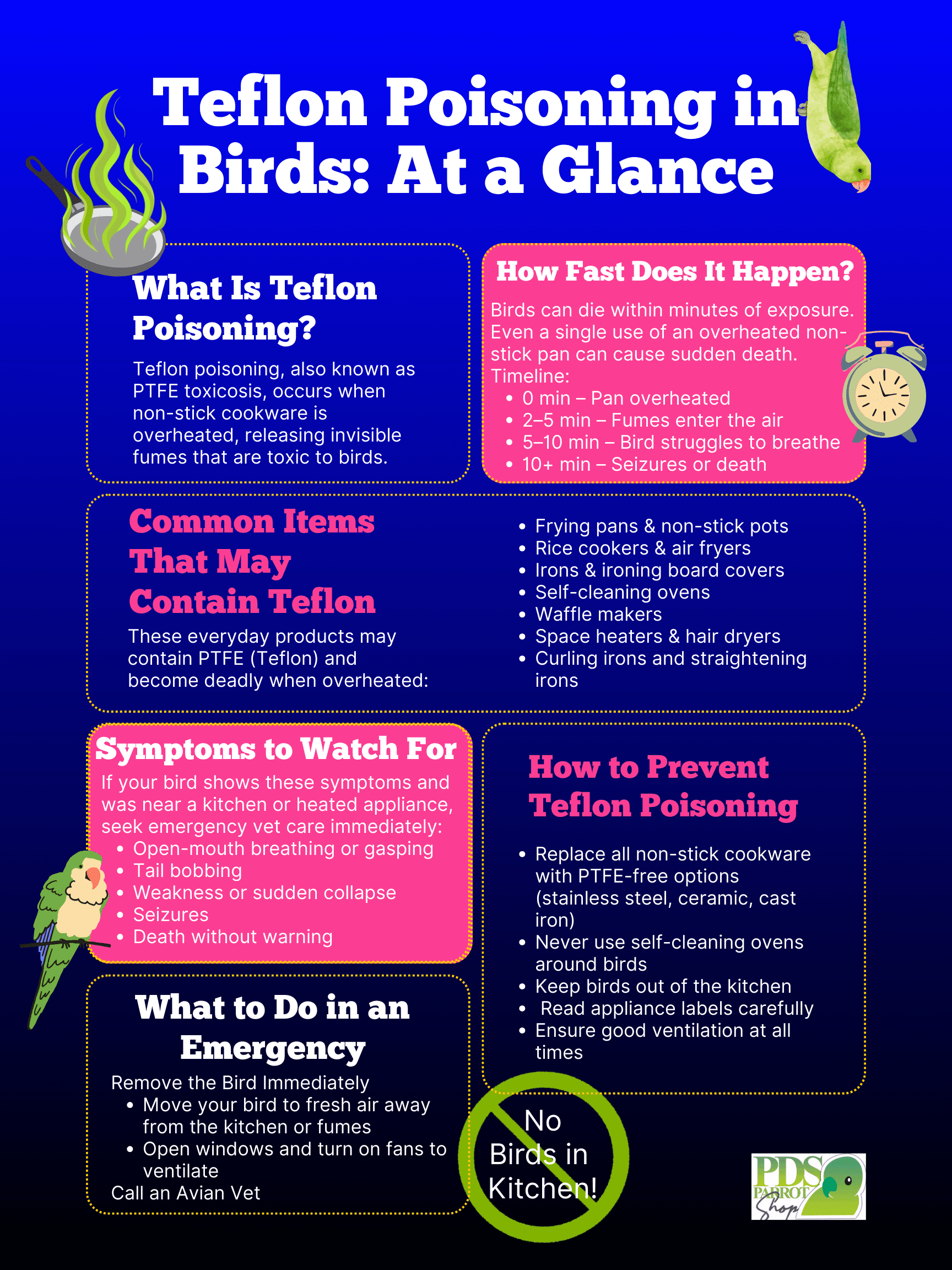
Have you ever wondered if your non-stick pans could be harming your pet birds? What if something as common as Teflon is quietly putting your feathered friends at risk?
You might be surprised to learn how dangerous the fumes from Teflon-coated cookware can be for your birds’ health. If you care about keeping your pets safe and happy, understanding these hidden dangers is crucial. Keep reading to discover what you need to know to protect your birds from the bad effects of Teflon.

Credit: staravian.org
The Chemistry Of Teflon
Teflon is a common material found in many homes and industries. Its unique chemical structure makes it useful yet potentially harmful, especially to pet birds. Understanding the chemistry behind Teflon helps explain why it can be dangerous.
What Is Teflon
Teflon is the brand name for a chemical called polytetrafluoroethylene (PTFE). It is made from carbon and fluorine atoms. These atoms form strong bonds, creating a slippery and heat-resistant surface.
The carbon-fluorine bonds give Teflon its non-stick and chemical-resistant properties. This makes it very stable under normal conditions. But when heated above certain temperatures, Teflon releases toxic fumes.
Common Uses Of Teflon
- Non-stick cookware like frying pans and baking trays
- Coatings on fabric and carpets to resist stains
- Industrial applications such as seals and gaskets
- Electrical insulation for wires and cables
Many people use Teflon products daily without issues. Yet, heating Teflon too much can create fumes harmful to small animals like pet birds. These fumes come from the breakdown of its chemical bonds at high heat.

Credit: www.reddit.com
Teflon And Its Harmful Emissions
Teflon is a common coating on many non-stick cookware items. It is popular because food does not stick to its surface. Despite its convenience, Teflon can release harmful emissions. These emissions become dangerous at high temperatures. Pet birds are especially sensitive to these toxic fumes. Understanding how Teflon behaves when heated helps protect pet health.
Teflon At High Temperatures
Teflon begins to break down when heated above 260°C (500°F). At these temperatures, the coating starts to release gases. The gases come from the chemical breakdown of the Teflon surface. Even normal cooking temperatures can sometimes reach these levels. Rapid heating or empty pans increase the risk of overheating. Continuous exposure to these fumes can harm small pets.
Toxic Fumes Released
The fumes from heated Teflon contain toxic particles. These fumes cause a condition called “Teflon toxicosis” in birds. Birds have very sensitive respiratory systems. Even small amounts of fumes can cause severe illness or death. Signs of poisoning include difficulty breathing, weakness, and sudden death. Humans can also experience flu-like symptoms, known as “polymer fume fever.”
Pet Birds’ Sensitivity
Pet birds are incredibly sensitive creatures, especially when it comes to their environment. Their delicate respiratory systems make them vulnerable to substances that might seem harmless to us. Understanding this sensitivity is crucial to keeping your feathered friend safe from hidden dangers like Teflon fumes.
Unique Respiratory Systems
Birds breathe differently than humans. Their lungs are connected to air sacs that spread air throughout their bodies more efficiently. This system means they absorb airborne particles and gases much faster and in higher amounts than we do.
This unique setup also means toxins linger longer inside their bodies, causing more damage. Imagine inhaling harmful fumes every day without a chance to filter them out properly. This is why substances like overheated Teflon can be deadly for pet birds almost instantly.
Vulnerability To Airborne Toxins
Have you ever noticed how quickly your bird reacts to smoke or strong smells? Even small amounts of airborne toxins can stress their respiratory system. Chemicals released from burning or overheated non-stick pans, such as Teflon, produce fumes that are especially harmful.
These fumes can cause symptoms ranging from difficulty breathing to sudden death. It’s not just about avoiding smoke; even common household products can release dangerous particles. You need to create a safe environment by ensuring proper ventilation and avoiding toxic materials.
- Never use non-stick cookware near your birds.
- Keep your bird’s room free from aerosols and harsh cleaners.
- Watch for signs like wheezing, coughing, or lethargy.
Have you checked your home for hidden risks that might harm your bird’s lungs? Small changes can make a big difference in their health and happiness.

Credit: www.pdsnonprofit.org
Shocking Cases Of Teflon Toxicity
Teflon is common in many kitchens. It coats cookware to prevent food from sticking. But it releases harmful gases when overheated. These gases can be deadly to pet birds. Birds have very sensitive lungs. Even small amounts of fumes can cause severe harm.
Many pet owners do not know about this danger. Several shocking cases show how fast Teflon toxicity affects birds. The symptoms appear quickly and can lead to sudden death. Understanding these cases helps protect your feathered friends.
Documented Incidents
- Birds in homes with overheated non-stick pans suddenly fell ill.
- In many reports, birds showed breathing problems and weakness.
- Some birds died within minutes of exposure to Teflon fumes.
- Cases often occurred when cooking on high heat or leaving pans empty on stoves.
- Families reported no signs of trouble before the birds collapsed.
Veterinary Reports
- Veterinarians confirm Teflon fumes cause acute respiratory distress in birds.
- Examinations show lung damage and fluid buildup in the air sacs.
- Birds exposed to fumes need immediate treatment to survive.
- Many vets warn pet owners to avoid using Teflon cookware around birds.
- Some reports recommend alternative cookware like stainless steel or cast iron.
Signs Of Teflon Poisoning In Birds
Recognizing the signs of Teflon poisoning in your pet birds is crucial for their survival. Teflon fumes, released when non-stick cookware overheats, can be deadly even in small amounts. If you notice any unusual changes in your bird’s behavior or health, it’s important to act quickly.
Behavioral Changes
Birds exposed to Teflon fumes often show sudden shifts in behavior. They might become unusually quiet or lethargic, avoiding interaction even if they’re normally lively. You could also see signs of distress like pacing or frantic wing-flapping.
Have you observed your bird acting strangely without a clear cause? This could be an early warning sign that something harmful is affecting their nervous system. Paying attention to these subtle cues can make a big difference.
Physical Symptoms
Physical signs often follow behavioral changes and can be more alarming. Watch for difficulty breathing, open-mouth breathing, or gasping for air. You might notice puffed-up feathers as the bird tries to conserve heat due to shock or illness.
In some cases, birds develop seizures or collapse completely. These symptoms mean immediate veterinary care is essential. Your quick response could be the difference between life and death.
Have you ever seen your bird suddenly stop singing or moving? It’s easy to overlook these symptoms until they worsen. Early detection of Teflon poisoning symptoms can save your feathered friend from serious harm.
Preventing Exposure To Teflon
Preventing exposure to Teflon is essential, especially if you own pet birds. The fumes released from overheated Teflon-coated cookware can be deadly to birds, causing severe respiratory distress. Taking simple precautions can protect both your feathered friends and your family from harmful effects.
Safer Cooking Alternatives
Switching to safer cookware reduces the risk of toxic fumes. Stainless steel, cast iron, and ceramic pots and pans are excellent choices. They don’t release harmful gases when heated and still offer great cooking performance.
Consider using these alternatives even if you don’t have birds. Avoid overheating any non-stick pans by cooking on medium or low heat. This habit not only protects your health but also extends the life of your cookware.
Protective Measures For Bird Owners
If you have pet birds, never cook with Teflon-coated pans in the same room or nearby areas. Birds have extremely sensitive respiratory systems that can react instantly to fumes. Even a small amount of smoke from overheated pans can be fatal.
Keep your birds’ cages in a well-ventilated room, far from the kitchen. Installing air purifiers with HEPA filters can help reduce airborne toxins. Have you thought about how close your bird’s cage is to your cooking space? Moving it might be a simple change that saves their life.
Raising Awareness
Raising awareness about the harmful effects of Teflon on pet birds is crucial. Many bird owners do not realize that Teflon fumes can be deadly to their pets. Sharing clear, simple information helps protect these sensitive animals. Awareness leads to safer homes and better care for pet birds.
Educational Campaigns
Educational campaigns focus on spreading knowledge about Teflon dangers. These campaigns use flyers, videos, and social media posts to reach bird owners. They explain how overheated Teflon releases toxic fumes. Campaigns also teach how to avoid using Teflon cookware near birds. Simple messages make the information easy to understand and remember.
Community Involvement
Community involvement plays a big role in raising awareness. Local bird clubs and pet stores can share warnings about Teflon risks. Hosting talks or workshops helps people ask questions and learn more. Communities can create safe spaces for bird owners to exchange tips. Together, they build a stronger network to protect pet birds from harm.
Frequently Asked Questions
What Are The Harmful Effects Of Teflon On Pet Birds?
Teflon releases toxic fumes when overheated. These fumes cause respiratory distress and sudden death in pet birds. Birds have sensitive lungs and cannot tolerate these chemicals, making Teflon dangerous in kitchens and homes with birds.
How Does Teflon Poisoning Affect Pet Birds?
Teflon poisoning causes symptoms like difficulty breathing, weakness, and lethargy in birds. Exposure to fumes can lead to fatal pulmonary edema. Immediate veterinary care is crucial if poisoning is suspected.
Can Teflon Cookware Kill Pet Birds?
Yes, overheated Teflon cookware emits fumes lethal to pet birds. Even small amounts of fumes can be fatal. Avoid using non-stick pans around birds to ensure their safety.
Are All Non-stick Coatings Harmful To Birds?
Most non-stick coatings, including Teflon, release toxic fumes when heated above 500°F. Birds are highly sensitive to these fumes. Using ceramic or stainless steel cookware is safer for homes with birds.
Conclusion
Teflon can harm pet birds in many ways. The fumes from overheated Teflon are toxic to birds. Birds have sensitive lungs and breathe quickly. Even small amounts of these fumes can cause illness or death. Pet owners should avoid using Teflon cookware near birds.
Safer alternatives like stainless steel or ceramic work well. Protect your feathered friends by choosing bird-safe products. Keeping birds healthy means keeping their environment free from toxic materials. Always think about your pet’s safety at home. Small changes make a big difference for bird health.