
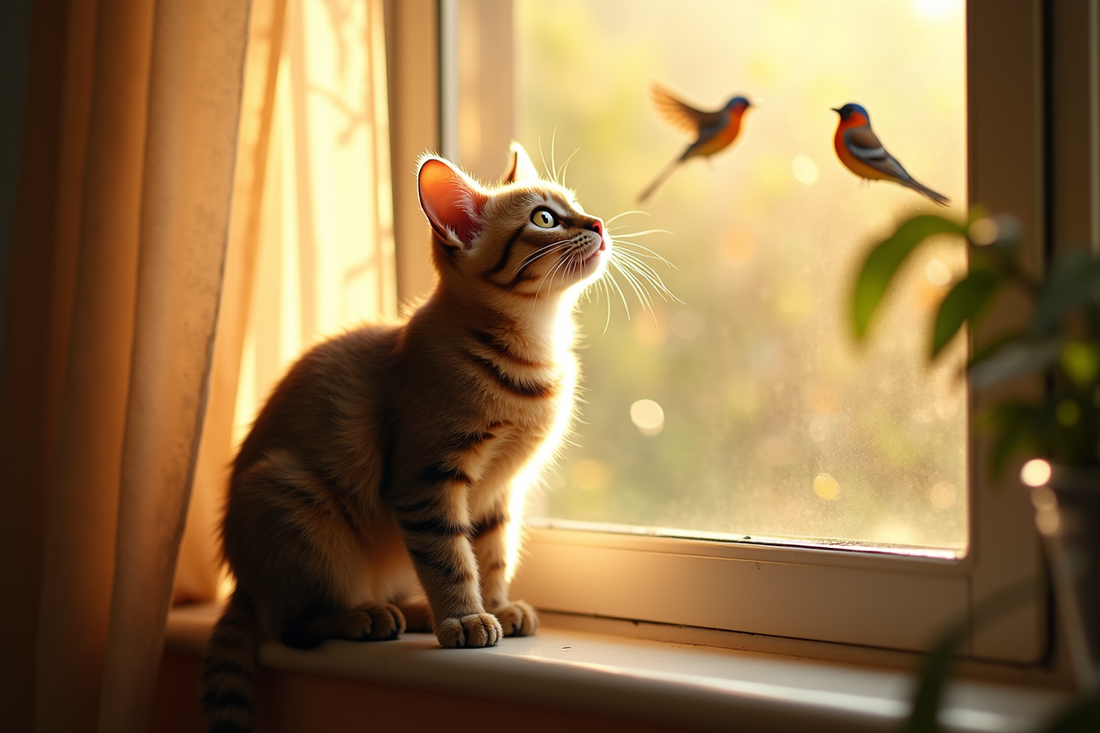
Have you ever caught your cat staring out the window, making strange chattering or chirping sounds while watching birds? It’s a curious behavior that can leave you wondering what’s going on inside your furry friend’s mind.
Those weird noises aren’t random—they reveal something fascinating about your cat’s instincts and emotions. Keep reading to discover why your cat makes these odd sounds and what it really means for their natural hunting drive. You might be surprised by what’s behind this quirky habit!
Cat Sounds Explained
Cats often make strange noises while watching birds. These sounds can be fascinating. They offer insight into your cat’s behavior and instincts. Understanding these sounds can strengthen your bond with your feline friend.
Types Of Noises Cats Make
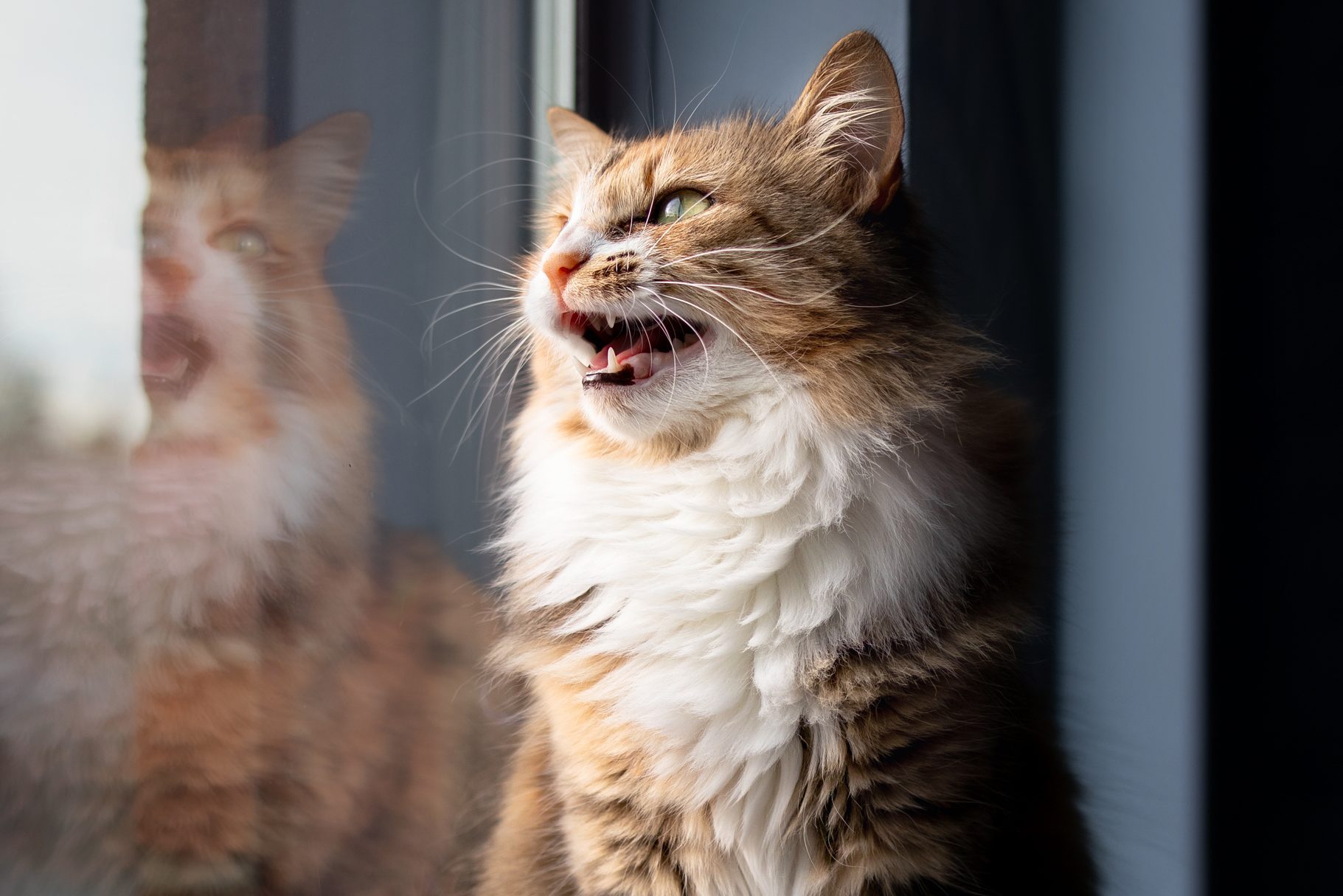
Cats produce various sounds when observing birds. The chattering sound is common. It resembles rapid teeth chattering or clicking. Cats may also emit a soft, guttural “chirrup.” This sound is a mix of a meow and a purr. Sometimes, cats make a high-pitched “squeak” or “trill.” Each sound carries a different meaning and emotion.
Common Triggers For Vocalization
Birds trigger a cat’s hunting instincts. Seeing them can excite or frustrate cats. The sounds they make express these feelings. Some noises indicate a cat’s desire to hunt. Others show excitement from watching potential prey. Environmental factors also play a role. Open windows or bird feeders can increase vocalizations.

Credit: ashevillecatweirdos.org
Bird Watching Behavior
Watching your cat intently stare at birds outside the window is a common sight. But the strange noises they make during these moments reveal much more than simple curiosity. Understanding this bird watching behavior helps you see your cat’s natural instincts at play.
Instinctual Hunting Responses
Those odd chirps and chattering sounds are your cat’s way of mimicking hunting behavior. Cats have evolved to be skilled predators, and watching birds triggers their hunting instincts.
It’s like your cat is practicing or preparing to pounce—even though the bird is safely out of reach. This vocalization may help them focus and mentally simulate the catch.
Visual Focus And Alertness
When your cat watches birds, their eyes are locked on fast-moving targets. This intense visual focus increases their alertness and sharpens their senses.
You might notice their ears twitching or their body tensing as they track every flutter and hop. These reactions show how deeply engaged they are with their environment and how tuned their senses remain, even indoors.
Chirping And Chattering
Cats often make strange noises while watching birds outside. These sounds include chirping and chattering. They are unique and catch the attention of many cat owners. Understanding these noises helps reveal what your cat feels or thinks during these moments.
What These Noises Mean
Chirping and chattering are not random sounds. They show a cat’s intense focus and excitement. Chirping is a short, sharp sound, almost like a bird call. Chattering is a rapid clicking or chattering of the teeth. These noises express a mix of curiosity and frustration.
Some experts believe cats mimic bird sounds to lure prey. Others say it is an instinctive reaction to hunting. Either way, these noises show a cat’s natural behavior and alertness.
Connection To Prey Excitement
Watching birds triggers a cat’s hunting instincts deeply. The chirping and chattering reflect this strong prey drive. Cats get ready to hunt, even if they can’t reach the bird. The sounds are part of their excitement and anticipation.
This noise may also help relieve tension. Cats feel both eager and a little frustrated. The sounds help them handle these mixed feelings. It is a way to express their natural urge to chase and catch prey.
Frustration And Excitement
Cats often make strange noises when they watch birds, and this behavior is rooted in a mix of frustration and excitement. Their instincts drive them to hunt, but being indoors limits their ability to act on those urges. This creates a unique emotional state that you can see and hear in their vocalizations.
Why Cats Vocalize Without Catching
Have you noticed your cat chattering or chirping at birds outside the window? This vocalization often happens when they’re close enough to see prey but can’t reach it. It’s a natural reaction to the frustration of not being able to catch the bird.
This chattering sound might also mimic their hunting bite, which helps them prepare mentally for a catch that never comes. It’s their way of expressing eagerness mixed with a bit of stress. Your cat’s voice is telling a story of desire and limitation.
Emotional Impact Of Watching Birds
Watching birds triggers a strong emotional response in cats. They get excited by the movement and sounds, which sparks their hunting instincts. This excitement can quickly turn into frustration as they realize they can’t physically reach the birds.
This emotional rollercoaster is why you might see your cat’s eyes widen and their tail twitch while making those weird noises. It’s their mind racing between the thrill of the chase and the reality of being stuck inside. Next time you see your cat react this way, consider how deeply they are engaged with their natural instincts.
Communication Signals
Cats use a variety of sounds to communicate their feelings and intentions. These noises are often a mix of instincts and learned behaviors. When watching birds, cats produce unique sounds to express excitement, frustration, or alertness. Understanding these communication signals helps us connect better with our feline friends.
Expressing Interest Or Warning
When cats make chattering or chirping noises at birds, they show strong interest. These sounds mimic hunting instincts and signal focus. Sometimes, the noises act as a warning to other cats nearby. They express alertness or a desire to protect their territory. The mix of curiosity and instinct drives these vocalizations.
Interaction With Humans
Cats also use these sounds to engage with their owners. They may try to share the excitement or frustration of seeing birds. This vocal behavior invites attention or play from humans. It builds a unique bond through shared moments. Listening closely can reveal what your cat feels during birdwatching.
Credit: www.rd.com
Physical Responses
Cats often make strange noises while watching birds. These sounds come from physical reactions inside their bodies. Their muscles and jaws move in specific ways. These actions prepare them for hunting. Understanding these responses helps explain why cats behave this way.
Muscle Twitching And Jaw Movements
Small muscle twitches appear in a cat’s paws and legs. These twitches show their excitement and readiness to pounce. Their jaws also move in quick, chattering motions. This jaw movement mimics the biting motion they use on prey. These physical signs reveal their intense focus on the bird.
Role In Hunting Preparation
These noises and movements help cats get ready to hunt. Muscle twitching keeps their body alert and ready to jump. Jaw chattering simulates the final step of catching prey. Together, these actions sharpen their instincts. They prepare cats mentally and physically for a quick strike.
Factors Influencing Noise Variation
Cats produce different sounds when watching birds. These noises can change based on several factors. Understanding these can explain why each cat’s reaction is unique. The variety in sounds shows their mood and instincts.
Age And Personality Differences
Young cats often make more high-pitched, excited noises. They are curious and learning about the world. Older cats might be quieter or use softer sounds. Their experience changes how they express themselves.
Personality plays a big role too. Some cats are shy and stay silent. Others are bold and vocalize more. Active cats show strong interest with louder chattering. Calm cats might watch quietly but stay alert.
Environmental Influences
The setting affects cat sounds as well. A noisy home can make cats quieter to listen better. In a calm place, they may chatter freely. Seeing many birds at once can excite cats more.
Weather also matters. Rain or wind might change bird activity. This can change how cats react and what sounds they make. Indoor cats might behave differently than outdoor cats too.

Credit: www.reddit.com
Frequently Asked Questions
Why Do Cats Chatter At Birds?
Cats chatter to mimic bird calls and express hunting excitement. It’s a mix of frustration and anticipation when they see prey but can’t reach it.
What Does Cat Chattering Mean?
Chattering is a natural hunting instinct. It shows a cat’s focus, excitement, and sometimes frustration when watching birds outside.
Are Weird Cat Noises Normal When Watching Birds?
Yes, these sounds are normal. They reflect a cat’s predatory instincts and heightened alertness triggered by bird movements.
Can Cat Noises Indicate Stress Or Excitement?
Cat noises while watching birds mostly show excitement, not stress. It’s their way to engage with prey instinctively from a distance.
Conclusion
Cats make strange sounds because they feel excited and curious. These noises show their natural hunting skills and focus. Watching birds triggers their instincts to chase and catch prey. This behavior is normal and part of their playful nature. Understanding this helps pet owners connect better with their cats.
Next time you hear those sounds, remember your cat is just having fun. Watching birds is a small way cats explore the world around them. It’s one of the many ways they stay alert and active indoors.