
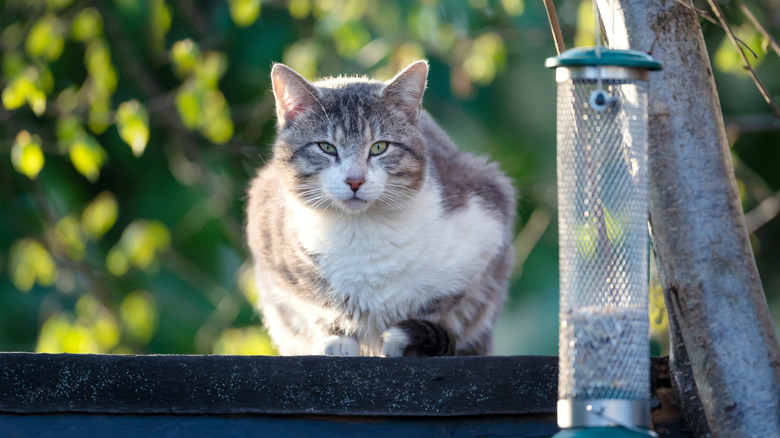
Are you tired of your cat turning your peaceful bird feeder into a hunting ground? Watching your feathered friends disappear every time your cat shows up can be frustrating.
But don’t worry—you can protect your bird feeder and keep both your cat and birds safe. You’ll discover simple, effective ways to keep your cat away from your bird feeder without causing harm. Ready to enjoy watching the birds without any interruptions?
Keep reading to find out how.

Credit: www.birdspot.co.uk
Why Cats Are Drawn To Bird Feeders
Understanding why cats are drawn to bird feeders is key to keeping them away effectively. Cats are natural hunters, and bird feeders often become a hotspot for their curiosity and instincts. This attraction isn’t just about food; it’s deeply rooted in their behavior and senses.
Instinctual Hunting Behavior
Cats have a strong hunting instinct that drives their interest in bird feeders. The movement of birds triggers their natural prey drive. Even indoor cats can’t resist the urge to stalk and pounce on birds, making feeders irresistible targets.
Think about how your cat watches birds through the window for long periods. That focused attention is more than entertainment—it’s practice for hunting. This instinct can be hard to ignore, especially if your feeder is close to where your cat spends time.
Attraction To Bird Activity
Bird feeders create a lively scene that fascinates cats. The fluttering wings, chirping sounds, and sudden movements catch their eye instantly. This activity stimulates your cat’s senses and keeps them coming back.
Bird feeders can sometimes feel like a live TV show for your cat. Have you noticed how your cat’s eyes follow every bird landing or takeoff? This constant motion makes the feeder area a tempting place for any feline.
Credit: www.humaneworld.org
Choosing Cat-resistant Bird Feeders
Choosing the right bird feeder can make a big difference in keeping your feathered friends safe from curious cats. Not all feeders are created equal—some designs naturally discourage cats from getting too close. Picking a cat-resistant bird feeder is about combining thoughtful design with smart placement.
Design Features That Deter Cats
Look for bird feeders with smooth, slippery surfaces. Cats struggle to grip these, making it hard for them to climb or hang onto the feeder. Metal or plastic feeders with rounded edges are often better than wooden ones that offer easy paw holds.
Feeders with built-in guards or cages around the feeding ports add an extra layer of protection. These barriers let birds in but block cats from reaching the food. Some models even have weight-sensitive perches that close off access when a heavier animal, like a cat, tries to land.
Have you noticed how some feeders hang from thin wires or poles that bend under weight? These flexible setups can discourage cats because they can’t balance well on unstable surfaces. Choosing feeders with these features can save you from constant battles with your feline visitor.
Placement Tips For Safety
Where you put your bird feeder matters as much as its design. Position feeders at least 5 to 6 feet away from places cats use to leap onto them, like fences, trees, or ledges. Cats are excellent jumpers, so giving them a long, clear run-up is key to keeping them out.
Consider hanging feeders on poles with baffles—smooth, cone-shaped barriers—that prevent cats from climbing up. Placing feeders over open ground instead of near dense shrubs reduces hiding spots for cats to stalk birds unnoticed.
Think about your own yard’s layout. Have you seen where your cat likes to hang out? Avoid setting up feeders in those areas. Sometimes, moving a feeder just a few feet can make all the difference in discouraging cat visits.
Physical Barriers To Protect Feeders
Keeping cats away from your bird feeder is essential to protect the birds while still enjoying their company. Physical barriers offer a straightforward way to create a safe feeding zone without harming your feline friends. These barriers not only block cats but also keep squirrels and other unwanted guests at bay.
Using Baffles And Guards
Baffles are simple, effective devices placed above or below the bird feeder to prevent cats from climbing or jumping onto it. A dome-shaped baffle mounted on the pole below the feeder stops cats from climbing up. You can also install a cone-shaped baffle above the feeder to block cats that might try to jump down from a tree or roof.
Guards made of metal or plastic can be attached around the feeder pole. These guards create a slippery or unstable surface that cats find difficult to grip. Have you noticed how cats hesitate to climb smooth or rounded surfaces? Using guards plays on that natural hesitation.
Creating Safe Perches For Birds
Cats often ambush birds by hiding near perches close to the feeder. You can encourage birds to use perches that are harder for cats to reach by attaching long, thin rods or branches at a distance from the feeder pole. These perches give birds a safe landing spot without providing cats easy access.
Another idea is to place perches with spiky or rough textures that deter cats but are comfortable for birds. You might be surprised how small changes like this can shift the balance in favor of your feathered visitors. What types of perches have you seen birds prefer in your garden?

Credit: kateminimalist.com
Natural Deterrents For Cats
Keeping cats away from your bird feeder protects the birds and keeps your garden peaceful. Natural deterrents offer safe, gentle ways to discourage cats without harm. These methods use smells and plants that cats dislike. They help maintain balance in your outdoor space.
Scent-based Repellents
Cats have a strong sense of smell. Certain scents can make them avoid specific areas. Use natural smells to keep cats away from your bird feeder.
- Citrus peels like orange, lemon, or lime work well.
- Lavender and rosemary scents can also repel cats.
- Vinegar sprayed near the feeder creates an unpleasant smell for cats.
- Essential oils such as eucalyptus or peppermint discourage cats from approaching.
Refresh these scents regularly to maintain their effect. Avoid spraying directly on plants or the feeder.
Plants That Repel Cats
Planting certain herbs and flowers can naturally keep cats away. These plants have strong smells or textures cats dislike.
- Rue is a bitter-smelling plant cats avoid.
- Lavender not only smells good to humans but deters cats.
- Rosemary’s strong scent works as a natural cat repellent.
- Coleus canina, known as “scaredy cat plant,” keeps cats distant.
Place these plants around your bird feeder. They create a natural barrier without chemicals.
Training And Behavior Techniques
Training and behavior techniques help stop cats from bothering bird feeders. Cats are curious and love to explore. Teaching them new habits can keep both cats and birds safe. Patience and consistency are key. Using simple steps can change your cat’s focus and actions.
Redirecting Cat Attention
Redirecting your cat’s attention helps keep them away from bird feeders. Offer toys or playtime in other areas. Use interactive toys that mimic prey. This satisfies their hunting instincts without harming birds. Create a special play zone far from the feeder. Try moving their feeding bowl to a different spot. This change can reduce their interest in the bird feeder.
Using Positive Reinforcement
Positive reinforcement encourages good behavior in cats. Reward your cat when they stay away from the bird feeder. Use treats, praise, or petting as rewards. Give the reward immediately after the right behavior. This helps your cat understand what is expected. Avoid punishment, as it can create fear or stress. Consistent rewards build a strong habit over time.
Additional Tips For Cat And Bird Safety
Keeping cats away from bird feeders protects both animals. Birds stay safe, and cats avoid harm. Simple habits help maintain a peaceful outdoor space. Careful attention supports a healthy environment for wildlife and pets.
Regular Feeder Maintenance
Clean feeders often to prevent diseases among birds. Remove old seeds and debris regularly. Check for damage that may trap birds or attract cats. Use fresh seed to keep birds coming back safely. Secure feeders tightly to reduce shaking and noise.
Monitoring Cat Activity Outdoors
Watch cats near bird feeders to understand their behavior. Create safe zones for birds away from cat paths. Use gentle deterrents if cats get too close. Spend time outside to notice any risks early. Training cats to stay away helps protect birds too.
Frequently Asked Questions
How Can I Keep Cats Away From My Bird Feeder?
Place the feeder on a pole with a baffle to block cats. Keep the area clear of low shrubs or hiding spots. Use motion-activated sprinklers or noise devices to scare cats away effectively.
What Natural Deterrents Repel Cats Near Bird Feeders?
Citrus peels, coffee grounds, and lavender can deter cats naturally. Sprinkling these around the feeder area discourages cats without harming them. These safe options protect birds while keeping cats at a distance.
Are There Safe Bird Feeder Designs To Prevent Cats?
Yes, feeders with enclosed or hanging designs reduce cat access. Use feeders mounted high or inside cages to protect birds. These designs help keep cats from reaching the birds and their food.
Can I Use Plants To Keep Cats From Bird Feeders?
Planting prickly bushes or thorny plants near feeders deters cats. Cats dislike walking through rough or uncomfortable vegetation. This natural barrier helps protect birds without using harmful chemicals.
Conclusion
Keeping cats away from bird feeders protects both birds and cats. Use barriers or place feeders out of cats’ reach. Motion-activated devices can help keep cats away. Regularly check your yard for hiding spots cats might use. Patience and consistency are key to success.
Enjoy watching birds safely without worry. Your efforts make a big difference for local wildlife. Stay calm and keep trying different methods until you find what works. Safe bird feeding creates a happy outdoor space for everyone.