
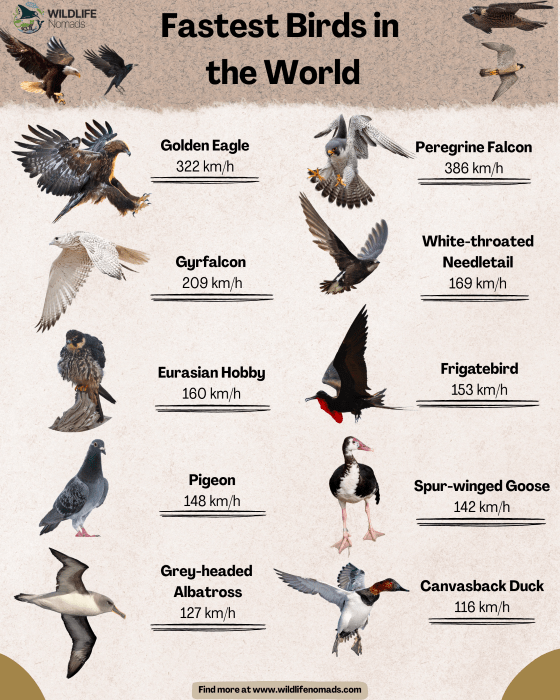
Have you ever wondered which bird soars through the sky faster than any other? Imagine watching a feathered speedster slicing through the air at incredible speeds.
Knowing which bird holds the record for the fastest flight can amaze you and change how you see the natural world. You’ll discover the incredible champion of the skies and learn surprising facts about its speed and abilities. Get ready to be amazed—your view of birds is about to take off!

Credit: www.wildlifenomads.com
Peregrine Falcon: Nature’s Speedster
The Peregrine Falcon stands out as one of the most fascinating birds in the sky, earning its title as nature’s speedster. Its unmatched velocity during flight leaves many in awe. But what makes this bird so fast, and how does it use this incredible speed in the wild?
Incredible Dive Speed
The Peregrine Falcon can reach dive speeds over 240 miles per hour (386 kilometers per hour). This makes it not only the fastest bird but one of the fastest animals on the planet. Imagine the control and precision needed to maintain such speed while hunting.
Have you ever wondered how it manages to slow down and navigate at these high speeds? The falcon adjusts its wings and tail feathers to steer and brake, ensuring a perfect strike on its prey.
Anatomy For Aerodynamics
Its body is built for speed. The falcon has a sleek, aerodynamic shape that reduces air resistance. Strong chest muscles power its rapid wing beats, while its stiff feathers keep airflow smooth.
Another key feature is its nostrils, which have special bony tubercles that help regulate airflow during high-speed dives. This adaptation prevents damage to its lungs, letting it breathe easily despite the intense speed.
Hunting Techniques
The Peregrine Falcon uses its speed to surprise and overpower prey. It soars high, spots a target, then plunges in a high-speed dive to capture birds mid-air. This hunting style requires perfect timing and incredible precision.
Have you noticed how it chooses specific birds that can’t match its speed or agility? This strategy increases its chances of a successful hunt, showing just how smart and efficient it is in the wild.

Credit: www.wildlifenomads.com
Other Fast Flyers
Beyond the well-known speed champions, several bird species exhibit remarkable flying capabilities that can surprise you. These “other fast flyers” showcase different strengths—whether it’s the power of a swift dive, the ability to maintain speed over long distances, or the incredible velocity in straight flight. Understanding these birds helps you appreciate the diversity and specialization in the avian world.
Golden Eagle’s Swift Pursuit
The Golden Eagle is a master of aerial hunting, capable of reaching speeds up to 150 miles per hour during its hunting dives. You might spot one soaring high, then suddenly plunging with incredible precision to capture prey. This swift pursuit strategy combines speed and agility, teaching you how focused bursts of energy can achieve remarkable results.
Common Swift’s Endurance Speed
The Common Swift stands out not just for its speed, but for its endurance. Flying at speeds around 70 miles per hour, it can stay airborne for months without landing. Imagine the stamina required to keep moving nonstop; this bird reminds you that endurance is just as important as raw speed in long-distance travel.
White-throated Needletail’s Straight Flight
This bird holds the record for the fastest straight-line flight among birds, clocking speeds close to 105 miles per hour. Its streamlined body and powerful wing beats allow it to cut through the air with minimal resistance. If you want to understand how design and technique combine for pure speed, the White-throated Needletail offers a perfect example.
Factors Influencing Bird Speed
Birds don’t just flap their wings and take off; their speed depends on several fascinating factors working together. Understanding these can change how you see a bird’s flight. Ever wondered why some birds slice through the air faster than others?
Wing Shape And Size
Wing design plays a major role in flight speed. Narrow, pointed wings reduce air resistance and help birds cut through the air quickly. Birds like falcons have these sleek wings, allowing them to dive at incredible speeds.
On the other hand, broader wings provide more lift but can slow down a bird. This is why soaring birds like eagles have wide wings to glide effortlessly but don’t reach the highest speeds.
Muscle Composition
Your muscles power your movements, and the same is true for birds. Birds with a higher proportion of fast-twitch muscle fibers can generate quick, powerful wing beats. This muscle makeup is key for rapid acceleration and bursts of speed.
Think about the peregrine falcon—it has strong muscles enabling rapid wingbeats during a high-speed dive. The muscle type affects not only speed but also stamina during flight.
Environmental Conditions
Speed isn’t just about the bird itself; the environment matters too. Wind direction and air density can either boost or hinder a bird’s flight speed. Tailwinds can push a bird forward, increasing its speed effortlessly.
Altitude also affects air resistance. At higher altitudes, thinner air allows some birds to fly faster, but it requires more energy. What environment do you think would help your favorite bird fly fastest?
Significance Of Speed In Survival
Speed is more than just a cool fact about birds; it’s a vital part of their survival toolkit. The ability to fly fast can mean the difference between life and death. Whether escaping danger, catching prey, or traveling thousands of miles, speed shapes how birds live and thrive.
Predator Evasion
Flying fast helps birds dodge predators quickly. When a hawk or falcon swoops down, a swift bird can outmaneuver and escape. Think about how a small songbird darts through trees—it’s not just agility but speed that keeps it safe.
Have you ever tried to catch a fast-moving target? Birds use their speed like a built-in defense system, making it hard for predators to predict their moves.
Efficient Hunting
Speed isn’t only for running away; it’s crucial for catching food. Birds like the peregrine falcon dive at speeds over 200 mph to snatch prey mid-air. This high velocity gives them a hunting edge that slower birds can’t match.
Imagine hunting with lightning speed—you can surprise your prey before it reacts. This efficiency saves energy and increases the chance of a successful catch, which is essential for survival.
Migration And Long-distance Travel
Many birds cover thousands of miles during migration. Flying fast lets them reach breeding or feeding grounds quicker, avoiding harsh weather and conserving energy. Speed reduces the time spent in dangerous or unfamiliar areas.
Have you ever experienced a long journey where speed made a big difference? For migratory birds, faster travel means better timing for reproduction and access to resources.
Technological Insights From Avian Speed
Birds that reach incredible speeds in flight offer more than just natural wonder—they provide valuable lessons for technology. Their streamlined bodies, wing shapes, and flight mechanics inspire innovations that push the boundaries of human engineering.
Have you ever thought about how the fastest birds manage energy and control at such high speeds? Understanding these factors can help improve machines designed to move through air more efficiently and safely.
Aerospace Engineering Inspirations
Engineers study the aerodynamics of fast-flying birds like the peregrine falcon to design better aircraft. The falcon’s pointed wings and tapered body reduce air resistance, which helps planes achieve greater fuel efficiency.
Birds adjust their wing shape mid-flight to control speed and maneuverability. This adaptive ability inspires variable geometry wings in modern jets, allowing aircraft to perform well at different speeds and conditions.
Consider how birds use minimal energy to maintain speed. Aerospace designers apply these insights to optimize lift-to-drag ratios, resulting in smoother and more economical flights.
Drone Design And Efficiency
Drone technology borrows heavily from avian flight mechanics. Observing how birds flap and glide helps engineers improve battery life and flight stability in drones.
- Wing design mimics bird wings for better lift and reduced noise.
- Flight control systems emulate birds’ natural adjustments to wind and turbulence.
- Lightweight materials, inspired by bird bones, increase drone agility.
Imagine your drone flying longer and handling wind gusts with ease—this is the direct result of learning from nature’s fastest flyers.
What if you applied these avian principles to your own projects? Could your designs become more efficient by studying the natural masters of speed and precision?

Credit: www.wildlifenomads.com
Frequently Asked Questions
What Is The Fastest Flying Bird In The World?
The peregrine falcon is the fastest flying bird. It can reach speeds over 240 mph during a hunting dive. This makes it the quickest animal in flight.
How Fast Can A Peregrine Falcon Fly?
A peregrine falcon can dive at speeds exceeding 240 mph. In level flight, it flies around 40-60 mph. Its hunting dive speed is unmatched by any other bird.
Why Is The Peregrine Falcon So Fast?
The peregrine falcon’s speed comes from its aerodynamic body, strong muscles, and specialized feathers. These features reduce air resistance, allowing high-speed dives during hunting.
Are Any Other Birds Close In Speed To The Peregrine Falcon?
No other bird matches the peregrine falcon’s diving speed of 240 mph. Some birds like the golden eagle fly fast but not as fast in dives.
Conclusion
The fastest flying bird amazes with its speed and grace. It shows nature’s power and design. Watching these birds inspires awe and curiosity. Their speed helps them catch prey and stay safe. Learning about them teaches us about life in the sky.
Speed in birds is a wonder worth exploring. It reminds us how special and varied life can be. Keep watching the skies—you never know what you might see next.