
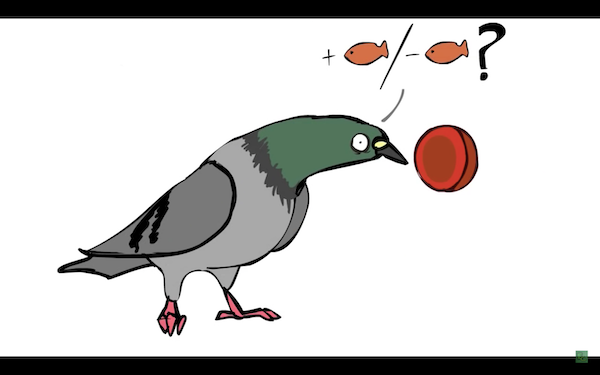
Have you ever wondered how scientists learn what makes birds tick? Imagine a specially designed box where every move a bird makes is carefully watched and recorded.
This isn’t just any box—it’s a tool that helps researchers uncover the secrets of bird behavior. If you’re curious about who studies birds in such unique settings and why it matters, keep reading. You’re about to discover a fascinating world where science meets nature, right inside a simple box.

Credit: medium.com
Bird Behavior Researchers
Scientists who study bird behavior often use special boxes to watch how birds act in controlled spaces. These boxes help researchers learn about bird habits and reactions clearly. Observing birds this way reveals important details about their natural behavior.
Bird behavior researchers are a fascinating group of scientists dedicated to understanding the complex world of avian actions and interactions. These researchers use specially designed environments, often known as Skinner boxes, to meticulously observe and analyze how birds behave under various conditions. Have you ever wondered who these experts are and what roles they play in unraveling the mysteries of bird behavior?Roles Of Ornithologists
Ornithologists are the primary experts in the study of birds. They focus on understanding everything about bird species, from their physical characteristics to their migratory patterns. In the context of behavior research, ornithologists design experiments to observe how birds interact with their environment and each other. Many ornithologists work in field settings, where they can study birds in their natural habitats. This hands-on approach provides invaluable insights into how environmental factors influence bird behavior. Their work often involves tagging and tracking birds, enabling them to gather data on flight patterns and social structures.Contributions Of Ethologists
Ethologists take a broader view, studying animal behavior across various species, including birds. They are particularly interested in the ‘why’ behind behaviors, often looking at evolutionary and adaptive significance. In bird behavior research, ethologists might focus on understanding how specific behaviors enhance survival or reproduction. This could involve studying mating rituals or the way birds communicate. Ethologists often collaborate with ornithologists, combining their expertise to deepen our understanding of bird behavior. This interdisciplinary approach can lead to breakthroughs, such as discovering new methods of conservation. The contributions of both ornithologists and ethologists are crucial to the field. Their work not only enriches our knowledge of birds but also raises important questions about the impact of environmental changes on these fascinating creatures. Are we doing enough to protect bird habitats and ensure their survival? The insights gained from these researchers can help guide conservation efforts and policy-making.Specialized Research Boxes
Specialized research boxes are essential tools for scientists who study bird behavior in controlled environments. These boxes allow researchers to observe natural actions and reactions without outside interference. The design of these boxes plays a crucial role in ensuring accurate and meaningful data collection.
Design Features
These research boxes are carefully crafted to mimic natural habitats while allowing close observation. They often include adjustable lighting to simulate different times of day and temperature controls to match various climates. Transparent walls or small observation windows let you watch birds without disturbing them.
Inside, the boxes contain perches, nesting materials, and feeding stations that encourage normal behavior. Some designs even include cameras or sensors to record movements and sounds automatically. This setup gives you detailed insights into bird habits you might miss in the wild.
Purpose And Benefits
The main purpose of these boxes is to study bird behavior in a consistent and repeatable way. You can test how birds respond to changes in environment, food availability, or social settings. This helps in understanding their communication, mating rituals, and problem-solving skills.
Using specialized boxes reduces external variables that could skew results. It also allows for long-term monitoring without stressing the birds. Have you ever wondered how birds react to subtle changes in their surroundings? These boxes help answer that by creating a controlled yet natural space for study.
Methods Used In Bird Behavior Studies
Studying bird behavior inside a specially designed box allows scientists to observe natural actions in a controlled space. This method helps isolate specific behaviors without distractions. Researchers use various techniques and tools to gather accurate data. These approaches reveal how birds interact with their environment and each other.
Observation Techniques
Watching birds closely is the first step in behavior studies. Scientists often use one-way glass to avoid disturbing the birds. This lets them see real actions without influencing them.
Video recording is common. Cameras capture every movement for detailed review later. Slow motion helps analyze quick behaviors that are hard to see live.
Some studies use time-lapse photography. This method shows changes over longer periods, like daily routines or feeding habits.
Researchers also note body language, vocal calls, and interactions. These observations help understand communication and social structure.
Data Collection Tools
Tools play a crucial role in collecting precise data. Sensors inside the box can track movement and position. This data shows activity levels and patterns.
Microphones record bird sounds. Analyzing calls helps decode communication signals and emotional states.
Special software assists in organizing and analyzing data. It can detect trends and compare behaviors across different birds.
Sometimes, researchers use RFID tags on birds. These tags provide information on individual behavior and interactions within the box.
Famous Experiments With Birds In Boxes
Scientists have used specially designed boxes to study bird behavior for many years. These boxes help control the environment and observe birds closely. Famous experiments have revealed how birds learn, remember, and interact.
Researchers put birds in these boxes to test their problem-solving skills and instincts. This controlled setting allows clear observation of bird actions. Such experiments help us understand bird intelligence and habits better.
Key Discoveries
- Birds can recognize shapes and colors quickly.
- Many species use trial and error to solve puzzles.
- Some birds show strong memory for rewards.
- Birds learn by watching others inside the box.
- They show signs of planning future actions.
Impact On Science
- These studies changed how we see animal intelligence.
- Bird cognition research inspired new learning theories.
- Experiments helped develop better animal training methods.
- Findings influenced designs of robotic and AI systems.
- They raised awareness about bird conservation needs.
Applications Of Bird Behavior Research
Studying bird behavior in specially designed boxes helps scientists learn how birds act in safe, controlled spaces. This research has many useful applications. It guides efforts to protect birds and improve their living conditions. Understanding bird habits also helps create better environments where they can thrive.
Conservation Efforts
Bird behavior research supports conservation by revealing what birds need to survive. Scientists observe nesting habits, feeding patterns, and responses to threats. This data helps protect endangered species and maintain biodiversity. Conservation programs use these insights to create effective protection plans. They also monitor bird populations to track changes over time.
Improving Bird Habitats
Research in bird behavior shows how to improve natural habitats. It identifies key features birds require for shelter and food. Habitat restoration projects use this knowledge to build safer, more supportive environments. This work helps increase bird populations in urban and rural areas. It also guides planting native trees and designing bird-friendly parks.

Credit: www.nature.com
Challenges In Studying Birds In Controlled Environments
Studying birds in controlled environments poses unique challenges. Researchers use specially designed boxes to observe bird behavior closely. These settings help isolate variables but also create difficulties. Birds may act differently in artificial spaces than in nature. This affects the accuracy of findings. Scientists must balance control with realism to get meaningful results.
Ethical Considerations
Keeping birds in confined spaces raises ethical questions. Birds need freedom to fly and explore. Limited space can cause stress and affect health. Researchers must ensure humane treatment at all times. Proper care includes:
- Providing enough room to move
- Offering natural light and fresh air
- Ensuring proper food and water
- Minimizing stress through gentle handling
Ethical guidelines protect birds and maintain research integrity. Scientists must follow strict rules set by animal care committees. Respecting animal welfare is crucial for credible studies.
Technical Limitations
Controlled environments cannot fully mimic the natural world. Birds rely on complex cues from their habitat. Boxes may lack natural sounds, smells, or weather changes. This can alter bird behavior and responses. Cameras and sensors help collect data but have limits.
- Limited space restricts natural movement
- Artificial settings may confuse birds
- Equipment can disturb or distract subjects
- Data may not reflect real-life behavior
Researchers work to improve technology and design. They aim to create more natural conditions inside boxes. Balancing control and authenticity remains a key challenge.

Credit: royalsocietypublishing.org
Frequently Asked Questions
Who Studies Birds’ Behavior In Specially Designed Boxes?
Ornithologists and behavioral ecologists study birds’ behavior using specially designed boxes. These boxes simulate natural habitats to observe nesting, feeding, and social interactions.
What Is The Purpose Of Specially Designed Bird Boxes?
Specially designed bird boxes provide safe environments for birds to nest. Researchers use them to monitor breeding habits, chick development, and environmental impacts on behavior.
How Do Researchers Observe Birds In These Boxes?
Researchers use discreet cameras and sensors inside the boxes. This non-intrusive method helps collect data on bird activities without disturbing them.
Which Bird Species Are Commonly Studied In These Boxes?
Commonly studied species include blue tits, great tits, and sparrows. These birds adapt well to boxes, making them ideal for behavioral research.
Conclusion
Studying birds in special boxes helps scientists learn how birds think. These boxes create safe, controlled places for careful observation. Researchers watch how birds behave, eat, and solve problems. This knowledge helps protect birds and their homes. Watching birds closely shows surprising details about nature.
Such studies improve our understanding of wildlife and environment. Bird behavior research in these boxes stays important for future discoveries. It brings us closer to the natural world around us. Simple tools, big ideas.