

Are you tired of seeing your bird feeder constantly disturbed by curious cats? You want to enjoy watching colorful birds visit your feeder, but those sneaky felines keep scaring them away.
It can be frustrating to protect your feathered friends while keeping your neighborhood cats safe and happy. You’ll discover simple, effective ways to deter cats from your bird feeder without harming them. Keep reading to learn how to create a peaceful space where birds can thrive and you can enjoy their beauty without worry.
Risks Cats Pose To Bird Feeders
Cats near bird feeders create several risks that affect birds and the feeders themselves. Their presence changes how birds behave and threatens their safety. Cats also cause physical damage to feeders, which can be costly to repair or replace.
Impact On Bird Safety
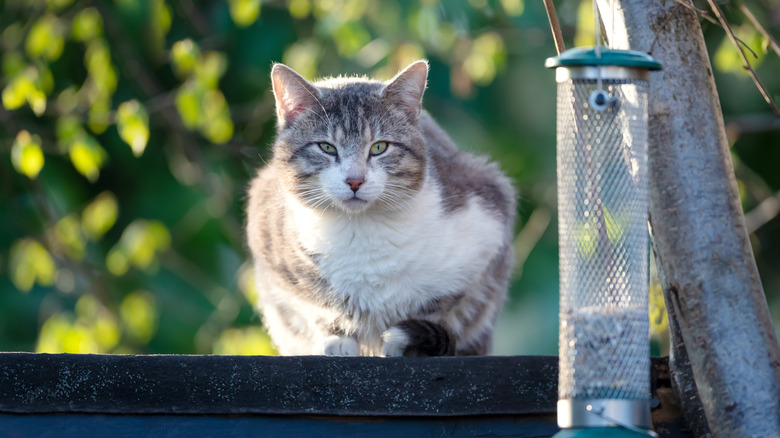
Cats are natural hunters. They stalk and pounce on birds visiting feeders. This causes stress and fear among birds. Some birds stop coming to feeders altogether. Injured birds may not survive. Nesting birds nearby may abandon their nests. The presence of cats reduces the number of birds in your garden.
Damage To Feeders
Cats climbing on feeders can cause breakage. Feeders may fall or get bent out of shape. Scratches and bite marks are common. Damaged feeders no longer protect bird food properly. This leads to wasted seed and attracts pests. Repairing or replacing feeders adds extra costs.
Credit: www.housedigest.com
Choosing Cat-proof Bird Feeders
Choosing a bird feeder that keeps cats away is key to protecting birds. Cat-proof feeders prevent cats from reaching the birds or their food. They create a safe space for birds to feed without fear. Selecting the right feeder involves understanding design and material features that discourage cats.
Design Features To Look For
- Feeders with cages or metal guards block cats from access.
- Feeders mounted on tall, smooth poles are hard to climb.
- Feeders with baffles or domes stop cats from jumping up.
- Enclosed feeders offer shelter and keep food out of reach.
- Feeders with weight-sensitive perches close off food when heavy animals land.
Material Considerations
- Metal feeders resist claw damage and are tough to chew.
- Plastic feeders with smooth finishes prevent cats from gripping.
- Durable materials last longer despite cat attempts to access.
- Choose rust-resistant materials for outdoor durability.
- Non-toxic finishes ensure safety for birds and the environment.
Strategic Feeder Placement
Strategic feeder placement plays a crucial role in keeping cats away from your bird feeder. Positioning your feeder thoughtfully can create natural barriers that discourage cats from reaching the birds. It also helps protect the birds without harming the cats, making your backyard a safer place for wildlife.
Ideal Locations To Avoid Cats
Choose spots that are open and visible, so cats have fewer places to hide. Avoid placing feeders near low shrubs, dense bushes, or fences where cats can easily crouch and stalk. Think about areas with good visibility from your windows or porch, allowing you to keep an eye on the feeder and any sneaky visitors.
Have you noticed how cats prefer quiet, sheltered spots? Placing your feeder out in the open reduces their chances to approach unnoticed. You might find that a sunny lawn or a well-trimmed garden bed works best.
Using Height And Distance
Elevating your bird feeder can make a big difference. Mount it at least 5 feet off the ground and away from jump points like trees, fences, or walls. Cats can leap surprisingly high, so ensure there’s a clearance of at least 8-10 feet horizontally from any launching spots.
If you have a pole feeder, install baffles or guards to prevent cats from climbing. Distance also matters—placing the feeder 10 to 12 feet away from any structures cats can use to jump makes it harder for them to reach.
Have you ever tried moving your feeder just a few feet and noticed fewer cat visits? Small changes in height and distance can create effective barriers that protect your feathered friends.
Physical Barriers To Keep Cats Away
Physical barriers are one of the most effective ways to keep cats from invading your bird feeder. They create a clear, tangible boundary that cats cannot easily cross, helping protect the birds you want to attract. By adding these barriers, you reduce the chances of cats sneaking up unnoticed and disturbing the feeding area.
Protective Guards And Shields
Protective guards and shields act as a direct block between cats and your bird feeder. You can attach baffles or cone-shaped shields around poles or hanging feeders to prevent cats from climbing or jumping onto them.
These guards are usually made from metal or sturdy plastic and come in various sizes to fit different feeders. I once added a dome-shaped baffle to my feeder pole, and instantly, the visits from neighborhood cats stopped. Wouldn’t you want a simple guard that works quietly without harming the animals?
Remember to place these shields at least 4 feet above the ground, so cats cannot leap over them. Also, ensure they are wide enough so cats cannot reach around the edges.
Fencing And Enclosures
Fencing offers a more comprehensive barrier by enclosing the bird feeder in a safe zone. You can use mesh or wire fencing to create a small cage around the feeder, allowing birds to enter but keeping cats out.
Setting up an enclosure may take some effort, but it provides peace of mind knowing your feathered friends are secure. I designed a simple wire cage with an easy-access door for refilling the feeder, which made maintenance hassle-free while keeping cats at bay.
- Make sure the mesh size is small enough to prevent cats from squeezing through.
- Choose materials that blend with your garden to avoid an eyesore.
- Check the enclosure regularly for any gaps or damage.
Could creating a small cat-proof fortress around your feeder be the solution you need?
Natural Deterrents For Cats
Natural deterrents offer a safe and effective way to keep cats away from your bird feeder without causing harm. These solutions use smells and plants that cats naturally dislike, creating an environment that encourages them to stay clear. Using natural deterrents can protect your feathered friends while keeping your yard peaceful.
Scent-based Repellents
Cats have a strong sense of smell, so certain scents can easily discourage them from approaching your bird feeder. You can try placing cotton balls soaked in essential oils like citrus, lavender, or eucalyptus around the feeder. These smells are unpleasant to cats but generally safe for birds and other wildlife.
Another option is sprinkling coffee grounds or crushed pepper near the base of the feeder. These create a smell and texture cats avoid. Have you noticed how cats quickly retreat when you spray citrus-scented cleaners in your kitchen? This same idea works outdoors, giving you a natural shield against unwanted feline visitors.
Plants That Discourage Cats
Adding certain plants near your bird feeder can help keep cats away naturally. Plants like rue, lavender, and pennyroyal release scents cats dislike, making your yard less attractive to them. These plants also add beauty and attract beneficial insects, offering multiple benefits.
Placing thorny or dense plants such as rosemary or holly bushes around the feeder acts as a physical barrier. Cats tend to avoid walking through prickly foliage. Have you tried planting any cat-repelling greenery? It’s an easy, organic way to protect your birds while enhancing your garden’s look.
Behavioral Tips To Discourage Cats
Keeping cats away from bird feeders requires more than physical barriers. Understanding cat behavior helps create an environment they find less inviting. Behavioral tips focus on changing the surroundings and redirecting cat attention. These strategies reduce cat visits near bird feeders.
Removing Attractants
Cats are drawn by food and small animals near feeders. Remove spilled seeds and fallen fruit regularly. Clean the ground below feeders to avoid attracting birds and rodents. Avoid placing feeders near dense bushes or low branches where cats can hide. Clear open spaces help birds feel safe and keep cats visible and less likely to approach.
Alternative Play Areas For Cats
Cats need stimulation and exercise to stay happy and calm. Create a special play zone away from bird feeders. Use toys, scratching posts, and climbing structures to keep cats busy. Offer interactive play sessions to tire cats out. A well-entertained cat spends less time hunting near feeders and more time playing in their own space.
Tech Gadgets To Deter Cats
Tech gadgets offer smart, hands-off solutions to keep cats away from your bird feeder. These devices use motion, sound, or light to discourage cats without causing them harm. You get to protect your feathered friends and keep your yard cat-free with minimal effort.
Motion-activated Devices
Motion-activated devices detect when a cat approaches and respond instantly. Some spray a quick burst of water, while others emit a sudden noise or flash a light. These sudden surprises startle cats, teaching them to avoid your feeder area.
One of my neighbors installed a motion-activated sprinkler near their bird feeder. The first few times, the cats were curious, but the water spray quickly changed their behavior. Now, the cats don’t even come close, and the birds feed peacefully.
- Easy to set up and run on batteries or solar power
- Safe for cats and other animals
- Works best in small to medium-sized garden areas
Ultrasonic Repellents
Ultrasonic repellents emit high-frequency sounds that are unpleasant to cats but mostly inaudible to humans. These sounds create an invisible barrier that cats avoid. You can place these devices near your feeder to keep cats at a distance.
I once tried an ultrasonic repellent for my backyard, and it surprised me how quickly the neighborhood cats stopped visiting. Unlike sprays or barriers, this gadget does not need any physical setup around the feeder, which keeps the area neat.
- Non-invasive and silent for you and your birds
- Works well in quiet environments without lots of background noise
- Range varies, so check device specs to cover your feeder area
Have you thought about which type of gadget fits your yard’s layout and your cat neighbors’ behavior? Sometimes combining a couple of these tools creates the best results. What will you try first to protect your birds?

Credit: www.aol.com

Credit: www.aol.com
Frequently Asked Questions
How Can I Keep Cats Away From My Bird Feeder?
Place feeders on tall poles with baffles to block cats. Avoid low or reachable spots. Use cat deterrents like motion-activated sprinklers to scare cats away effectively.
What Plants Help Deter Cats Near Bird Feeders?
Plants like lavender, rosemary, and rue emit scents cats dislike. Planting these around feeders creates a natural barrier and keeps cats at a distance without harming them.
Are Motion-activated Devices Effective For Cat Deterrence?
Yes, motion-activated sprinklers or ultrasonic devices startle cats gently. They discourage cats from approaching bird feeders without causing harm or distress.
Can Physical Barriers Protect Bird Feeders From Cats?
Installing mesh cages or protective covers around feeders prevents cats from accessing birds. These barriers keep feeders safe and ensure birds can feed without interruption.
Conclusion
Keeping cats away from bird feeders protects both birds and cats. Use simple barriers or place feeders in open areas. Motion-activated devices can also scare cats off. Regularly check your feeder’s surroundings for signs of cats. Stay patient and try different methods if one does not work.
Enjoy watching birds safely without worrying about curious cats nearby. Small changes can make a big difference in your garden. Protect wildlife and keep your pets safe too. Your peaceful garden is worth the effort.