

Have you ever wondered why some birds suddenly disappear from your backyard as the seasons change? It’s not just about finding a warmer place to live.
Many birds actually change their homes and their meals to survive and thrive. Understanding what kind of birds migrate their habitat and diet can open your eyes to nature’s incredible strategies. Stick with me, and you’ll discover surprising facts that will change the way you see these feathered travelers forever.
Ready to find out which birds make these amazing moves and why? Let’s dive in.
Migratory Bird Species
Migratory bird species captivate many with their incredible journeys across continents. These birds move between habitats to find better conditions for breeding, feeding, or surviving harsh seasons. Understanding which species migrate and how their diets change can deepen your appreciation for their resilience and adaptability.
Famous Migratory Birds
Some birds are well-known for their epic migrations. The Arctic Tern, for example, travels from the Arctic to the Antarctic, covering around 25,000 miles annually. Its diet shifts from small fish in colder waters to crustaceans in warmer regions.
The Monarch Butterfly of the bird world, the Swainson’s Thrush, flies from North America to South America. It mainly feeds on insects during the summer but switches to berries and fruits on its journey south. Watching these birds in your backyard can connect you to a global natural rhythm.
Lesser-known Migrants
Not all migratory birds grab headlines. The Blackpoll Warbler undertakes a non-stop flight over the ocean, surprising many with its stamina. It primarily eats insects but shifts to berries before migration to build energy reserves.
Another intriguing migrant is the Rufous Hummingbird, which travels thousands of miles between Alaska and Mexico. Its diet changes from nectar-rich flowers during the breeding season to small insects and tree sap when flowers are scarce.
Have you noticed any unusual bird visitors in your area during certain seasons? These lesser-known migrants may be closer than you think, each with a fascinating survival story you can observe firsthand.
Migration Patterns
Bird migration is a fascinating natural event. Birds move to new places to find food and better weather. Their migration patterns vary by species, climate, and food sources. Understanding these patterns helps us learn how birds survive and adapt.
Seasonal Movements
Many birds migrate with the seasons. They fly south in autumn to escape the cold. In spring, they return north to breed and find food. These movements often follow temperature changes and food availability. For example, songbirds eat insects that appear in spring. Waterfowl move to open water as ice melts.
Seasonal migration helps birds avoid harsh conditions. It also allows them to use resources that change throughout the year. This cycle repeats every year, showing a strong connection to nature’s rhythms.
Longest Migration Journeys
Some birds travel incredible distances during migration. The Arctic Tern holds the record, flying around 25,000 miles annually. It moves from the Arctic to the Antarctic and back. This journey ensures it experiences summer twice each year.
Other long-distance migrants include the Bar-tailed Godwit. It flies nonstop for over 7,000 miles across the Pacific Ocean. These birds rely on fat stores for energy on such long flights. Their navigation skills are highly developed, using the sun, stars, and Earth’s magnetic field.
Habitats And Adaptations
Birds that migrate change their homes and diets with the seasons. Migration helps them survive harsh weather and find food. Their habitats and physical traits play key roles in their journeys. Understanding these factors reveals how birds thrive across different environments.
Preferred Habitats
Migratory birds choose habitats that offer food and safety. Wetlands, forests, and grasslands are common stops during migration. Coastal areas provide rich feeding grounds for shorebirds. Some birds move between tropical and temperate zones. They select places with abundant insects, seeds, or fish.
- Forests provide shelter and insects in summer.
- Wetlands offer fish and aquatic insects.
- Grasslands supply seeds and small animals.
- Coastal shores are vital for resting and feeding.
Adaptations For Migration
Migratory birds have special traits to travel long distances. Strong wings and lightweight bodies help conserve energy. Some species store fat as fuel for the journey. Their navigation skills use the sun, stars, and Earth’s magnetic field. Seasonal changes trigger hormonal shifts to prepare for travel.
- Powerful wing muscles aid long flights.
- Fat storage provides energy during migration.
- Sharp vision helps spot food and landmarks.
- Internal clocks time migration to the season.
Credit: animal-pedia.org
Dietary Preferences
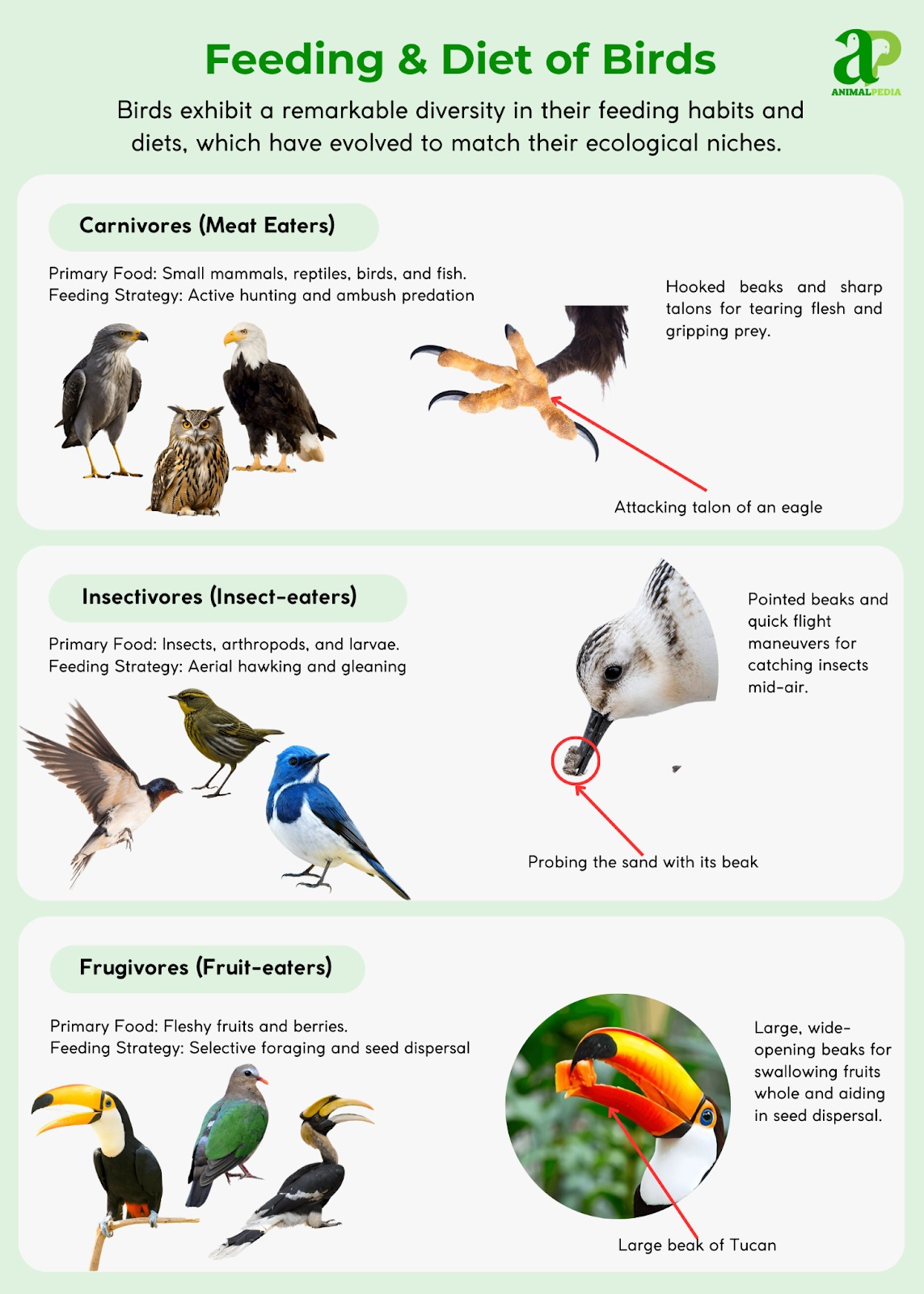
Birds that migrate often have specific dietary needs. Their food choices help them stay strong and healthy during long flights. Understanding these preferences shows how birds adapt to different environments. Many birds change what they eat as they move from place to place. This change is important for their survival and energy.
Common Diets
Many migrating birds eat a variety of foods. Seeds, fruits, and insects are common in their diets. Some birds prefer nectar from flowers. Others hunt small fish or amphibians. The type of food depends on the bird species and its habitat. For example:
- Songbirds often eat insects and berries.
- Waterfowl feed on aquatic plants and small fish.
- Raptors hunt rodents and other small animals.
These diets provide the needed energy and nutrients for flight and rest stops.
Diet Changes During Migration
Many birds adjust their diets during migration. They eat more high-energy foods like berries and insects. This shift helps them build fat reserves. Fat is a key energy source for long flights. Some birds switch from eating insects to fruits as insects become scarce. Others may feed on agricultural crops near stopover sites. These changes allow birds to adapt quickly to new environments and food availability.
Surprising Migration Facts
Bird migration holds many surprises. Birds travel thousands of miles to find better habitats and food. Their journeys are full of unexpected twists and amazing endurance. Discover some surprising facts about their migration routes and record-breaking trips.
Unexpected Migratory Routes
Birds often take unusual paths during migration. Some species avoid direct routes to escape bad weather. Others follow coastlines or mountain ranges for safety and food. These routes may cross deserts, oceans, or large cities.
For example, the Arctic Tern flies from the North Pole to the South Pole. It travels over 25,000 miles, using a zigzag path. This helps it find food and rest along the way.
Record-breaking Journeys
Some birds hold incredible migration records. The Bar-tailed Godwit makes the longest nonstop flight. It flies about 7,000 miles without stopping. This journey lasts up to 11 days over the ocean.
The Ruby-throated Hummingbird crosses the Gulf of Mexico. It flies 500 miles nonstop, powered by its tiny wings. These birds show amazing stamina and navigation skills.
Credit: animal-pedia.org
Challenges Facing Migratory Birds
Migratory birds face many challenges during their long journeys. These obstacles affect their survival and ability to find food and shelter. Understanding these challenges helps us protect these birds better.
Climate Change Impact
Climate change alters weather patterns and seasons. Birds may arrive too early or late for food sources. This mismatch affects their energy and breeding success. Changing temperatures also force birds to fly longer distances. Storms and extreme weather increase risks during migration.
Habitat Loss
Many migratory birds rely on stopover sites to rest and eat. Urban growth and farming reduce these crucial habitats. Wetlands, forests, and grasslands disappear or shrink. Without safe places to stop, birds face exhaustion and starvation. Protecting habitats is essential for their survival.
Conservation Efforts
Conservation efforts are vital to protect migratory birds and their habitats. These birds travel thousands of miles and face many dangers along the way. Protecting their habitats and food sources helps ensure their survival. Many groups and governments work hard to create safe environments for these birds.
Protective Measures
Many protected areas have been created for migratory birds. These include bird sanctuaries and wildlife reserves. Laws limit hunting and habitat destruction in these areas. Restoring wetlands and forests also supports bird populations. Monitoring bird numbers helps track changes and threats. Using safe pesticides reduces harm to birds and their food.
Community Involvement
Local communities play a big role in bird conservation. People can help by planting native trees and shrubs. Feeding stations provide safe food during migration. Schools and groups organize bird-watching and clean-up events. Awareness programs teach the importance of protecting birds. Volunteers help collect data and report bird sightings. These actions build respect and care for migratory birds.

Credit: www.wildlifenomads.com
Frequently Asked Questions
What Types Of Birds Migrate Seasonally?
Many songbirds, waterfowl, and shorebirds migrate to find food and breeding grounds. Examples include swallows, geese, and sandpipers.
Why Do Birds Change Their Habitat During Migration?
Birds migrate to access better food, warmer climates, and safe nesting sites. Seasonal changes reduce available resources in their original habitat.
How Does Diet Affect Bird Migration Patterns?
Birds with diets dependent on insects or fruit migrate to follow food availability. Omnivorous birds adapt their routes based on seasonal food sources.
Which Bird Species Have Long Migration Routes?
Arctic terns and bar-tailed godwits have some of the longest migration routes, traveling thousands of miles annually to breed and feed.
Conclusion
Birds migrate to find better food and safer homes. Many species change their diet with the seasons. Some eat insects in summer and seeds in winter. Others move to warmer places to survive cold weather. Migration helps birds stay healthy and strong.
Watching these changes reveals nature’s careful balance. Understanding bird habits can inspire us to protect their homes. Migration shows how animals adapt to survive. It’s a natural journey full of challenges and hope.