
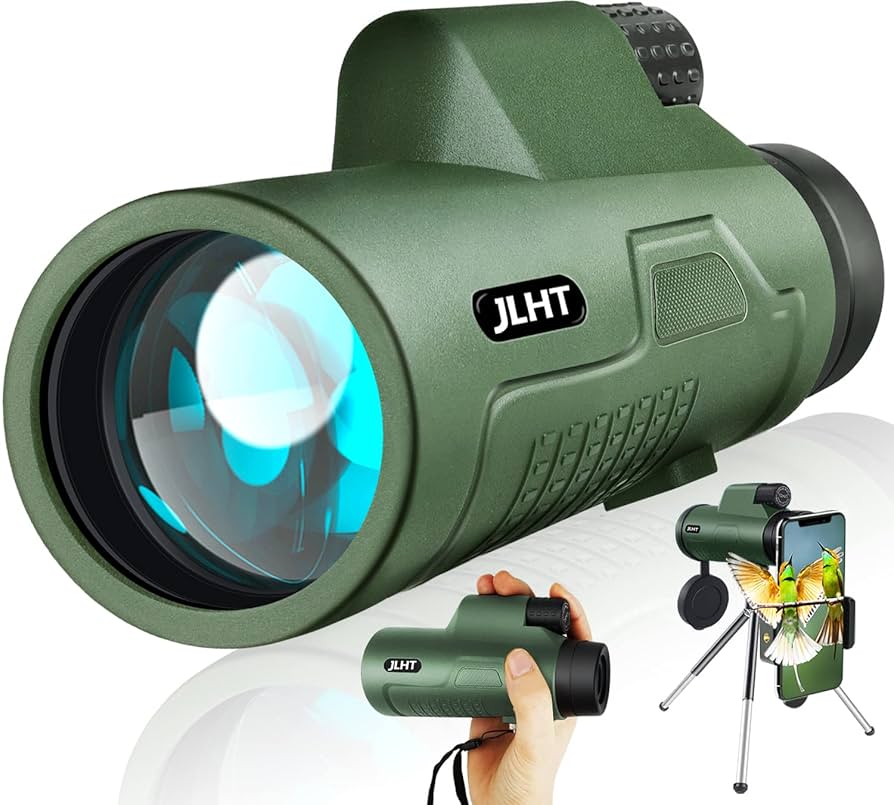
Are you passionate about bird watching and want to get closer to nature without disturbing the birds? Choosing the right monocular can make all the difference in your experience.
But with so many options available, how do you know what power of monocular is best for bird watching? This guide will help you understand exactly what to look for, so you can enjoy clear, sharp views every time you spot a feathered friend.
Keep reading to discover the perfect monocular power that fits your bird watching needs and enhances your outdoor adventures.
Monocular Basics
Bird watching is a serene hobby that requires the right tools to fully enjoy the experience. Among these tools, a monocular stands out for its compact size and ease of use. Understanding monocular basics is essential to choosing the right one for your bird watching adventures.
How Monoculars Work
A monocular is essentially a mini telescope that you hold in your hand. It uses a series of lenses and prisms to magnify distant objects, bringing them into clear view. Unlike binoculars, monoculars allow for one-eyed viewing, making them lighter and more portable.
Have you ever tried spotting a bird high up in a tree? With a monocular, you can easily zoom in and observe the intricate details of its feathers and colors. The simplicity of a monocular means less fussing with adjustments, allowing you to focus on the beauty before you.
Key Features To Consider
When selecting a monocular for bird watching, several features are crucial. Magnification power is a primary consideration; generally, a power between 8x to 10x offers a good balance of detail and stability. Higher magnifications might cause shakiness, affecting the clarity of the view.
Objective lens diameter is another vital feature. A larger lens, such as 42mm, allows more light, providing brighter and clearer images. Consider the field of view as well; a wider field of view makes it easier to track birds in motion.
Don’t forget about the weight and size, especially if you plan on long bird watching sessions. A lightweight and compact monocular will be more comfortable to carry around. Waterproof and fog-proof features are also beneficial for outdoor use in varying weather conditions.
What features do you find most important in a monocular? Reflect on these aspects to ensure your bird watching experience is as enjoyable as possible.
Ideal Power For Bird Watching
Choosing the ideal power for your monocular can transform your bird watching experience. The right magnification helps you see fine details without losing clarity or stability. It’s about finding a balance that suits your specific needs and environment.
Common Magnification Ranges
Most bird watchers prefer monoculars with magnification between 6x and 10x. This range provides enough zoom to spot birds clearly without making the image shaky or hard to hold steady.
- 6x to 8x:Offers a wider field of view and easier handling. Great for beginners or those watching fast-moving birds.
- 8x to 10x:Provides more detail, especially for distant birds. Ideal if you want to study plumage or behavior closely.
- Above 10x:Can be powerful but often harder to stabilize and may require a tripod. Best for stationary observation.
Have you ever struggled to keep a high-magnification monocular steady? That’s why understanding these ranges helps you choose what fits your style.
Balancing Magnification And Clarity
Higher magnification doesn’t always mean better viewing. As you increase zoom, the image can become darker and blurrier if the lens quality isn’t up to par.
Clarity depends on factors like lens size, coating, and overall build quality. A 10x monocular with poor optics will disappoint more than a sharp 8x model.
Ask yourself: Are you willing to carry extra gear like a tripod for higher magnifications? Or do you need something lightweight and quick to use? Your answer will guide the perfect balance between power and clarity.
Factors Influencing Power Choice
Choosing the right power for your monocular depends on several practical factors that affect your bird watching experience. It’s not just about picking the highest magnification; you need to balance clarity, ease of use, and your specific birding conditions. Understanding these influences helps you get the most from your equipment and enjoy every sighting.
Distance And Environment
How far away are the birds you want to observe? If you mostly watch birds in your backyard or local park, a lower power monocular (around 6x to 8x) often works best. It provides a wider field of view and sharp images without much shaking.
On the other hand, if you’re spotting birds in open fields or wetlands where subjects are far away, higher power (10x or more) can bring distant birds closer. But remember, higher power narrows your view and makes it harder to track moving birds.
Consider the lighting and weather too. Bright, clear days make higher magnifications easier to handle. In dim light or foggy conditions, lower power gives a brighter, clearer image.
Portability And Weight
If you like hiking to reach your birding spots, your monocular’s weight matters a lot. A lightweight monocular around 6x to 8x power is easier to carry for hours. You won’t get tired holding it steady, and it fits nicely in your pocket or small bag.
Higher power monoculars often weigh more and can be bulkier. Think about how much gear you want to carry and whether you’ll use a tripod to support heavier equipment. If your trips are short or you mostly birdwatch near your home, weight might be less important.
Stability And Image Shake
Higher magnification amplifies any hand shake, making the image jittery and harder to focus on. Have you ever tried holding a zoomed-in camera steady without a tripod? Monoculars are the same.
Lower power monoculars offer a steadier image when held by hand, especially if you’re standing or moving. If you want to use high power, consider bringing a tripod or monopod for stability.
Some monoculars come with image stabilization features, but these tend to be pricier. Think about how steady you can hold your monocular during your usual birdwatching sessions before choosing a higher power.

Credit: www.amazon.ca
Comparing Different Powers
Choosing the right power for a monocular affects your bird watching experience greatly. Different powers bring different benefits and drawbacks. Understanding these helps pick a monocular that fits your needs. The power of a monocular is the level of zoom it offers. Let’s explore how low, medium, and high powers compare for bird watching.
Low Power Monoculars
Low power monoculars typically offer 6x to 8x magnification. They show a wider field of view. This makes it easier to spot birds quickly. Images are usually brighter and clearer. Low power monoculars are lighter and easier to carry. They work well for beginners or casual bird watchers. However, details on distant birds may be less sharp.
Medium Power Monoculars
Medium power monoculars range from 8x to 12x magnification. They balance zoom and image stability well. Birds appear larger without losing too much field of view. These monoculars still offer good brightness and detail. They are a popular choice for most bird watchers. Medium power helps observe birds in moderate distances clearly. Carrying comfort remains reasonable.
High Power Monoculars
High power monoculars provide 15x magnification or higher. They bring distant birds very close. Fine details like feathers and colors become visible. The field of view narrows, making it harder to find birds quickly. Image brightness and stability may decrease. High power monoculars are best for experienced users. They work well in open areas with steady hands or tripods.
Additional Features For Bird Watching
Choosing the right power for your monocular is just the beginning. To truly enjoy bird watching, you need to pay attention to additional features that enhance your viewing experience. These features can make a big difference when you’re trying to spot a bird in dense foliage or low light.
Lens Quality And Coating
High-quality lenses improve clarity and sharpness, which are crucial for identifying birds accurately. Look for monoculars with multi-coated lenses; these coatings reduce glare and increase light transmission. This means brighter, clearer images even during dawn or dusk when birds are most active.
I once used a monocular without proper coatings and struggled with reflections that blurred the bird’s details. Investing in good lens coatings changed that instantly, making every feather visible.
Field Of View
A wide field of view lets you scan larger areas without moving your monocular constantly. This is especially useful when birds are quick or unpredictable. Typically, a wider field of view comes with lower magnification, so find a balance that works for your style.
Ask yourself: do you prefer to spot birds from a distance, or do you enjoy tracking their movements closely? Your answer will guide the ideal field of view for your monocular.
Waterproof And Fogproof Options
Bird watching often happens outdoors in varying weather conditions. Waterproof and fogproof monoculars protect your device from rain and moisture, keeping your view clear. Nitrogen or argon purging inside the monocular prevents internal fogging during temperature changes.
On a misty morning, I noticed how waterproof features kept my monocular functional while others struggled. It’s a feature that ensures your equipment is ready whenever you are.

Credit: www.reddit.com
Tips For Choosing The Right Monocular
Choosing the right monocular for bird watching can dramatically improve your experience. The power of the monocular affects how clearly and closely you see birds in their natural habitat. But picking the perfect one involves more than just zoom levels—it’s about comfort, clarity, and usability in the field.
Testing Before Buying
Never rely solely on specs when selecting a monocular. Try holding and looking through different models to see which feels natural in your hand and eye. Pay attention to how easy it is to focus quickly—birds don’t wait around!
Check the clarity and brightness of the image in various lighting conditions. A model that works well in bright daylight might struggle at dawn or dusk, when many birds are most active. If possible, test the monocular outdoors to mimic real bird watching situations.
Budget Considerations
Your budget defines the range of options but shouldn’t limit the quality you need. Higher-powered monoculars often come with better lenses and coatings that improve image sharpness and reduce glare. However, mid-range models can still offer excellent performance for casual bird watchers.
Consider how often you’ll use the monocular. If bird watching is a hobby you want to grow into, investing a bit more upfront can save money later on upgrades. On the other hand, if you’re just starting out, a budget-friendly option with decent optics might be the smarter choice.
User Reviews And Recommendations
Reading user reviews gives you real-world insights that product descriptions miss. Look for comments about durability, ease of use, and how well the monocular performs in different weather conditions. Pay special attention to reviews from fellow bird watchers—they know what matters most.
Ask yourself: do the positive reviews mention features that match your bird watching style? Sometimes a highly rated monocular might not suit your specific needs, like compactness for travel or wide field of view for scanning large flocks. Use reviews to narrow your choices, not just to confirm a purchase.

Credit: www.amazon.ca
Frequently Asked Questions
What Is The Ideal Monocular Power For Bird Watching?
The ideal monocular power for bird watching is 8x to 10x. This range offers a clear and stable view. It balances magnification and image steadiness, helping you spot birds without excessive shaking or blurry images.
Why Not Use Higher Power Monoculars For Bird Watching?
Higher power monoculars, like 15x or more, magnify shakiness. This makes it harder to keep birds in view. They also have narrower fields of view, which can make locating birds more difficult during observation.
How Does Monocular Power Affect Field Of View?
Lower power monoculars provide a wider field of view. This helps bird watchers quickly scan areas for birds. Higher power reduces field of view, limiting how much you can see at once, making it harder to track moving birds.
Can A 12x Monocular Work Well For Bird Watching?
A 12x monocular can work but may be less stable. It offers more detail but requires a steady hand or tripod. Beginners often prefer 8x-10x for easier use and balanced clarity.
Conclusion
Choosing the right monocular power helps you see birds clearly. A 8x or 10x zoom works well for most bird watchers. These powers balance detail and ease of use. Higher powers may cause shaky images and narrow views. Keep your needs and comfort in mind while choosing.
Enjoy watching birds with a monocular that fits you best. Happy bird watching!