
Have you ever wondered what to feed birds to keep them healthy and happy? Choosing the right food for your feathered visitors can make all the difference.
Whether you want to attract colorful songbirds or help local wildlife through the seasons, knowing what to offer is key. You’ll discover simple and effective tips to feed birds the best way. Ready to learn how to make your backyard a bird paradise?
Let’s dive in!
Bird Dietary Needs
Birds need a balanced diet to stay healthy and active. Their dietary needs vary by species, age, and environment. Understanding these needs helps provide the right foods. Proper nutrition supports feathers, energy, and overall well-being. Offering suitable food encourages birds to visit your garden or feeder regularly.
Nutritional Requirements
Birds require proteins, fats, carbohydrates, vitamins, and minerals. Protein helps build muscles and repair tissues. Fats provide energy and aid in vitamin absorption. Carbohydrates give quick energy for daily activities. Vitamins and minerals support immune function and bone health. Water is essential for hydration and digestion. Feeding a mix of these nutrients keeps birds strong and healthy.
Common Bird Species Diets
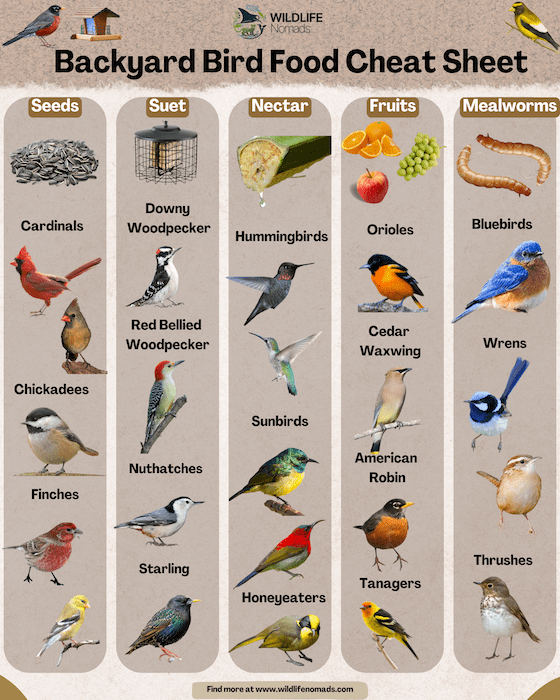
Different bird species prefer different foods. Seed-eating birds like finches and sparrows enjoy sunflower seeds and millet. Nectar-feeders such as hummingbirds need sugar water or flower nectar. Insect-eaters like robins eat worms, beetles, and caterpillars. Fruit-loving birds prefer berries and soft fruits. Providing varied food attracts a wider range of birds to your feeder.
Seasonal Feeding Changes
Bird dietary needs change with the seasons. In spring and summer, insects and fresh fruits are abundant and preferred. During fall and winter, seeds and nuts become important for energy and warmth. Cold weather increases birds’ energy needs, so offer high-fat foods like suet. Adjusting food types helps birds survive seasonal challenges and thrive year-round.

Credit: www.wildlifenomads.com
Safe Bird Foods
Knowing what foods are safe for birds is key to attracting them to your garden and keeping them healthy. Birds have different dietary needs, and feeding them the right foods helps them thrive. Let’s look at some safe options you can offer.
Seeds And Grains
Seeds are a favorite for many bird species. Black oil sunflower seeds are especially popular because they have thin shells that are easy to crack.
Other good choices include millet, safflower, and cracked corn. Avoid seeds with added salt or flavoring, as these can harm birds.
Have you noticed which seeds your backyard birds prefer? Offering a variety lets you observe their favorites and helps support different species.
Fruits And Vegetables
Fresh fruits and vegetables provide essential vitamins and hydration. Apples (without seeds), berries, and melon pieces are great treats.
Vegetables like peas, corn, and chopped carrots are also safe and nutritious. Avoid avocado and onion, which can be toxic to birds.
Try placing small fruit pieces on a platform feeder to see if you can attract species that enjoy sweet snacks. What new visitors might you spot?
Nuts And Proteins
Nuts offer healthy fats and energy, but they should be unsalted and given in moderation. Peanuts (unsalted and shelled) and almonds are good options.
Birds also need protein, especially during breeding season. Mealworms, boiled eggs, and small amounts of cooked chicken work well.
Have you ever tried offering live or dried mealworms? Many insect-eating birds find them irresistible and it’s a great way to provide natural protein.
Foods To Avoid
Feeding birds can be a joyful experience, but it’s crucial to know which foods to keep away from them. Certain items can cause serious health issues or even be fatal. Avoiding these foods protects your feathered friends and keeps your feeding routine safe and enjoyable.
Toxic Foods For Birds
Many common foods you might think are safe can actually be toxic to birds. Avoid giving birds:
- Chocolate– Contains theobromine, which is poisonous to birds.
- Avocado– Persin in avocado can cause heart damage and respiratory issues.
- Onions and garlic– These can damage red blood cells leading to anemia.
- Alcohol– Even small amounts can cause severe intoxication and death.
I once saw a friend unknowingly feed bread with onion seasoning to wild birds. The birds became lethargic and stopped visiting the feeder. It’s a clear reminder to double-check every ingredient before sharing food with birds.
Processed Human Foods
Processed snacks and fast foods are loaded with salt, sugar, and artificial additives that harm birds. Items like chips, cookies, and salted nuts can cause dehydration and organ damage.
While it’s tempting to share your snacks, birds don’t process these ingredients like humans do. Instead, stick to plain, natural foods that mimic their natural diet.
- Avoid salty foods that can disturb their electrolyte balance.
- Skip sugary treats that may lead to obesity and diabetes in birds.
- Don’t offer processed meats or deli products containing preservatives and spices.
Harmful Plants And Substances
Some plants and garden chemicals pose hidden dangers to birds. Avoid feeding birds seeds or berries from toxic plants such as:
- Oleander
- Rhododendron
- Foxglove
Additionally, pesticides and herbicides used in gardens can contaminate bird food and water sources. Have you ever considered how a simple garden spray could affect your local birds? Protecting their environment is just as important as choosing safe foods.
Always wash any fruits or vegetables you feed to birds to remove any chemical residues. Your attention to these details can make a significant difference in the health of your backyard visitors.

Credit: www.amazon.com
Feeding Techniques
Feeding birds effectively requires more than just putting food outside. The way you offer food can attract a variety of birds and keep them coming back. Paying attention to feeding techniques enhances the experience for both you and your feathered visitors.
Choosing The Right Feeder
Select feeders based on the type of birds you want to attract. Tube feeders work well for small songbirds like finches, while platform feeders suit larger birds such as cardinals and jays.
Consider the feeder’s material and ease of cleaning. Plastic feeders are lightweight but may wear out faster, while metal feeders last longer but can be heavier to handle.
Think about the feeder’s placement too. Hanging feeders near shrubs can provide birds with quick shelter from predators.
Feeding Frequency And Portions
Offer food consistently to build trust with your birds. Many bird lovers feed once or twice daily, adjusting the amount based on the number of visitors you see.
Avoid overfeeding by providing just enough food to be eaten within a day. Excess food can attract pests and spoil quickly, which may harm the birds.
Watch how the birds respond. If food disappears quickly, increase portions slightly. If leftovers remain, reduce the amount next time.
Maintaining Clean Feeding Areas
Clean feeders regularly to prevent mold and disease. A quick rinse with warm, soapy water every two weeks can keep your feeder safe for birds.
Clear spilled seeds and droppings from the ground to avoid attracting unwanted animals. Using a tray under the feeder can help contain messes and make cleanup easier.
Have you noticed how birds avoid feeders that look dirty or have spoiled food? Keeping feeding spots clean encourages repeat visits and healthier birds.
Special Diets
Special diets are important for certain birds that need extra care. These diets help birds grow, heal, and stay healthy. Regular bird food may not meet all their needs. Understanding what to feed these birds ensures their survival and well-being.
Feeding Baby Birds
Baby birds require soft, easy-to-digest foods. Their diet mainly consists of insects and soft fruits. Avoid hard seeds or dry foods that can harm their delicate throats.
- Offer finely chopped insects like mealworms or crickets.
- Use mashed fruits such as bananas or berries.
- Provide small amounts frequently, as they eat often.
Warmth and moisture in food are crucial for baby birds. Feeding them with a syringe or dropper helps control portions.
Diet For Injured Or Sick Birds
Injured or sick birds need a gentle, nutritious diet to recover. High-protein foods support healing and energy. Soft foods reduce stress on the bird’s body.
- Offer boiled eggs or cooked lean meat in small pieces.
- Include soaked seeds or softened pellets for easier eating.
- Fresh water must always be available.
Consult a wildlife expert for specific care and feeding guidelines.
Supplementing Wild Bird Diets
Wild birds benefit from additional food during harsh seasons. Supplementing helps them find energy and nutrients. Focus on natural, easy-to-digest options.
- Provide unsalted nuts and seeds like sunflower or safflower.
- Offer fresh fruits such as apples and oranges in small pieces.
- Use suet or fat balls in cold weather for extra calories.
Keep feeding areas clean to prevent disease spread among wild birds.

Credit: www.reddit.com
Attracting Birds Safely
Attracting birds to your garden or balcony can be a joyful experience, but it’s essential to do it safely. Providing the right food and environment ensures that birds visit regularly without facing harm. How can you create a space that welcomes birds while protecting their wellbeing?
Creating A Bird-friendly Environment
Start by offering shelter and water along with food. Plant native trees and shrubs to give birds places to hide and rest. A clean water source like a birdbath encourages visits and helps birds stay hydrated.
Keep feeders clean to prevent disease. Regularly wash them with hot soapy water and rinse well. Also, place feeders where you can easily watch but away from windows to avoid collisions.
Using Natural Food Sources
Natural foods are the safest and most nutritious for birds. Instead of just buying seed mixes, try growing plants that produce berries, seeds, or nectar. Sunflowers, coneflowers, and native grasses attract many species.
Consider adding mealworms or fruit slices for variety. These provide protein and vitamins birds need, especially during breeding or migration. Have you noticed which foods your local birds prefer?
Avoiding Predators And Risks
Place feeders in open areas where cats and other predators can’t hide. Avoid hanging feeders too low or near dense shrubs where predators lurk. Using baffles on poles helps keep squirrels and larger animals away.
Watch out for harmful foods like bread or salty snacks that people often offer. These can cause malnutrition or illness. Instead, stick to bird-safe options and monitor your feeding stations regularly for signs of trouble.
Frequently Asked Questions
What Are The Best Seeds To Feed Wild Birds?
Black oil sunflower seeds are ideal for most wild birds. They have a thin shell and high oil content. These seeds attract many species, including finches, cardinals, and chickadees. Avoid salted or flavored seeds to keep birds healthy.
Can Birds Eat Bread Or Processed Foods?
No, bread and processed foods lack nutrients birds need. Feeding bread can cause malnutrition and digestive issues. Instead, offer natural foods like seeds, nuts, fruits, and insects. This supports birds’ health and natural diet.
How Often Should I Feed Backyard Birds?
Feed birds daily, especially during winter or migration. Consistent feeding helps birds build energy reserves. Clean feeders regularly to prevent disease. Adjust amounts based on bird activity and weather conditions.
Are Homemade Bird Food Mixes Safe For Birds?
Yes, homemade mixes with seeds, nuts, and dried fruits are safe. Avoid adding salt, sugar, or artificial ingredients. Tailor mixes to local bird species for best results. Homemade food can supplement natural diets effectively.
Conclusion
Feeding birds helps them stay healthy and happy. Choose seeds, fruits, and nuts they enjoy. Avoid giving harmful or processed foods. Keep feeders clean to stop diseases. Watching birds eat brings joy and peace. Small efforts make a big difference for wildlife.
Start feeding birds today and enjoy nature close by.