

Have you ever noticed a mother robin leave her nest, only to see a second bird swoop in and watch over the eggs? It’s a curious moment that sparks questions about nature’s hidden patterns.
What does this behavior mean? And why does the second bird take such an interest? If you want to understand the secrets behind this fascinating scene, keep reading. You’ll discover surprising facts that change the way you see birds and their world.

Credit: www.reddit.com
Robin Nesting Habits
Robins are fascinating birds, especially when you observe their nesting habits closely. Their behavior around the nest reveals a lot about their survival strategies and family dynamics. Watching a mother robin leave the nest only to be replaced by a second bird shows how these creatures manage care and protection of their young.
Typical Nesting Behavior
Robins usually build their nests in sheltered spots, often in trees or shrubs near human habitats. The female collects soft materials like grass, feathers, and mud to create a sturdy cup-shaped nest. This careful construction ensures the eggs stay safe and warm.
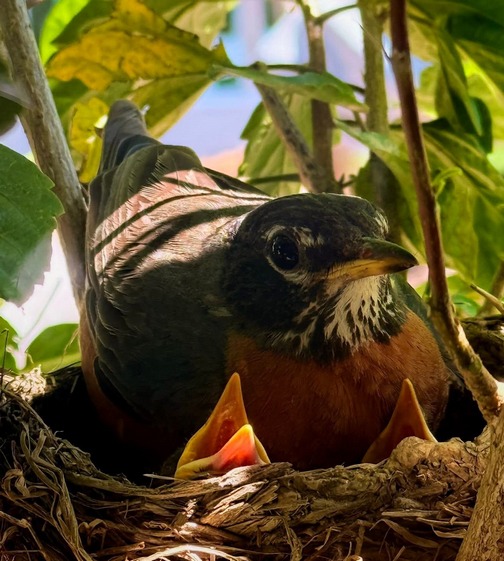
Once the eggs hatch, the mother robin spends most of her time feeding the chicks. Interestingly, when she leaves the nest, another bird—often the male or a helper—may take her place to watch over the young. Have you ever noticed how this teamwork increases the chicks’ chances of survival?
Role Of Parental Care
Parental care in robins is a shared effort. Both parents participate in feeding and protecting the chicks. The father often brings food while the mother keeps the chicks warm and clean.
This cooperation doesn’t just stop at feeding. When the mother leaves the nest, the other bird acts as a sentinel, watching for predators and alerting the family to danger. This division of labor helps keep the nest safe and the chicks healthy.
Next time you see a robin’s nest, pay attention to who is watching and caring for the young. It might surprise you how involved both parents are in this delicate process.

Credit: www.reddit.com
Second Bird Appearance
Observing the moment when the mother robin leaves the nest, you might notice a surprising visitor appearing soon after. This second bird often shows up quietly, watching the nest with curiosity and caution. Understanding who this visitor is and why it appears can deepen your appreciation of nature’s subtle interactions.
Species Of Second Bird
The second bird is often a different species, commonly a curious neighbor or a potential predator. Species such as sparrows, blue jays, or even starlings are frequent visitors. These birds may be attracted by the activity around the nest or are checking for opportunities to claim the nest or scavenge leftover food.
Sometimes, the second bird is a juvenile robin from a nearby nest, learning about territory and safety. You might be surprised to find a tiny wren or titmouse keeping a close watch. Knowing which species appear helps you understand local bird behavior and ecosystem balance.
Frequency Of Visits
How often the second bird visits varies widely. Some return daily, while others might just peek once or twice during the nesting period. Their visits usually coincide with the mother robin’s absences, showing a strategic sense of timing.
These visits can last from a few seconds to several minutes, depending on the bird’s intent and comfort level. Have you ever noticed a bird watching a nest for an unusually long time? This behavior might indicate territorial disputes or scouting for future nesting spots.
Behavioral Interpretations
Observing a mother robin leave her nest and another bird taking her place can spark curiosity about what drives such behavior. These moments offer a glimpse into the complex social interactions and survival strategies birds use. Understanding these behaviors can deepen your appreciation for nature’s subtle dynamics and may even help you interpret similar situations in your backyard.
Guarding Or Competition
When the mother robin steps away, the second bird often appears to watch over the nest. This action can be seen as a form of guarding, protecting the eggs or fledglings from potential threats. However, it might also signal competition, where the newcomer is assessing the nest as a possible new home or trying to take over.
Have you noticed if the second bird shows signs of aggression or calm observation? Aggressive posturing usually points toward competition, while a more relaxed stance could indicate a protective role. Understanding these subtle cues helps you read the bird’s intentions more accurately.
Symbiotic Relationships
Sometimes, the presence of the second bird near the nest suggests a symbiotic relationship rather than conflict. Birds occasionally form partnerships to share the burden of nest protection or to keep watch for predators together. This teamwork increases the chances of survival for their young.
Think about your own experiences with teamwork—how sharing responsibilities often leads to better outcomes. In nature, this cooperation is no different. Watching these interactions can inspire you to recognize the value of collaboration in your daily life.
Ecological Implications
Observing a mother robin leave her nest only to have another bird come and watch reveals intriguing ecological dynamics. These moments are more than just bird behavior; they reflect a complex web of interactions that affect both the robins and their surrounding environment. Understanding these ecological implications helps you appreciate the delicate balance in nature and how small actions ripple through ecosystems.
Impact On Robin Offspring
When the mother robin leaves the nest, her absence can temporarily increase the vulnerability of her chicks. The second bird watching the nest might be a rival or a potential predator, which adds pressure on the young robins to survive.
However, this interaction can also encourage the mother to return sooner or increase her vigilance. You might notice robins becoming more protective or feeding their young more frequently after such encounters. This behavior directly influences the growth and survival rate of the robin offspring.
Influence On Local Ecosystem
The presence of a second bird observing the robin nest highlights competition and territorial behavior common in many bird species. This interaction affects local biodiversity by influencing which species dominate certain areas.
These dynamics can shift the balance of insect populations, seed dispersal, and even plant growth, since robins and other birds play key roles in these processes. Have you ever considered how watching one bird’s behavior can reveal the health and changes in your local ecosystem?
- Bird competition affects insect control by changing which species are present.
- Territorial disputes can alter nesting site availability for multiple species.
- Changes in bird populations influence plant pollination and seed spreading.
Research And Observations
Scientists and bird watchers have studied the behavior of mother robins closely. Their research helps explain what happens after a mother robin leaves her nest. Observations show that a second bird often appears and watches the nest. This behavior raises many questions about robin social habits and survival strategies.
Studies and community reports give us a clearer picture. They reveal patterns and possible reasons behind the second bird’s presence. These findings deepen our understanding of robin life and nature’s complexity.
Scientific Studies
Researchers use cameras and field notes to track robin activity. They observe the timing of the mother robin’s departure and the arrival of the second bird. Some studies suggest the second bird might be a helper. Helpers assist in protecting the nest or feeding chicks. Others think the second bird could be a rival or a future mate. Experiments and data collection support these ideas. Scientists continue exploring to find definitive answers.
Community Reports
Many bird watchers share their sightings online or in local groups. They describe seeing a second robin near the nest after the mother leaves. Reports often mention the second bird’s quiet watching behavior. Some say the second bird stays for hours, while others note it leaves quickly. These accounts help confirm patterns found by scientists. They add real-world context and show how common this behavior is. Community observations are valuable for ongoing research.
Credit: dailyencouragement.wordpress.com
Broader Wildlife Patterns
Observing a mother robin leave the nest only to have a second bird arrive and watch reveals more than just a single behavior—it opens a window into broader wildlife patterns. Such actions often hint at complex social structures and survival strategies shared across species. These patterns can help you understand how animals communicate, protect, and learn from each other in the wild.
Similar Behaviors In Other Birds
Many bird species show a curious tendency to monitor nests, especially when the primary caregiver steps away. For example, blue jays sometimes take turns guarding the nest, ensuring constant protection against predators.
In some cases, other birds may even learn parenting skills by watching the nest activities of their peers. This suggests that your backyard birds might be engaging in a subtle form of education and cooperation, beyond simple survival.
Comparative Analysis With Other Species
Beyond birds, similar behaviors appear in mammals like meerkats and primates. Meerkats take turns standing guard while others forage, showing a shared instinct for group safety and vigilance.
This raises an interesting question for you: Could the second bird watching the nest be practicing for future parenting or protecting its territory? Observing these patterns encourages you to think about the complex social roles animals take on, often unseen at first glance.
Frequently Asked Questions
Why Does A Second Bird Watch When Mother Robin Leaves?
The second bird often acts as a sentinel or helper. It watches for predators and protects the nest during the mother’s absence. This behavior increases the chicks’ survival chances and ensures nest safety.
How Long Does A Mother Robin Stay At The Nest?
Mother robins typically stay at the nest for 12 to 14 days. She incubates the eggs and feeds the hatchlings until they are strong enough to leave. After this period, she leaves more often to find food.
What Role Does The Second Bird Play In The Nest?
The second bird helps guard the nest and alert the mother robin. Sometimes, it may assist in feeding or protecting the chicks. This cooperative behavior is beneficial for the survival of the young robins.
Is It Common For Other Birds To Watch Robin Nests?
Yes, it’s common for nearby birds to observe robin nests. They may be assessing territory or potential threats. However, the second bird watching is usually a mate or helper specifically involved in nest care.
Conclusion
The second bird watching the nest shows nature’s care and watchfulness. This behavior helps protect the eggs and young birds. It teaches us about teamwork and trust in the wild. Watching these moments reminds us how animals support each other.
Nature’s small actions hold big meanings. Keep observing and learning from these simple, beautiful scenes. They show life’s quiet strength and care.