

Have you ever wondered which birds can’t take to the skies? You might be surprised to learn that not all birds are built to fly.
Some species have adapted in fascinating ways, choosing to stay grounded instead. If you’re curious about these unique birds and what makes them different, this article will reveal their secrets. Keep reading to discover the species of birds that cannot fly—and why they thrive without ever leaving the ground.
Evolution Of Flightlessness
Flightlessness in birds is a fascinating result of evolution adapting to unique environments. Some bird species have lost the ability to fly over thousands or millions of years. This change often happens when flying no longer offers a survival advantage.
Imagine living on an island with no predators. Why waste energy on flying when walking or running is enough? This idea helps explain why some birds evolved to be flightless.
The Role Of Environment In Flightlessness
Islands often host flightless birds because they have fewer threats from predators. Without the need to escape quickly, these birds save energy by dropping flight muscles and shrinking wings.
The famous example is the kiwi from New Zealand, which evolved in isolation. It uses its strong legs to move around instead of wings for flight.
Energy Conservation And Flightlessness
Flying is energy-intensive. Birds that don’t need to escape predators or migrate can benefit by redirecting energy to other needs, like reproduction or growing stronger legs.
This shift can lead to smaller wings or heavier bodies, making flight impossible but allowing better adaptation to their environment.
Genetic Changes Behind Flightlessness
Flightlessness involves complex genetic changes affecting muscles, bones, and feathers. Some genes that control wing development become less active or mutate.
These genetic shifts happen gradually, showing how evolution tinkers with species over generations.
Examples Of Flightless Birds And Their Habitats
- Ostrich:Lives in African savannas, uses speed rather than flight to escape threats.
- Emu:Native to Australia, relies on running and camouflage.
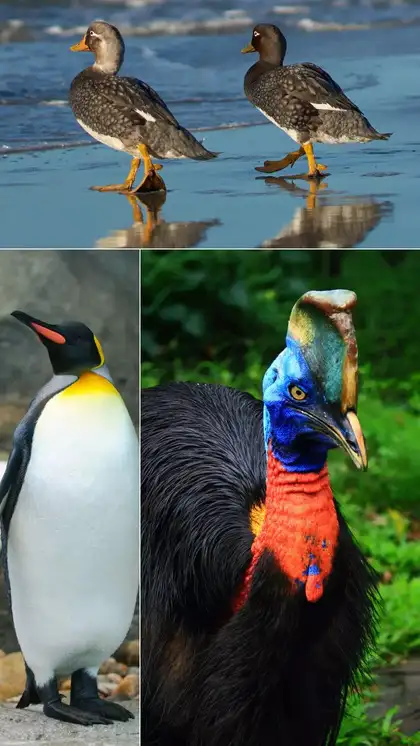
- Penguin:Lives in cold aquatic environments, evolved wings into flippers for swimming.
- Rhea:Found in South America’s open grasslands, uses powerful legs to run fast.
What would happen if your environment suddenly changed? Would your survival skills also need to evolve? Thinking about flightlessness helps you understand how closely life adapts to its surroundings.
Credit: m.economictimes.com
The Ostrich: A Giant On Land
The ostrich stands out as one of the most fascinating flightless birds on the planet. Towering over many animals, it holds the title of the largest living bird. Despite its inability to fly, the ostrich thrives in its natural habitat with unique adaptations that make it a giant on land.
The Ostrich’s Physical Characteristics
Ostriches can grow up to 9 feet tall and weigh as much as 320 pounds. Their powerful legs are built for speed, not flight. These legs help them run up to 45 miles per hour, making them the fastest two-legged runners in the animal kingdom.
Why Can’t Ostriches Fly?
Unlike flying birds, ostriches have small wings that are not strong enough to lift their heavy bodies. Their large size and muscle structure favor running over flying. Have you ever wondered how losing the ability to fly actually helped them survive?
Unique Adaptations For Survival
- Strong legs for running and defense
- Two toes per foot to increase speed and balance
- Excellent eyesight to spot predators from afar
- Large body size to intimidate threats
These traits make the ostrich well-equipped to handle predators and harsh environments.
Ostriches And Their Role In Ecosystems
Ostriches play a crucial part in their ecosystems by spreading seeds and providing prey for large carnivores. Their presence affects the balance of their habitats in ways you might not expect. What would happen if ostriches suddenly disappeared from these landscapes?
Penguins: Masters Of The Sea
Penguins are fascinating birds that cannot fly. Instead, they have adapted perfectly to life in the water. Their bodies are built for swimming, making them excellent divers and swimmers. These birds spend most of their time in the ocean, hunting for fish and avoiding predators.
Their wings have changed over time. Instead of wings for flying in the air, penguins have strong, flipper-like wings. These flippers help them move quickly and smoothly underwater. Penguins use their powerful muscles to “fly” through water with great speed and agility.
Penguins live mainly in cold regions, especially around Antarctica. Some species live in warmer places like the coasts of South America and Africa. Despite the differences in location, all penguins share similar traits that make them unique among birds.
Physical Adaptations For Swimming
- Strong, stiff flippers instead of flexible wings
- Streamlined bodies that reduce water resistance
- Dense bones for better diving control
- Waterproof feathers to keep them dry and warm
Diet And Hunting Techniques
- Feed mainly on fish, squid, and krill
- Dive deep to catch prey underwater
- Use sharp beaks to grab slippery fish
- Hunt in groups for better success
Unique Behaviors And Social Life
- Live in large colonies called rookeries
- Communicate with loud calls and body language
- Care for their young in nests made of rocks or burrows
- Take turns hunting and guarding eggs

Credit: medium.com
The Emu: Australia’s Iconic Bird
The Emu stands out as one of Australia’s most iconic birds. Despite being flightless, it has adapted impressively to life on the ground. Its unique features and behaviors make it a fascinating subject for anyone interested in bird species that cannot fly.
The Emu’s Physical Characteristics
The Emu is the second-largest bird in the world, only smaller than the ostrich. It has strong legs built for running, not flying. These legs allow it to sprint at speeds up to 30 miles per hour, helping it escape predators.
Its feathers are soft and brown, providing excellent camouflage in the Australian outback. Unlike flying birds, the Emu’s wings are small and not suitable for flight. This makes you wonder how evolution shaped such a powerful runner instead of a flyer.
How The Emu Survives Without Flight
Without the ability to fly, the Emu relies on its running skills to avoid danger. It also uses its sharp claws to defend itself when necessary. Their keen eyesight helps spot threats from far away, giving them extra time to flee.
Emus are omnivores, feeding on a wide variety of plants and insects. This diet supports their active lifestyle and long-distance travel in search of food. Have you ever thought about how much energy it takes for a bird this size to keep moving every day?
The Emu’s Role In Australian Culture
Emus hold a special place in Aboriginal stories and Australian culture. They appear in many traditional tales and art, symbolizing survival and adaptability. People often see the Emu as a reminder to respect nature’s unique designs.
Tourists visiting Australia are often excited to see Emus in the wild. Watching one run freely across the plains is an unforgettable experience. How might your perspective on flightless birds change after seeing an Emu in action?
Rheas: South America’s Runners
Rheas are large, flightless birds native to South America. They roam the open plains and grasslands with speed and grace. These birds cannot fly but have adapted to run fast to escape predators. Their long legs and strong muscles make them excellent runners. Rheas are important in their ecosystems and have unique behaviors worth exploring.
Physical Characteristics Of Rheas
Rheas have long necks and legs, similar to ostriches. They stand about 5 feet tall and weigh up to 50 kilograms. Their feathers are soft and gray or brown, blending with the grasslands. Their wings are small and not useful for flying. Instead, they use their wings for balance while running.
Habitat And Distribution
Rheas live mainly in Argentina, Brazil, Uruguay, and Paraguay. They prefer open areas like grasslands and savannas. These places provide plenty of food and space for running. Rheas avoid forests and mountains where running is harder.
Diet And Feeding Habits
Rheas eat plants, seeds, and fruits. They also consume insects and small animals occasionally. Their diet helps control insects and spread seeds. Rheas forage on the ground, often in groups.
Behavior And Social Structure
Rheas are social birds that live in groups called flocks. These flocks can have a few to over 20 birds. Males build nests and care for eggs from several females. This shared parenting helps protect the young.
Adaptations For Running
- Long, powerful legs for speed and endurance
- Light body weight for easy movement
- Strong muscles to support quick bursts of speed
- Wings used for balance and steering during fast runs
Kiwis: New Zealand’s Nocturnal Dwellers
The kiwi is one of New Zealand’s most unique birds, known for its inability to fly and its preference for nighttime activity. These small, fuzzy creatures have adapted to live in the dark, dense forests of New Zealand. Their nocturnal habits make them mysterious and fascinating, inviting curiosity about how they survive and thrive without flight.
Kiwis’ Physical Features That Prevent Flight
Kiwis have tiny wings that are hidden under their feathers, making flight impossible. Unlike other birds, their wing bones are weak and not built for flying. Instead, their strong legs are made for running and digging, helping them find food and escape predators on the ground.
Nocturnal Lifestyle And Behavior
These birds are active mainly at night, using their keen senses to hunt for insects, worms, and berries in the dark. Their long, sensitive beaks help them detect prey underground. Have you ever thought about how living in the dark shapes an animal’s habits and survival skills?
How Kiwis Influence New Zealand’s Culture
The kiwi is more than just a bird; it’s a national symbol of New Zealand and represents uniqueness and resilience. You’ll find kiwis featured in sports teams, company logos, and everyday conversation. Their image encourages people to appreciate nature’s wonders and protect endangered species.
Cassowaries: The Rainforest Guardians
Cassowaries are large, flightless birds found in the dense rainforests of Australia and New Guinea. Known for their striking appearance and powerful build, they play a vital role in their ecosystem. These birds help spread seeds, ensuring the growth of many rainforest plants.
Their strong legs allow them to run fast and move through thick underbrush. Cassowaries have a helmet-like casque on their heads, which helps them push through dense vegetation. They are shy but can be dangerous if threatened.
The Unique Physical Features Of Cassowaries
Cassowaries have vibrant blue and black feathers, making them easy to recognize. Their long, sharp claws can be deadly weapons. The casque on their head grows as they age and protects their skull. Their strong legs help them jump and run quickly.
The Role Of Cassowaries In Seed Dispersal
Cassowaries eat many types of fruits and plants in the rainforest. After eating, they carry seeds far from the parent plant. This helps new plants grow and keeps the forest healthy. Without cassowaries, many plants would struggle to spread.
Why Cassowaries Cannot Fly
Cassowaries have small wings hidden under their feathers. These wings are too weak to lift their heavy bodies. Instead, their strong legs support fast running and jumping. Flight is not needed in their dense forest home.
The Unique Nature Of Flightless Birds
Flightless birds offer a fascinating glimpse into the diversity of nature’s designs. Unlike their airborne relatives, these birds have adapted in ways that make flying unnecessary or impossible. Their unique traits challenge what you might expect about birds and how they survive in different environments.
The Evolution Behind Flightlessness
Flightless birds didn’t lose the ability to fly by accident. Over time, some species adapted to environments where flying provided little advantage. For example, island habitats with few predators allowed birds like the kiwi to thrive without flight.
This evolutionary path shows how survival depends on more than just flying. You might wonder how losing flight can sometimes be a benefit rather than a drawback.
Physical Adaptations Of Flightless Birds
These birds often have stronger legs and larger bodies compared to flying birds. The ostrich, for instance, uses its powerful legs to run fast and defend itself. Their wings tend to be smaller and less developed since they don’t need to support flight.
Such changes make you think about how form follows function in nature. What physical traits would you expect if you could design a bird that never needed to fly?
Behavioral Traits Unique To Flightless Birds
Flightless birds often rely on different survival strategies. Many are excellent runners or swimmers, like the penguin that uses its wings for swimming instead of flying. Their social and feeding behaviors also adapt to their grounded lifestyle.
These behaviors highlight that flightlessness doesn’t mean a bird is less capable. Instead, it shows how species find new ways to succeed in their habitats.
Impact Of Flightlessness On Bird Conservation
Flightless birds can be more vulnerable to threats such as predators introduced by humans. You may have heard how the introduction of rats or cats to islands has endangered species like the kakapo. Protecting these birds often requires special conservation efforts tailored to their unique needs.
Understanding their nature helps you appreciate why certain species need more help to survive. What can you do to support conservation efforts for these remarkable birds?
Conservation Challenges
Non-flying birds face unique conservation challenges that demand urgent attention. Their inability to escape predators or rapidly change habitats makes them vulnerable to environmental changes and human activities. Understanding these challenges helps you appreciate why protecting these species requires tailored strategies.
Habitat Loss And Fragmentation
Many flightless birds live in very specific habitats, such as dense forests or isolated islands. When these areas are cleared for farming or development, the birds lose their homes and food sources.
You might wonder why they can’t just move to a new area. Their limited mobility means they can’t easily relocate, making habitat destruction a direct threat to their survival.
Predation By Introduced Species
Flightless birds evolved without many predators, so they often lack natural defenses. When humans introduce animals like rats, cats, or dogs, these birds become easy targets.
Take the kakapo of New Zealand, a nocturnal parrot that can’t fly. It nearly went extinct after predators were introduced. This shows how quickly non-flying birds can be impacted by new threats.
Climate Change Impacts
Changes in temperature and rainfall patterns alter food availability and habitat conditions. Flightless birds have limited options to find new habitats or food sources when conditions worsen.
Have you considered how rising sea levels might affect island species like the flightless cormorant? Their restricted range leaves them with little room to adapt.
Conservation Efforts And Success Stories
Targeted conservation programs can make a difference. For example, removing invasive predators and protecting habitats has helped increase kakapo numbers.
Involving local communities in conservation creates lasting change. When people understand the challenges, they become active protectors of these vulnerable species.
The Role Of Flightless Birds In Ecosystems
Flightless birds often surprise people because they defy the common idea that all birds should fly. But these birds play essential roles in their ecosystems, contributing in ways that flying birds might not. Understanding their impact helps you appreciate the delicate balance of nature and how every creature fits into the bigger picture.
The Impact Of Flightless Birds On Seed Dispersal
Many flightless birds help spread seeds across large areas. Without the ability to fly, they walk through forests, grasslands, or wetlands, eating fruits and dropping seeds as they move. This behavior supports plant growth and biodiversity, which benefits the whole ecosystem.
Take the kiwi in New Zealand, for example. It carries seeds in its stomach and deposits them far from the parent plant. This process encourages forest regeneration and helps maintain healthy habitats.
Flightless Birds As Soil Aerators And Nutrient Recyclers
Some flightless birds dig into the soil to find food. This action aerates the ground, allowing air and water to reach plant roots more easily. Their droppings add nutrients back into the soil, promoting plant growth and sustaining other wildlife.
The cassowary, found in Australia and New Guinea, is a prime example. It turns over leaf litter and helps recycle nutrients, making the forest floor rich and fertile. Can you imagine how different the soil would be without these birds’ daily activities?
Predator-prey Dynamics Involving Flightless Birds
Flightless birds influence predator-prey relationships in unique ways. Their inability to fly means they rely on camouflage, speed on land, or group defense to survive. This creates a different set of challenges and adaptations compared to flying birds.
For instance, the ostrich uses its powerful legs to run fast and deliver strong kicks to predators. This interaction shapes the behavior of both the birds and their predators, keeping the ecosystem balanced.

Credit: www.pbs.org
Frequently Asked Questions
Which Bird Species Are Completely Flightless?
Flightless bird species include ostriches, emus, kiwis, cassowaries, and penguins. These birds have evolved to survive without flying.
Why Can’t Some Birds Fly?
Flightless birds lack the strong wing muscles or wing structure needed for flight. Evolution favored other survival traits instead.
Are All Penguins Unable To Fly?
Yes, all penguin species are flightless. They use their wings for swimming rather than flying in the air.
How Do Flightless Birds Protect Themselves?
Flightless birds rely on speed, camouflage, or strong legs to escape predators instead of flying away.
Conclusion
Flightless birds show how nature adapts in many ways. These birds use running, swimming, or camouflage to survive. They live in different places, from islands to forests. Understanding them helps us appreciate animal diversity better. Protecting their homes keeps these unique species safe.
Every bird has a special role in the world. Their stories remind us of nature’s amazing variety.