
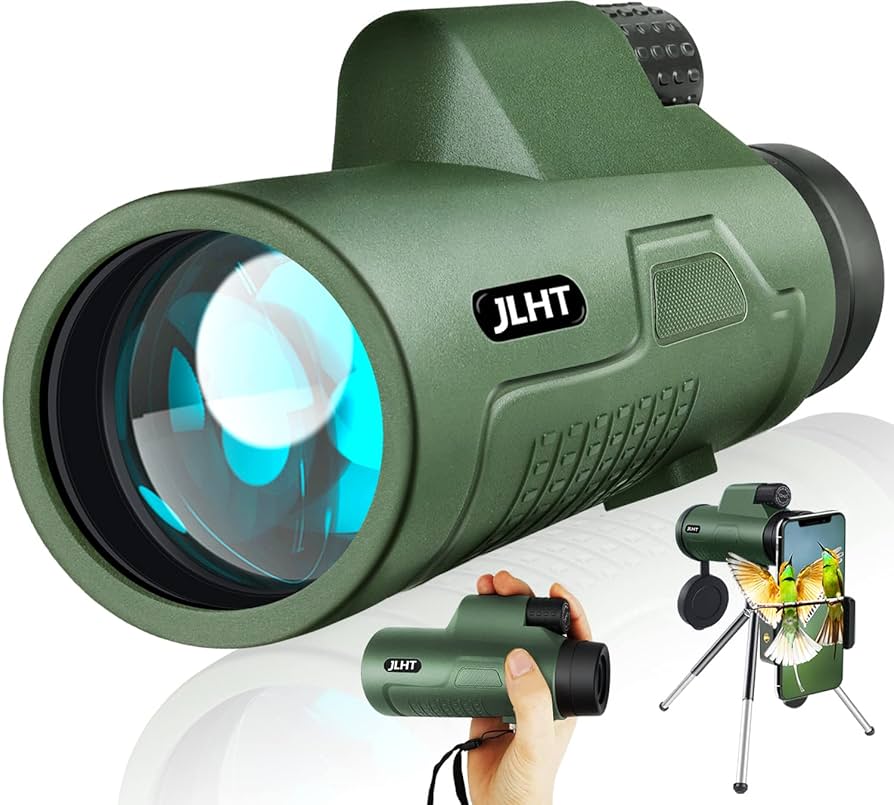
Are you passionate about bird watching and want to get closer to those beautiful creatures without disturbing them? Choosing the right gear can make all the difference in your experience.
You might be wondering if a monocular is a good option for bird watching. This simple, compact tool promises convenience, but does it deliver the clarity and detail you need? Keep reading to discover how a monocular stacks up against other optics and whether it could be the perfect companion for your next birding adventure.

Credit: www.amazon.ca
Benefits Of Using A Monocular
A monocular offers clear and close views of birds without heavy equipment. Its compact size makes it easy to carry during long walks. Ideal for quick spotting and detailed observation in nature.
When considering tools for bird watching, a monocular often emerges as a surprisingly effective option. Offering a unique blend of convenience and efficiency, monoculars are an excellent choice for both amateur and seasoned bird watchers. Their design and functionality provide distinct benefits that enhance your bird-watching experience.Portability And Compact Design
Monoculars are incredibly lightweight and compact, making them perfect for long hikes and adventurous treks. Unlike binoculars, they easily fit into your pocket or bag without adding unnecessary bulk. Imagine spotting a rare bird and quickly pulling out your monocular to capture the moment without hassle.Ease Of Use In The Field
Operating a monocular is straightforward, allowing you to focus on what truly matters—observing birds. With fewer components to adjust, you can quickly adapt to sudden movements or changes in scenery. This ease of use means less time fumbling with equipment and more time enjoying the vibrant colors and behaviors of the birds around you.Cost-effectiveness Compared To Binoculars
Monoculars often come at a fraction of the cost of high-quality binoculars, offering great value for those new to bird watching. Investing in a monocular lets you experience the joys of bird watching without breaking the bank. With the money saved, you could even consider upgrading your bird-watching gear or traveling to new bird habitats. Have you considered how a monocular might change your bird-watching adventures? Its lightweight design and ease of use might just be the game-changer you need.Key Features To Look For
Choosing the right monocular enhances your bird watching experience. Certain features make a monocular suitable for spotting birds clearly and comfortably. Focus on these key aspects to find a model that fits your needs.
Magnification Power
Magnification shows how close the bird appears. A 6x to 10x magnification is ideal for bird watching. Too high magnification can make images shaky and hard to focus. A balanced power helps you see details without losing stability.
Lens Quality And Coating
Clear lenses reveal sharp images and true colors. Look for lenses made from high-quality glass. Special coatings reduce glare and improve light transmission. This makes viewing bright and clear, even in low light.
Field Of View
The field of view means how wide an area you can see. A wider view helps you spot birds faster. It also makes tracking moving birds easier. Check the field of view in feet at 1000 yards or meters at 1000 meters.
Durability And Weather Resistance
Bird watching often happens outdoors in different weather. Choose a monocular that is waterproof and fog-proof. Rubber armor protects it from drops and bumps. A durable monocular lasts longer and performs well in nature.
Monocular Vs Binocular For Bird Watching
Choosing between a monocular and binoculars for bird watching can shape your entire experience. Each tool has unique features that affect how you see birds in their natural habitat. Understanding the differences helps you pick what fits your style and needs best.
Advantages Of Monoculars
Monoculars are compact and lightweight, making them easy to carry during long hikes or quick trips. Their single lens means less bulk, which is perfect if you want to travel light. You can quickly grab and use a monocular with one hand, allowing your other hand to hold a camera or a map.
They also tend to be less expensive than binoculars with similar magnification and clarity. Many bird watchers find monoculars useful for spotting birds at a distance before switching to binoculars for a detailed view. Have you ever struggled with bulky gear slowing you down? A monocular might solve that problem.
Advantages Of Binoculars
Binoculars provide a three-dimensional view, giving you depth perception that monoculars can’t match. This makes it easier to judge distance and track birds in motion. Using both eyes reduces eye strain during long viewing sessions, which is a big plus when you’re out all day.
They generally offer a wider field of view, so you can spot birds faster and follow them more smoothly. Binoculars often come with better image stabilization and more powerful zoom options. If you want to study bird behavior closely or identify small details, binoculars usually deliver a richer experience.
Situations Best Suited For Each
| Scenario | Monocular | Binoculars |
|---|---|---|
| Hiking or Backpacking | Lightweight and easy to carry | Heavier, but better for detailed viewing during breaks |
| Quick Spotting | Fast to grab and use with one eye | Good for scanning a wide area quickly |
| Long Observation Sessions | Can cause eye fatigue over time | Comfortable for extended use with both eyes |
| Budget | Generally more affordable | Often more expensive but offers higher quality optics |
Think about your typical bird watching trips. Are you often on the move, needing something light and quick? Or do you prefer to settle in one spot and watch for a long time? Your answer will guide you to the right choice between monocular and binocular.

Credit: www.amazon.ca
How To Choose The Right Monocular
Choosing the right monocular is key to enjoying bird watching. It affects how clearly you see birds and how easy it is to carry the device. Picking one that fits your needs improves your overall experience and satisfaction.
Focus on features that match your bird watching style and environment. Consider size, weight, magnification, and clarity. These factors shape how well you observe birds in different settings.
Assessing Your Bird Watching Needs
Think about where and how often you watch birds. Different environments require different features. For forest birding, lighter and smaller monoculars work best. Open areas might need higher magnification for distant views.
Consider how long you watch birds at a time. Comfortable grip and ease of use matter for longer trips. Also, check if you prefer daytime or low-light viewing to choose proper lens quality.
Budget Considerations
Monoculars come in many price ranges. Set a budget that balances quality and cost. High-end models offer better optics but may not be necessary for casual watchers.
Look for brands known for durability and clear images within your price. Avoid very cheap options that might break easily or blur your view. Investing wisely ensures a good experience without overspending.
Testing And Handling Tips
Try holding different monoculars before buying. Check if they fit comfortably in your hand. A good grip helps steady your view and reduces shaking.
Look through the lens at various distances. Ensure the image is sharp and clear. Adjust the focus wheel to test smoothness and ease.
Consider weight and size for carrying convenience. Lightweight models are easier to carry on long walks. Also, check if the monocular is waterproof or fog-proof for outdoor use.
Top Monocular Models For Bird Watching
Choosing the right monocular enhances every bird watching trip. Different models offer various features to suit your needs. Some are compact and light, perfect for travel. Others provide powerful zoom and sharp images for detailed views.
Below are top monocular models divided by price and experience level. This guide helps find one that fits your budget and skills.
High-end Options
- Leica Monovid 8×20 – Clear optics, very durable, compact design.
- Swarovski CL Pocket 8×25 – Bright image, excellent color, waterproof.
- Zeiss Victory Pocket 8×25 – Sharp focus, great contrast, lightweight.
Affordable Choices
- Vortex Solo 8×36 – Good clarity, wide view, affordable price.
- Bushnell Legend Ultra HD 10×25 – Crisp images, easy to carry.
- Aurosports 10×25 – Budget-friendly, decent zoom, lightweight.
Best For Beginners
- Carson MiniAura 10×25 – Simple to use, clear images, compact.
- Gosky 8×42 – Easy focus, good light gathering, solid build.
- NiSi 8×32 – Lightweight, great for casual bird watchers.

Credit: www.amazon.ca
Tips For Effective Bird Watching With A Monocular
Using a monocular for bird watching can be incredibly rewarding if you know how to handle it right. Small adjustments in how you hold and use your monocular can make a big difference in the clarity and speed of spotting birds. Let’s look at some practical tips that will help you get the most out of your bird watching experience.
Proper Holding Techniques
Hold your monocular steady to avoid shaky images. Use both hands if possible—one to grip the monocular and the other to support it underneath. This balance reduces hand tremors and keeps the view stable.
Rest your elbows against your body or a solid surface like a tree branch. This extra support helps maintain focus on fast-moving birds. Have you noticed how quickly a small movement can blur your sight? Minimizing that is key.
Adjusting Focus Quickly
Birds rarely stay still, so you need to adjust focus fast. Practice turning the focus ring smoothly without losing sight of the bird. It helps to start with a rough focus on the general area before zeroing in on the bird’s details.
Try to anticipate the bird’s movement. If you watch their behavior closely, you can adjust focus even before they move closer or farther away. Quick adjustments mean you won’t miss those brief moments of perfect viewing.
Maintaining Your Monocular
Keep your monocular clean and in good shape to ensure clear vision. Wipe the lenses gently with a microfiber cloth to avoid scratches. Dust or smudges can ruin your view and make it harder to identify birds.
Store it in a protective case when not in use to prevent damage from drops or dirt. Regularly check for loose parts and tighten them if needed. Taking care of your monocular means it will be ready whenever you spot a rare bird.
Frequently Asked Questions
Is A Monocular Better Than Binoculars For Bird Watching?
A monocular is compact and lightweight, ideal for quick spotting. However, binoculars provide depth and wider view, enhancing bird watching detail and comfort during long sessions.
What Are The Advantages Of Using A Monocular For Birds?
Monoculars offer easy portability, quick focusing, and one-handed use. They are excellent for casual bird watchers or hikers needing a lightweight optical tool.
Can A Monocular Provide Clear Images Of Distant Birds?
Yes, modern monoculars with high-quality lenses and zoom can deliver sharp, clear images of distant birds, making them suitable for most bird watching needs.
How Does Monocular Magnification Affect Bird Watching?
Higher magnification helps see distant birds but may reduce image stability. Choose a balanced magnification (6x-10x) for clear, steady views without too much shake.
Conclusion
A monocular offers a simple way to see birds up close. It is light and easy to carry on walks. You can spot details without heavy gear. While it may not match binoculars in some ways, it still works well for many bird watchers.
Choosing the right monocular depends on your needs and budget. Give it a try to enjoy bird watching with less weight and more ease. Small and handy, a monocular can make nature watching fun and clear.