

Have you ever wondered where birds choose to live and why? Understanding the habitats of birds can open your eyes to the amazing ways these creatures adapt to their surroundings.
Whether you’re a bird lover or just curious about nature, discovering where birds thrive will change how you see the world around you. Keep reading, and you’ll find out what makes a perfect home for different birds—and how you can spot these habitats near you.
This knowledge will bring your outdoor experiences to life like never before.
Forest Habitats
Birds in forest habitats find shelter among trees and plants. These areas provide food, nesting spots, and protection from predators. Forests support many bird species with their varied layers and rich resources.
Forest habitats are vibrant homes for many bird species. These habitats provide shelter and food. Birds thrive among the trees and foliage. Let’s explore the distinct forest environments where birds live.Tropical Rainforests
Tropical rainforests are rich in biodiversity. They offer a warm, humid environment. Birds like parrots and toucans find abundant food here. These forests have tall trees and dense vegetation. The canopy provides a safe haven for nesting. Many colorful birds call this place home.Temperate Woodlands
Temperate woodlands have a mix of trees. They experience four seasons. Birds like owls and woodpeckers thrive here. The changing seasons offer diverse food sources. Trees lose their leaves in autumn. This creates a unique habitat for ground-nesting birds.Boreal Forests
Boreal forests are also known as taiga. They are found in cold regions. Evergreen trees dominate these forests. Birds such as crossbills and owls live here. The long winters challenge bird survival. These birds adapt with thick feathers and strong beaks. They find food and shelter among the conifers.Wetland Homes
Wetlands are some of the most vibrant bird habitats you can find. They offer a mix of water and land that supports a wide variety of bird species. If you’ve ever watched birds wading through shallow waters or nesting among reeds, you’ve witnessed the unique life of wetland homes firsthand.
Marshes And Swamps
Marshes and swamps provide dense vegetation and abundant water, making them perfect spots for birds to feed and raise their young. You might spot herons, egrets, or red-winged blackbirds here, all thriving in these moist environments. The slow-moving waters and thick plants offer both protection and food sources, so these habitats are crucial for many bird populations.
Lakes And Ponds
Lakes and ponds attract birds that love open water and calm shores. Ducks, geese, and swans often call these areas home, using the water for swimming and the shores for nesting. Have you noticed how some birds dive underwater to catch fish, while others pick insects off the surface? This variety of feeding styles shows how lakes and ponds support diverse bird lifestyles.
Mangroves
Mangroves are coastal wetlands with unique trees that grow in salty water. These habitats are essential for birds like kingfishers, ospreys, and various shorebirds. Mangroves offer safe nesting spots high above water and rich feeding grounds below. Next time you see a mangrove area, think about how it supports both land and water birds in surprising ways.
Grassland And Savanna
Grasslands and savannas are open habitats with wide spaces covered mostly by grasses. These areas support many bird species adapted to living without many trees. Birds here rely on the grasses for food, shelter, and nesting.
Birds in these habitats often have strong legs for walking or running. They use tall grasses to hide from predators. Many birds feed on insects, seeds, and small animals found in the grass.
Prairies
Prairies are grasslands mostly found in North America. They have tall grasses and few trees. Birds like meadowlarks and bobolinks thrive here. These birds build nests on the ground among thick grasses. They feed on insects, seeds, and small plants.
African Savannas
African savannas are vast grasslands with scattered trees. They support large flocks of birds like hornbills and ostriches. These birds often feed on insects and fruits. Many species migrate during dry seasons to find water and food. The open landscape helps birds spot predators early.
Steppe Regions
Steppes are dry grasslands found in parts of Europe and Asia. Birds such as larks and eagles are common here. They use the flat land to hunt small mammals and insects. These birds build nests on the ground or in low bushes. Steppes offer few trees, so birds rely on grass cover for protection.

Credit: www.wildlifenomads.com
Desert Habitats
Desert habitats challenge birds with extreme conditions like intense heat, scarce water, and limited food. Yet, many bird species thrive here by adapting in remarkable ways. Understanding these habitats reveals how resilient and resourceful birds can be.
Hot Deserts
Hot deserts, such as the Sahara or Sonoran, experience scorching daytime temperatures and very little rainfall. Birds here often hunt during cooler early mornings or evenings to avoid heat stress. You might spot species like the roadrunner, which uses speed and agility to catch prey under the blistering sun.
These birds have special adaptations to survive:
- Efficient kidneys to conserve water
- Light-colored feathers to reflect sunlight
- Ability to obtain moisture from the food they eat
Have you ever wondered how a bird can go days without drinking water? Hot desert birds often rely on dew and succulent plants, showing nature’s clever survival tricks.
Cold Deserts
Cold deserts like the Gobi or Great Basin face freezing winters and dry conditions. Birds here endure temperature swings that demand different survival strategies. For example, the horned lark blends into the barren landscape, avoiding predators and harsh winds.
In these deserts, birds often:
- Grow thicker plumage to keep warm
- Change their diet seasonally to match available food
- Seek shelter in shrubs or rocky crevices
Think about how you would cope with cold nights and no shelter. Birds in cold deserts manage this daily, making their habitats a fascinating study in endurance and adaptation.
Mountain And Alpine Zones
Mountain and alpine zones offer unique habitats for many bird species. These areas have different layers, each with special features. Birds adapt to the temperature, plants, and food sources found here. The zones range from forested areas to rocky peaks covered with snow.
Lower Mountain Forests
Lower mountain forests have tall trees and thick bushes. These forests provide shelter and food for many birds. Common birds here include woodpeckers and thrushes. The trees offer nests and protection from predators. Birds feed on insects, seeds, and fruits found in this zone.
Alpine Meadows
Alpine meadows lie above the tree line. These areas have grasses, flowers, and small shrubs. Birds such as pipits and sparrows live here. They find insects and seeds to eat. The open space helps birds spot predators easily. Nesting happens on the ground, hidden in the grass.
High Altitude Peaks
High altitude peaks are rocky and often snowy. Few plants grow here. Birds like snow finches and choughs survive in this tough environment. They feed on insects and small animals. These birds have strong wings to fly in thin air. They build nests in rock crevices to stay safe.
Credit: animal-pedia.org
Coastal And Marine Areas
Coastal and marine areas offer some of the most dynamic habitats for birds. These zones provide unique resources like abundant food, nesting sites, and protection from predators. Understanding these habitats can help you appreciate how birds adapt to survive in ever-changing environments.
Beaches And Dunes
Beaches and dunes are vital habitats for many shorebirds. Species like sandpipers and plovers rely on these sandy areas to find food such as small crustaceans and insects. You might notice their quick, darting movements as they hunt along the water’s edge.
These habitats also serve as nesting grounds. However, human activity can disturb nesting birds, so staying on marked paths can help protect their fragile homes. Have you ever paused to watch how these birds blend into the sand, almost invisible to the casual eye?
Cliffs And Rocky Shores
Cliffs and rocky shores provide safe nesting sites away from many ground predators. Birds such as puffins and gulls build nests in crevices where waves crash below. These tough environments demand strong flying skills, which these birds have mastered.
Visiting these areas can give you a close-up view of bird colonies during breeding season. But remember, loud noises can cause birds to abandon their nests. How often do you think about the risks birds face just to raise their young safely?
Open Ocean
Open ocean habitats are home to seabirds like albatrosses and petrels. These birds spend most of their lives soaring over vast waters, using wind currents to travel thousands of miles. They feed on fish and squid, often diving deep or snatching prey from the surface.
Observing seabirds offshore requires patience and sometimes a boat trip. Their incredible endurance and navigation skills can teach you a lot about survival in extreme conditions. Have you ever wondered how these birds find food in such a seemingly endless space?
Urban And Suburban Habitats
Birds have adapted remarkably well to urban and suburban areas, finding niches in places you might not expect. These habitats offer a mix of natural and man-made features that support diverse bird populations. Understanding where birds live in your city or neighborhood can help you create better spaces for them and enjoy their presence more fully.
City Parks And Gardens
City parks and gardens act as green islands in the concrete landscape. They provide food, shelter, and nesting sites for many bird species. You might spot robins, sparrows, or even woodpeckers in these areas, feeding on insects or seeds.
If you watch closely, you’ll see how birds use trees, shrubs, and flower beds differently. Some prefer the safety of thick bushes, while others perch openly on branches. Have you ever noticed how bird activity changes between a manicured lawn and a wildflower patch?
Rooftops And Buildings
Rooftops and buildings are unexpected habitats for birds like pigeons, swifts, and falcons. These birds use ledges, vents, and antennas as nesting spots. The height offers protection from ground predators, but it also exposes them to weather challenges.
Many cities report peregrine falcons nesting on tall buildings, turning skyscrapers into modern cliffs. You can often hear the distinct calls of swifts zooming around rooftops during summer evenings. Could your own rooftop be a secret bird haven?
Farmlands And Orchards
Farmlands and orchards provide a patchwork of food sources and shelter. Birds such as sparrows, finches, and starlings thrive here, feeding on grains, fruits, and insects. Rows of trees and hedges offer safe nesting sites away from open fields.
These areas highlight the balance between agriculture and wildlife. You might find that birds help control pests, benefiting the crops you grow. How could you adjust farming practices to support more birdlife in your area?
Adaptations To Habitat
Birds live in many habitats around the world. Each habitat has its own challenges. Birds adapt to survive and thrive in these places. Their bodies and behaviors change to fit the environment. These adaptations help birds find food, stay safe, and raise their young.
Adaptations are visible in how birds build nests, find food, and move from place to place. These traits improve their chances of living and reproducing. Understanding these changes shows how birds fit perfectly in their homes.
Nesting Strategies
Birds choose nesting sites carefully. Some build nests high in trees to avoid predators. Others nest on the ground, hidden in grass or bushes. Some use mud or twigs to make strong nests. Birds also use natural cavities in trees or rocks. Nest types vary by habitat and bird species.
Nesting timing matches seasons with good weather and food. Some birds lay many eggs at once, while others lay few. Parents protect their nests to keep eggs and chicks safe. These strategies increase the chance young birds survive.
Feeding Behavior
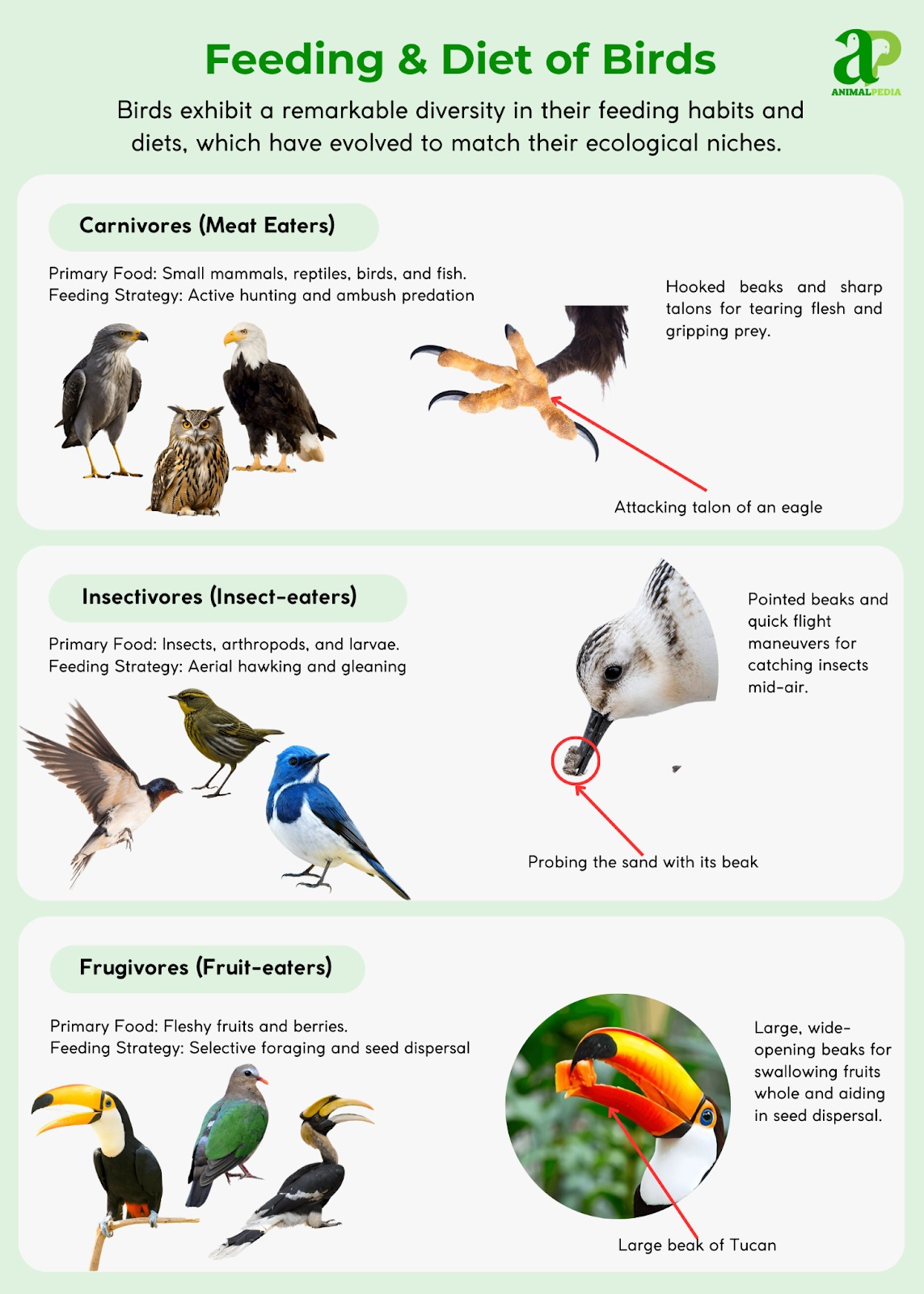
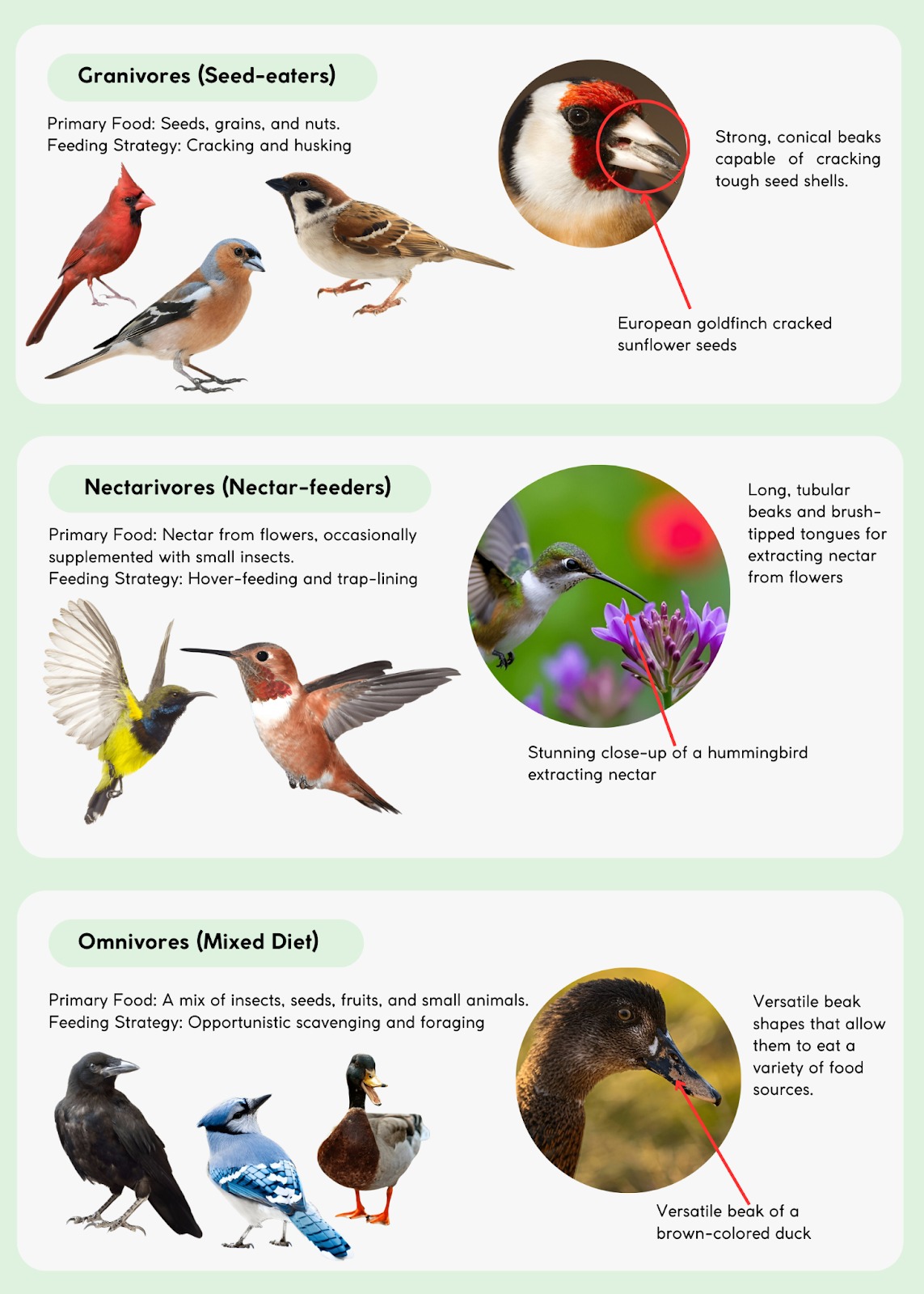
Birds eat what is available in their habitat. Some eat seeds, others catch insects or fish. Their beak shapes match their food types. For example, sharp beaks catch insects, while thick beaks crack seeds. Feeding times also change to avoid competition or predators.
Birds may hunt alone or in groups. Some follow other animals to find food. Certain birds store food to eat later. These behaviors help birds get enough energy to live and grow.
Migration Patterns
Many birds move to new places with changing seasons. Migration helps birds find food and better weather. Some travel thousands of miles to reach warm areas. Others move short distances to nearby habitats.
Birds use the sun, stars, and Earth’s magnetic field to navigate. Migration timing is often linked to daylight and temperature. This movement protects birds from harsh conditions. It also allows access to breeding sites and food resources.
Credit: animal-pedia.org
Frequently Asked Questions
What Types Of Habitats Do Birds Commonly Live In?
Birds inhabit diverse environments like forests, wetlands, grasslands, deserts, and urban areas. Each habitat offers food, shelter, and nesting sites suited to specific bird species, supporting their survival and reproduction.
How Do Bird Habitats Affect Their Behavior?
Bird habitats influence feeding, mating, and migration behaviors. For example, forest birds may forage in trees, while waterbirds dive for fish. Habitat conditions shape daily activities and seasonal movements.
Why Are Wetlands Important For Bird Habitats?
Wetlands provide abundant food, nesting areas, and water for many bird species. They support migratory birds and maintain biodiversity by offering a rich ecosystem essential for bird survival.
Can Urban Areas Serve As Bird Habitats?
Yes, urban areas offer food sources, nesting sites, and shelter for adaptable bird species. Parks, gardens, and buildings create new habitats, although they may differ from natural environments in resources and safety.
Conclusion
Birds live in many different places. They choose habitats that fit their needs. Some live in forests, others near water or cities. Each habitat offers food, shelter, and safety. Understanding where birds live helps us protect them. It also shows how nature works together.
Watching birds in their homes can be fun and educational. Protecting habitats means protecting birds for the future. Nature depends on all creatures, big and small. Caring for bird homes helps keep the world healthy.