
Have you ever wondered how birds survive and thrive in so many different places? One key to their success lies in their unique behaviors.
Understanding just one behavioral adaptation of a bird can change the way you see these fascinating creatures. You’ll discover a simple yet powerful behavior that helps birds adapt to their environment. Keep reading, and you’ll uncover insights that might surprise you—and deepen your connection with the world of birds around you.
Behavioral Adaptations In Birds
Birds migrate to warmer places during winter to find food and survive cold weather. This behavior helps them adapt to changing seasons.
Behavioral adaptations in birds are fascinating and diverse. These adaptations help birds survive in various environments. Birds have developed unique behaviors to find food, protect themselves, and communicate.Migration Patterns
Birds migrate to find food and better living conditions. Many travel thousands of miles. They follow the same routes each year. This behavior ensures survival during harsh seasons.Nesting Habits
Nesting is crucial for bird reproduction. Birds choose safe spots for their nests. Some build nests high in trees. Others nest on the ground hidden by vegetation. This behavior protects their eggs from predators. Birds use different techniques to find food. Some hunt in groups, while others forage alone. Certain species use tools, like twigs, to extract insects. This behavior shows their adaptability and intelligence.Vocal Communication
Birds communicate using songs and calls. These sounds can warn of danger or attract mates. Each species has its unique sound. This behavior helps maintain social bonds and ensures survival.Camouflage And Mimicry
Some birds use camouflage to blend with their surroundings. Others mimic sounds or appearances of different species. This behavior confuses predators and aids in protection.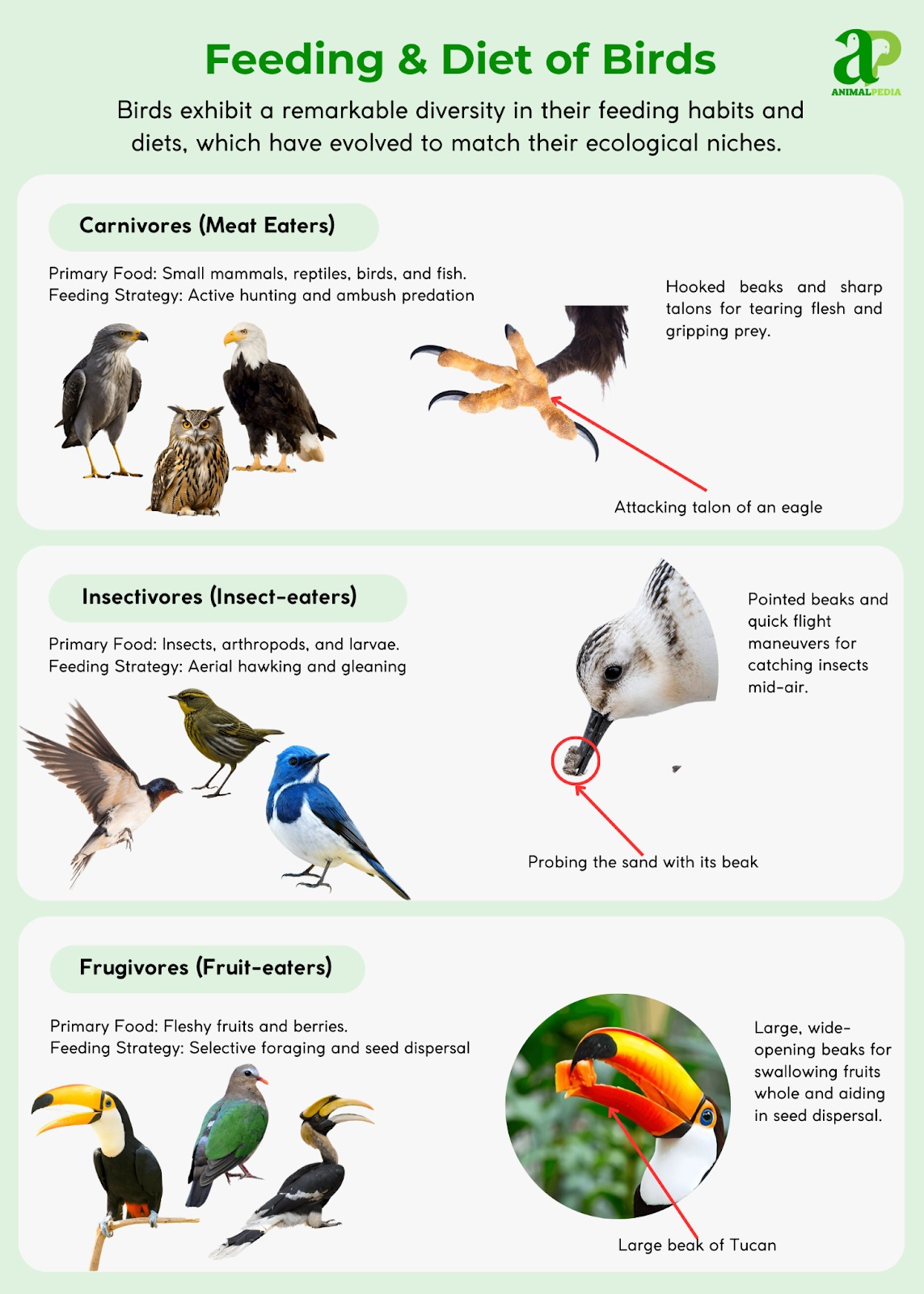
Credit: animal-pedia.org
Migration As A Survival Strategy
Migration is one of the most important survival strategies for many bird species. Birds move from one place to another to find food, better climate, and safe breeding grounds. This seasonal journey helps them avoid harsh weather and scarce resources. Migration increases their chances of survival and successful reproduction.
Seasonal Movement Patterns
Birds follow clear seasonal movement patterns. Many species travel thousands of miles twice a year. They head to warmer areas in winter and return to cooler regions in summer. These patterns depend on food availability and weather changes. Some birds migrate during the day, others at night. Each species has its own timing and route.
Navigational Skills
Birds have amazing navigational skills. They use the sun, stars, and Earth’s magnetic field to guide them. Some birds rely on landmarks like rivers and mountains. Their brains have special cells to sense direction. Young birds learn routes from older ones or by instinct. These skills help them reach their destination safely.
Energy Conservation During Flight
Flying long distances uses a lot of energy. Birds use several ways to save energy during migration:
- Flying in V-shaped formations reduces wind resistance.
- Gliding and soaring on air currents to avoid flapping.
- Stopping at resting spots to feed and recover.
These tactics help birds maintain strength for the entire journey.
Birds’ Nesting Behaviors
Birds’ nesting behaviors reveal fascinating ways they adapt to their environments. These behaviors directly impact their survival and the success of their offspring. Understanding how birds choose and build nests, as well as protect them, can give you fresh insights into nature’s clever strategies.
Nest Selection And Construction
Birds carefully pick nesting spots that offer safety and comfort. Some prefer tree branches, while others choose ground locations or even cavities in rocks or buildings. The choice depends on the species’ needs and the risks in their habitat.
When building nests, birds use a variety of materials like twigs, leaves, mud, and feathers. The construction process is impressive; some weave intricate baskets, while others create simple scrapes in the earth. Have you ever noticed how some nests feel soft and cozy while others seem rough but sturdy?
Protective Measures Against Predators
Protecting nests from predators is crucial. Birds often use camouflage by selecting materials that blend into the surroundings. Some species build nests in hidden or hard-to-reach places to keep eggs and chicks safe.
Another clever tactic involves distraction displays, where adult birds pretend to be injured to lure predators away. You might witness a bird fluttering on the ground, drawing attention away from its nest. These behaviors show how birds actively defend their young.
Credit: www.thetransmitter.org
Foraging Techniques
Birds use various foraging techniques to find and gather food efficiently. These behaviors help them survive in different environments. Some birds have developed clever ways to collect food, showing intelligence and cooperation.
Tool Use In Food Gathering
Some birds use tools to get food from hard places. For example, crows and woodpecker finches use sticks to poke insects from tree bark. This behavior shows problem-solving skills. Using tools helps birds reach food that is otherwise unavailable. It saves energy and increases their chances of eating.
Cooperative Hunting
Certain bird species hunt together in groups. They work as a team to catch prey. Cooperation improves their success rate. Birds like Harris’s hawks use this method. They take turns chasing and flushing out prey. Group hunting allows birds to catch larger or faster animals. Teamwork benefits all members by sharing food and effort.
Communication Methods
Birds use a variety of communication methods to interact with each other. These behaviors help them defend territories, warn of danger, and find mates. Understanding these communication methods reveals how birds survive and thrive in their environments.
Song And Calls For Territory
Birds often sing to mark their territory. Each species has unique songs that signal ownership to others. This vocal display reduces fights by letting rivals know the area is claimed.
Some birds, like the northern cardinal, have complex melodies that carry over long distances. Have you ever noticed how a bird’s song changes during breeding season? That’s because the intensity of their song often increases to attract mates and assert dominance.
Alarm Signals For Danger
When a predator approaches, birds use specific alarm calls to alert others. These calls are sharp and urgent, grabbing attention immediately. Different alarm calls can indicate different types of threats, such as aerial predators versus ground predators.
Watching birds react to danger can teach you a lot about their communication. For example, chickadees change the number of notes in their alarm calls based on how close a threat is. This kind of precision helps the entire flock stay safe.
Credit: news.ucsb.edu
Case Study: The Migration Of Arctic Terns
Arctic terns show one of the most amazing behavioral adaptations in birds. Their migration pattern is a key example. These birds travel vast distances every year to survive and reproduce. This case study explores how their migration works and why it benefits their survival.
Distance And Route
Arctic terns migrate from the Arctic to the Antarctic and back each year. This journey can cover around 25,000 miles. They follow a curved route, moving along coastlines and over open oceans. This path helps them avoid bad weather and find food easily.
Their route includes stops in places rich in fish and small marine animals. These stops allow the terns to rest and refuel. The birds use the sun and stars to navigate during their long flight. This behavior shows their strong instinct and ability to adapt.
Survival Benefits
The migration helps Arctic terns avoid harsh winters in the north. They spend the summer in the Arctic, where food is abundant and days are long. Then, they fly to the Antarctic for the southern summer, following the sun.
This constant movement gives them access to fresh food all year. It also reduces competition with other birds. Traveling so far may seem risky, but it helps Arctic terns live longer and produce more chicks. Their migration is a smart adaptation for survival in extreme environments.
Frequently Asked Questions
What Is A Common Behavioral Adaptation In Birds?
A common behavioral adaptation in birds is migration. Birds travel to warmer areas during cold seasons to find food and suitable habitat.
How Do Birds Use Behavioral Adaptations To Survive?
Birds use behaviors like nesting, foraging, and flocking. These help them find food, protect young, and avoid predators.
Why Do Some Birds Migrate Long Distances?
Birds migrate to access better food sources and breeding grounds. Migration helps them survive seasonal changes and harsh climates.
Can Behavioral Adaptations In Birds Change Over Time?
Yes, birds’ behaviors can evolve due to environmental changes. Adaptations improve their chances of survival and reproduction.
Conclusion
Birds use many behavioral adaptations to survive and thrive. One key example is migration, which helps them find food and better climates. This behavior shows how birds respond to changes in their environment. Such adaptations are important for their survival.
Understanding these behaviors helps us appreciate nature’s balance. Birds teach us about resilience and change. Watching them adapt inspires curiosity and respect for wildlife. Their actions remind us that survival often means adjusting to new challenges.