
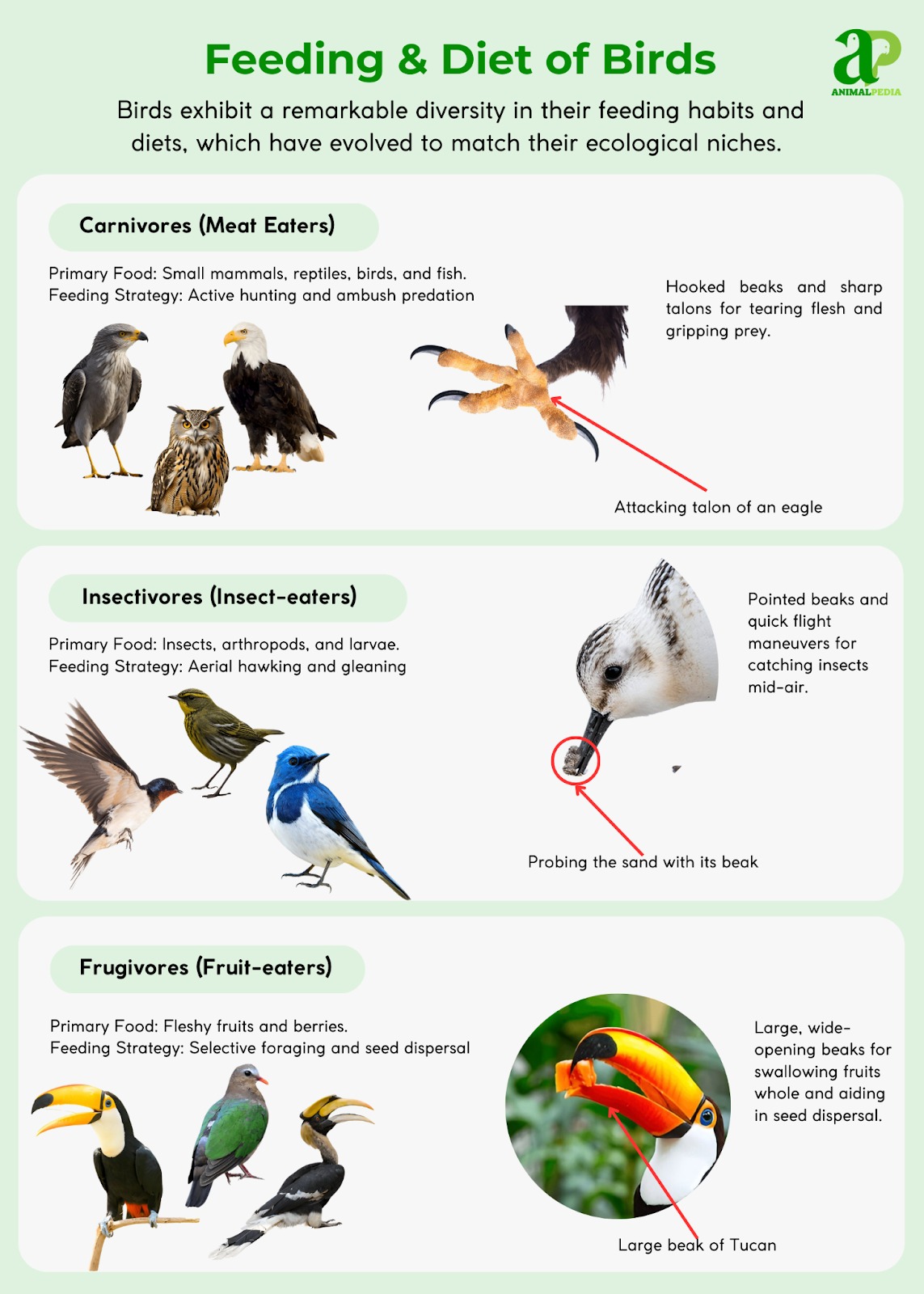
Have you ever wondered how birds seem perfectly built for the places they live? From the sharp beak of a hawk to the webbed feet of a duck, every part of a bird’s body plays a role in helping it survive and thrive.
Understanding these amazing adaptations can change the way you see nature around you. You’ll discover how birds have unique features that match their habitats, making them true masters of their environment. Keep reading, and you’ll soon see birds in a whole new light.
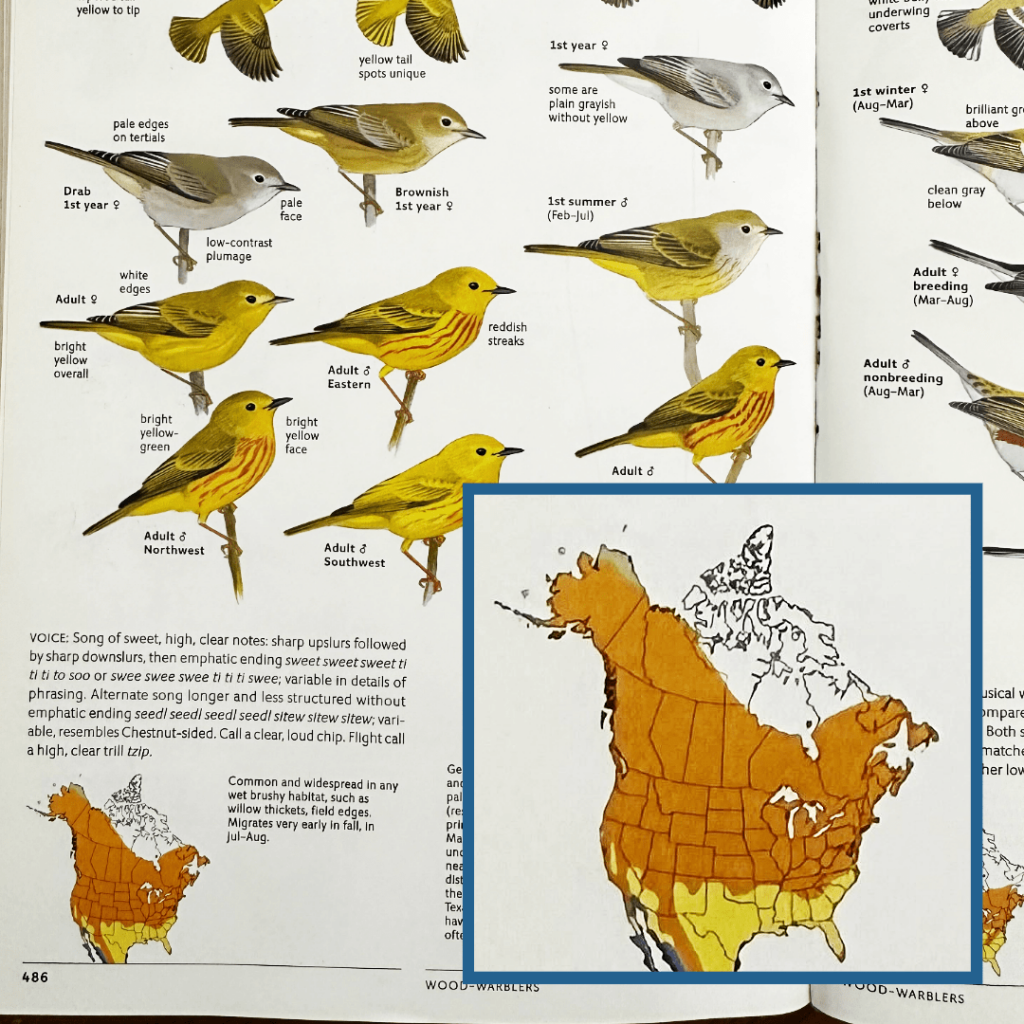
Credit: learn.birdscanada.org
Physical Traits For Survival
Birds have strong wings and sharp beaks that help them find food and escape danger. Their feathers keep them warm and allow smooth flying in different environments. These traits make survival easier in their unique habitats.
Birds have evolved an array of physical traits that allow them to thrive in various habitats. These adaptations are not just fascinating, but also crucial for their survival. From beak shapes to feather types, each trait plays a role in how birds interact with their environment. Let’s dive into these remarkable adaptations and understand how they help birds survive and succeed in their natural habitats.Beak Shapes And Their Functions
Birds have beaks uniquely suited to their feeding habits and environments. A hummingbird’s slender, elongated beak allows it to reach nectar deep within flowers. Meanwhile, the strong, hooked beak of an eagle is perfect for tearing flesh. Next time you observe a bird, consider how its beak is perfectly crafted for its diet. What does your favorite bird’s beak tell you about its lifestyle?Feather Types And Benefits
Feathers are more than just about flying or staying warm. The oily feathers of a duck, for instance, repel water, keeping it dry and buoyant in aquatic habitats. Owls have silent flight feathers that enable them to hunt stealthily at night. Have you noticed the vibrant colors of a peacock? Its feathers are not only beautiful but also play a role in mating rituals. Think about how different feather types impact the lives of birds you see daily.Body Size And Shape Adaptations
A bird’s body size and shape are tailored to its environment and lifestyle. The streamlined body of a swallow allows it to dart quickly through the air, catching insects mid-flight. Penguins, on the other hand, have bodies designed for efficient swimming. Observe how the stout body of a puffin aids in diving and catching fish. How does the body shape of birds around you reflect their habitat and behaviors? Birds have honed these physical traits over millennia, each adaptation a testament to their resilience and ingenuity. As you watch birds in your area, appreciate the silent story of survival written in their bodies. What other adaptations can you identify in your feathered neighbors?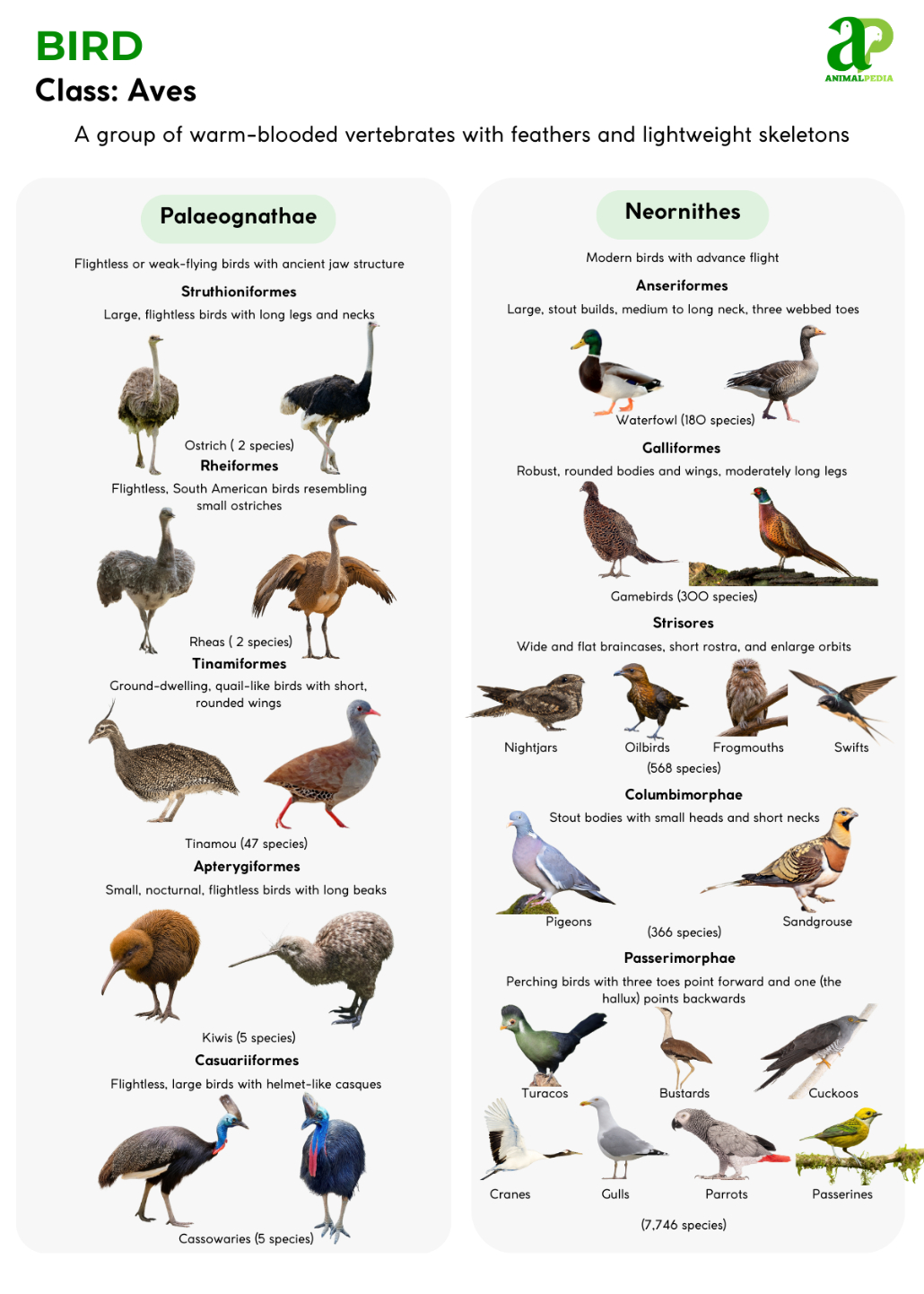
Credit: animal-pedia.org
Behavioral Adaptations
Birds show many behavioral adaptations that help them survive in their habitats. These behaviors are learned or instinctive actions that increase their chances of finding food, avoiding predators, and raising young. Behavioral adaptations often change with the seasons and environment. They are crucial for birds to live successfully in diverse ecosystems.
Migration Patterns
Many birds travel long distances to find better food and climate. Migration helps birds avoid harsh winters and scarce resources. Some species fly thousands of miles across continents. They use the sun, stars, and Earth’s magnetic field to navigate. Timing is key to reach breeding or feeding areas at the right moment.
Nesting Habits
Birds build nests to protect their eggs and chicks. Nest types vary by species and habitat. Some use twigs and leaves, others use mud or spider webs. Nest location is chosen to hide from predators and shield from weather. Many birds return to the same nesting sites year after year. Parents share duties like incubating eggs and feeding young.
Foraging Techniques
Birds use different ways to find and catch food. Some probe mud with long beaks, others dive underwater. Some birds hunt insects in the air or pick seeds from plants. They may feed alone or in groups. Foraging behavior adapts to food type and habitat. Learning and memory help birds find food efficiently.
Camouflage And Coloration
Camouflage and coloration play a crucial role in how birds survive and thrive in their habitats. These features help birds avoid predators, attract mates, and signal danger. Understanding these adaptations gives you a clearer picture of the intricate ways birds interact with their environment.
Blending With The Environment
Many birds have colors that match their surroundings, making them hard to spot. Think of the snowy owl, whose white feathers blend perfectly with snowy landscapes. This camouflage protects them from predators and helps them sneak up on prey.
Have you ever noticed how some birds look like leaves or tree bark? This natural disguise can be a lifesaver in dense forests or grasslands. You might want to observe birds in your area and see how their colors match the local environment.
Warning Colors And Signals
Not all bird colors are meant to hide. Some birds use bright colors to warn predators that they are dangerous or taste bad. The red feathers of the northern cardinal or the bold black and yellow of the oriole serve as clear signals.
These warning colors can also help birds communicate with each other. When you see a bird flashing bright plumage, it might be telling others to stay away or showing off to attract a mate. What messages do you think these colors send in your local bird species?
Seasonal Plumage Changes
Many birds change their feathers with the seasons to stay protected or attract mates. During winter, some birds grow duller feathers to blend in with the bare branches and snow. When spring arrives, their colors often brighten to catch the eye of potential partners.
This transformation can be surprising if you watch the same bird throughout the year. It’s a smart way birds adjust to changing environments and social needs. Have you ever noticed a bird that looks completely different depending on the season?
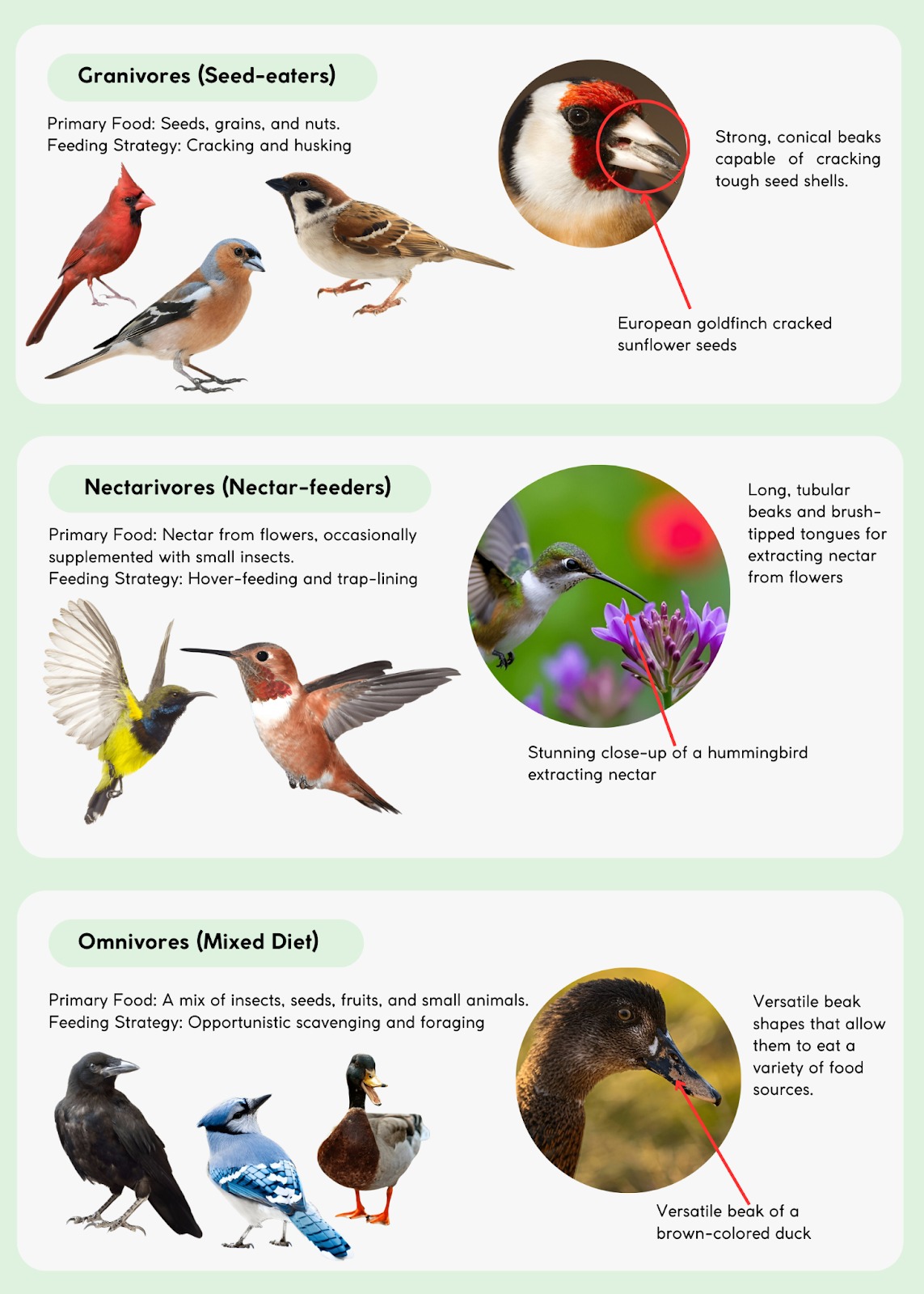
Credit: animal-pedia.org
Sensory Enhancements
Birds rely heavily on their senses to survive and thrive in their habitats. Their sensory systems have evolved to meet the challenges of finding food, avoiding predators, and navigating complex environments. These enhancements help birds react quickly and efficiently to their surroundings. Understanding these adaptations reveals how birds master their world through sharp senses.
Vision Adaptations
Birds have excellent eyesight. Many can see colors humans cannot, such as ultraviolet light. This ability helps them find food and mates. Raptors like eagles have sharp vision to spot prey from far away. Some birds have eyes on the sides of their heads, giving a wide field of view. Others, like owls, have forward-facing eyes to judge distance better. Their eyes often have more rods and cones, which enhance light sensitivity and color detection.
Hearing And Vocalization
Birds use hearing to detect predators and communicate. Their ears are often hidden under feathers but are very sensitive. Owls can hear tiny sounds to locate prey at night. Songbirds use vocalizations to mark territory and attract mates. Each species has unique calls, helping them recognize each other. Some birds can mimic sounds from their environment, aiding in social interaction or defense.
Navigation Skills
Birds travel long distances during migration. They use magnetic fields, the sun, and stars for navigation. Some species have special cells in their brains that sense the Earth’s magnetic field. They remember landmarks and use the position of the sun to stay on course. Homing pigeons are famous for their ability to find their way home over hundreds of miles. These skills ensure survival through seasonal changes and habitat shifts.
Specialized Habitat Adaptations
Birds have evolved unique features that help them thrive in specific environments. These specialized habitat adaptations allow them to find food, protect themselves, and reproduce successfully. Understanding these adaptations helps you appreciate how perfectly designed nature can be.
Forest-dwelling Birds
Birds living in forests often have strong, curved claws to grip tree branches securely. Their feathers may be darker or mottled to blend with shadows, keeping them safe from predators.
Many have sharp beaks to pick insects from bark or crack seeds. Think about the woodpecker’s chisel-like beak—perfect for drilling into trees. Could you imagine climbing trees without a good grip? These birds have it covered.
Desert Survivors
Desert birds face heat and scarce water. They often have light-colored feathers to reflect sunlight and reduce heat absorption.
Some species can survive on minimal water, extracting moisture from their food. Their nasal passages might be adapted to conserve water, showing how every part of their body works to suit harsh conditions.
Wetland And Aquatic Birds
Birds in wetlands or water have webbed feet for swimming efficiently. Their feathers are waterproof, helping them stay dry and buoyant.
Their bills vary greatly—some are long and thin for probing mud, while others are broad for filtering small creatures. Next time you see a duck gliding effortlessly, notice how its body suits its watery world perfectly.
Frequently Asked Questions
How Do Birds Adapt To Different Habitats?
Birds adapt through physical traits like beak shape and feather type. Behavioral changes such as migration also help them survive diverse environments.
What Physical Features Help Birds Survive In Habitats?
Features like camouflage feathers, strong claws, and specialized beaks enable birds to find food and avoid predators in their habitats.
How Does Bird Migration Relate To Habitat Adaptation?
Migration allows birds to move to favorable climates seasonally. This behavior helps them access food and breed in suitable habitats.
Why Is Beak Shape Important For Bird Adaptation?
Beak shape determines a bird’s diet and feeding method. It evolves to fit the specific food sources in their habitat.
Conclusion
Birds have special features that help them live well in their homes. Their beaks, feathers, and feet match their needs. Some birds fly fast, others swim or walk. Each bird’s body helps it find food and stay safe. Nature shapes birds to fit different places.
This shows how animals change to survive. Watching birds teaches us about life and nature’s balance. Every bird is a small wonder of the world.