
Have you ever wondered which bird can leave all others far behind in a breathtaking race through the sky? Knowing the world’s fastest species of bird isn’t just a fun fact—it reveals nature’s incredible power and precision.
If you’re curious about speed, agility, and the secrets of flight, this article will capture your imagination and surprise you. Get ready to discover the bird that dominates the air with unmatched velocity, and learn why it’s so fascinating for anyone who loves the thrill of the natural world.
Keep reading—you won’t want to miss this!

Credit: www.wildlifenomads.com
Peregrine Falcon: The Speed Champion
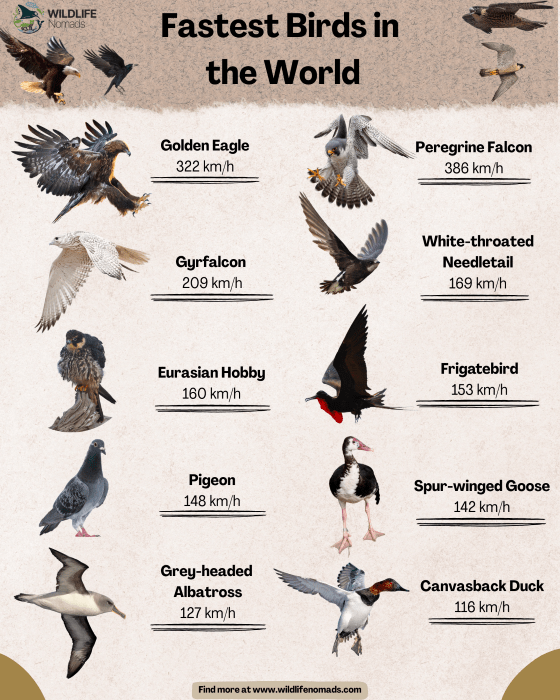
The peregrine falcon is known as the world’s fastest bird. It reaches incredible speeds during its hunting dive, making it a true speed champion. This bird uses its speed to catch prey mid-air with great precision. Its unique body shape and strong muscles help it fly faster than any other species.
The Peregrine Falcon’s Speed Record
The peregrine falcon can reach speeds over 240 miles per hour (386 kilometers per hour). This speed happens during a special dive called a stoop. The stoop allows the falcon to drop from great heights and accelerate rapidly. No other bird has been recorded flying this fast.
Body Features That Boost Speed
- Streamlined body reduces air resistance
- Strong wing muscles provide powerful thrust
- Sharp, pointed wings improve aerodynamics
- Compact feathers help maintain smooth airflow
Hunting Skills Enhanced By Speed
Speed allows the peregrine falcon to surprise prey quickly. It can catch birds like pigeons and ducks mid-flight. Its sharp talons grab prey with strong force. The falcon’s fast dive gives it an advantage over slower birds.
Diving Techniques
Diving techniques play a crucial role in the speed and agility of the world’s fastest bird. These birds dive from great heights, reaching incredible speeds. Their body shape and diving style help minimize air resistance. This allows them to accelerate quickly and maneuver sharply during the dive.
Aerodynamic Body
The bird’s body is sleek and streamlined. Its feathers lie flat to reduce drag. The shape resembles a teardrop, which is ideal for cutting through air. The narrow head and pointed beak help guide airflow smoothly. This design lowers air resistance during high-speed dives.
Tuck And Dive Strategy
Before diving, the bird tucks its wings close to the body. This reduces surface area exposed to air. The bird folds its legs tightly against its body too. This position helps maintain a straight, narrow profile. As a result, the bird can dive faster and more precisely.
Anatomical Adaptations
The world’s fastest bird is a marvel of nature, and its speed is no accident. Its body has evolved with special features that help it slice through the air with incredible efficiency. Understanding these anatomical adaptations gives you a clear picture of how form meets function in the animal kingdom.
Wing Structure
The wing shape of the fastest bird is sleek and pointed. This design reduces air resistance and allows for rapid acceleration. Unlike broad wings, these narrow wings minimize drag and maximize speed.
Think about how your hand feels when you stick it out of a moving car window. If you hold it flat and wide, the wind pushes hard against it. But if you point your fingers straight ahead, you feel less pressure. The bird’s wings work the same way.
- Long, tapered wings for cutting through the air
- Strong, lightweight bones to reduce weight without losing strength
- Flexible wing joints that allow quick, precise movements
Muscle Composition
Powerful muscles drive this bird’s extraordinary speed. Its breast muscles, which control wing beats, are packed with fast-twitch fibers. These fibers contract quickly and forcefully but tire fast, perfect for short bursts of high speed.
Imagine sprinting as fast as you can for a few seconds. Your legs burn quickly because of similar muscle fibers. The bird’s muscles are built for that same explosive power.
| Muscle Type | Function | Benefit for Speed |
|---|---|---|
| Fast-twitch fibers | Rapid contraction | High speed bursts |
| Slow-twitch fibers | Endurance | Longer flight times |
Have you ever wondered how muscle types affect your own performance? The bird’s muscle makeup highlights the trade-off between speed and endurance. It chooses speed every time.

Credit: www.wildlifenomads.com
Hunting Strategy
The hunting strategy of the world’s fastest bird is a perfect blend of speed and skill. It relies not just on flying fast but on smart tactics that ensure success. Understanding these tactics can change how you view speed and precision in nature.
High-speed Pursuit
The bird uses explosive speed to chase down prey in mid-air. It can reach speeds over 200 miles per hour during its hunting dives, which is astonishing. This rapid descent allows it to catch prey unaware before they can react.
Imagine spotting your target from high above and then accelerating faster than anything else around you. This bird doesn’t just rely on speed; it controls it perfectly to stay on course. You might wonder, how does it manage such control at such high velocity?
Its body is streamlined, reducing air resistance, and its wings are shaped for swift, tight maneuvers. This combination lets the bird pursue agile prey even in complex environments. If you think about your own goals, do you chase them with the same focus and speed?
Precision Targeting
Speed alone isn’t enough; the bird must hit its target precisely. It uses sharp eyesight to lock onto prey from great distances. This keen vision helps it calculate the exact moment to strike.
As it approaches, it adjusts its flight angle with incredible accuracy. The bird often strikes with its talons, which are perfectly shaped to grasp and hold slippery or fast-moving prey. This precision ensures that the high-speed dive ends in a successful catch, not just a dramatic display.
Think about how you aim for your own targets—do you plan your moves carefully, or do you rush? This bird’s strategy shows that combining speed with precision is key to achieving your goals effectively.
Comparing Speed With Other Birds
Birds show great variety in their flight speeds. Comparing their speed helps us understand their unique abilities. Some birds fly fast to catch prey. Others glide slowly to save energy. Let’s compare the speeds of some well-known birds.
Golden Eagle
The Golden Eagle is one of the fastest birds in level flight. It can reach speeds up to 80 miles per hour. This speed helps it hunt small mammals and birds. The Golden Eagle uses powerful wing strokes to move quickly. It soars high and dives sharply during a hunt.
Frigatebird
The Frigatebird is known for its incredible gliding skills. It can stay in the air for weeks without landing. Its speed reaches about 95 miles per hour in a dive. This bird uses wind currents to travel long distances. The Frigatebird’s light body helps it fly fast and far.
Credit: www.worldatlas.com
Environmental Impact On Speed
The speed of the world’s fastest birds doesn’t just depend on their physical abilities. The environment plays a huge role in how fast they can fly. Factors like wind and altitude can either boost their velocity or slow them down significantly.
Wind Patterns
Wind can act like a natural tailwind or headwind for birds in flight. When the wind blows in the same direction as the bird, it can give a noticeable speed boost. On the other hand, flying against strong winds can tire the bird and reduce its top speed.
Have you ever noticed how some days it feels easier to bike or run because the wind is at your back? Birds experience this too, but on a much larger scale. Swift wind currents can help species like the peregrine falcon reach their incredible diving speeds during hunting.
Altitude Effects
Flying at different altitudes changes the air density and oxygen availability, both crucial for speed. Higher altitudes have thinner air, which means less resistance and potentially faster speeds. However, the bird’s body must adapt to lower oxygen levels to maintain its power and endurance.
Think about mountain climbers who struggle with thin air; birds face a similar challenge. Species that reach high altitudes, like some falcons, have evolved to handle these conditions, allowing them to dive faster than birds flying closer to sea level.
Speed In Avian Evolution
Speed has played a crucial role in the evolution of birds, shaping their behavior, physical traits, and survival strategies. Over millions of years, flying creatures have adapted to different environments, pushing the limits of how fast they can move through the air. This drive for speed is not just about showing off—it’s a matter of life and death.
Evolutionary Advantages
Speed offers birds several clear benefits. It helps them catch fast-moving prey like insects or fish. It also allows them to escape predators quickly, increasing their chances of survival.
For instance, the peregrine falcon uses incredible diving speeds to strike prey mid-air. This sharp speed boost gives it an edge other birds don’t have. You might ask yourself, how does such speed affect other aspects of a bird’s life? It often means stronger muscles, lighter bones, and sharper vision, all evolving together to support rapid flight.
Survival And Adaptation
Birds that evolve to fly faster can explore larger territories and find food more efficiently. This adaptation often leads to better breeding opportunities and a higher chance to pass on their genes.
Think about the environment where these birds live. Harsh conditions or abundant predators push species to develop speed as a survival tool. You might notice that faster birds tend to thrive in open spaces where speed is essential, while slower birds might rely more on camouflage or other tactics.
Have you ever wondered how your own experiences with speed—like running or cycling—relate to these natural adaptations? Just like birds, your body improves with practice and challenge, showing how speed is key across living beings.
Frequently Asked Questions
What Is The Fastest Bird In The World?
The peregrine falcon is the fastest bird, reaching speeds over 240 mph during hunting dives. It uses aerodynamic body shape for incredible velocity.
How Fast Can A Peregrine Falcon Fly?
Peregrine falcons can dive at speeds exceeding 240 miles per hour, making them the fastest animals in flight. This speed helps them catch prey mid-air.
Why Is The Peregrine Falcon So Fast?
Its streamlined body, strong muscles, and sharp eyesight make the peregrine falcon extremely fast. These adaptations allow efficient hunting and rapid flight maneuvers.
Are Any Other Birds Nearly As Fast As The Peregrine Falcon?
No bird matches the peregrine falcon’s dive speed, but the golden eagle and white-throated needletail can fly fast horizontally, around 100 mph.
Conclusion
The world’s fastest bird shows nature’s power and grace. It can dive at incredible speeds. This bird uses speed to catch prey and stay safe. Watching it fly is truly amazing. Speed helps this bird survive in the wild. Learning about it helps us appreciate birds more.
Nature creates many wonders like this fast flyer. Next time you see a bird, think about its skills. Speed is just one way animals adapt and thrive.