
Have you ever watched a bird closely and wondered why it acts the way it does? Understanding a bird’s behavior can unlock fascinating secrets about how these creatures live, communicate, and survive.
Whether you’re a curious nature lover or someone who enjoys backyard birdwatching, knowing what drives a bird’s actions can make your experience much richer. You’ll discover the key patterns and reasons behind bird behavior that will change the way you see them forever.
Keep reading to unlock the mysteries of your feathered neighbors!
Credit: animal-pedia.org
Bird Behavior Basics
Bird behavior shows how birds act in their daily life. It includes feeding, flying, singing, and caring for their young. Understanding these actions helps us learn more about birds and their needs.
Understanding bird behavior is a fascinating journey into the natural world. Birds, with their vibrant colors and melodious calls, exhibit a wide range of behaviors. These actions can be as predictable as a sunrise or as surprising as a sudden downpour.Innate Vs Learned Actions
Birds perform certain actions instinctively, like migrating or building nests. These innate behaviors are hardwired, much like a toddler learning to walk. But birds are also capable of learning; a parrot mimicking human speech or a crow using tools are prime examples. Have you ever observed a bird adapting to a new environment? It’s a testament to their ability to learn and evolve. This adaptability can be crucial for survival, especially in rapidly changing environments.Communication Methods
Birds communicate in ways that are both complex and intriguing. Their songs can convey everything from mating calls to warnings of danger. Think about how a morning chorus can vary in tone and intensity—each note carries a message. Visual signals also play a significant role in bird communication. Bright plumage can attract a mate, while certain postures may signal aggression or submission. Next time you see birds interacting, consider the silent dialogues happening before your eyes. What do you think birds are saying when they chirp or preen? Understanding these behaviors can deepen your connection with nature and enhance your bird-watching experiences.Feeding Habits
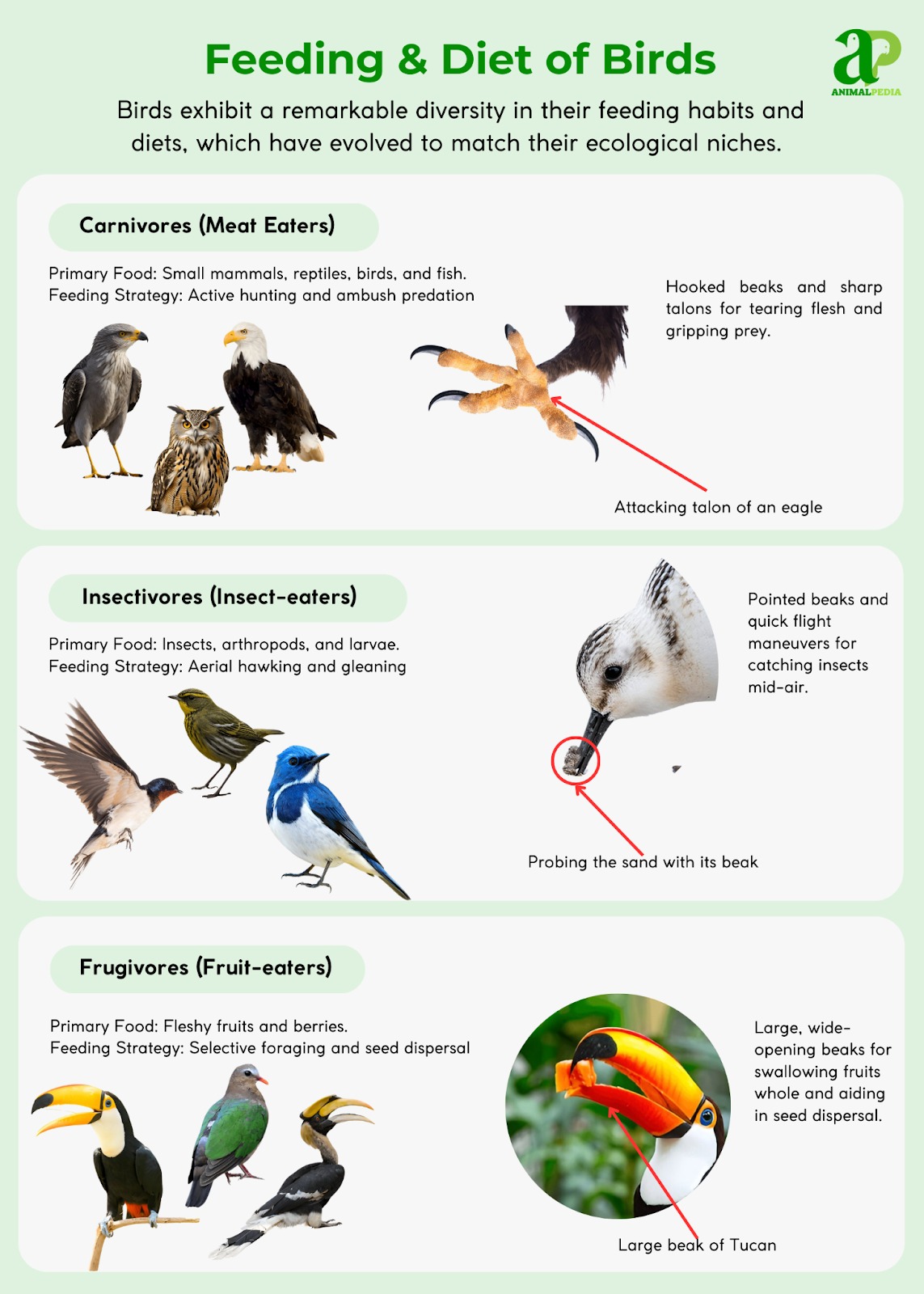
Birds show many feeding habits that help them survive in different places. Their feeding behavior depends on where they live, the food available, and their body type. Understanding these habits gives us a clear picture of how birds find and eat their food every day.
Foraging Techniques
Birds use several techniques to find food. Some search the ground for seeds or insects. Others catch flying insects in the air. Some birds dive into water to catch fish. Many use their beaks to pick insects from tree bark. Others follow animals to eat leftover food. Each technique suits the bird’s environment and diet.
Diet Variations
Bird diets vary widely among species. Some eat mostly seeds and grains. Others prefer fruits, nectar, or insects. Birds of prey eat small animals like mice or fish. Scavenger birds feed on dead animals. Some birds change their diet with the seasons. This variety helps birds live in many different habitats.
Migration Patterns
Bird migration is a fascinating behavior seen in many species. It involves long-distance travel between breeding and wintering areas. These journeys can cover thousands of miles. Migration helps birds survive changing seasons and find food. Understanding migration patterns reveals how birds adapt to their environment. These patterns vary widely among species and regions.
Reasons For Migration
Birds migrate mainly to find food and better living conditions. Cold winters reduce food availability in many areas. Moving to warmer places helps them access more food. Migration also provides safer places for raising young. Some birds avoid harsh weather and predators by migrating. Breeding areas often have more insects and plants in spring. These resources support chick growth and survival.
Navigation Strategies
Birds use many tools to find their way during migration. Some rely on the sun and stars to guide them. Others sense the Earth’s magnetic field like a natural compass. Landmarks such as rivers and mountains help birds stay on course. Many species remember routes learned from older birds. Some use smell and sound cues to navigate. These strategies work together to keep birds on track.
Mating Rituals
Birds perform unique actions to attract mates and reproduce. These actions are called mating rituals. Each species has special ways to show readiness for mating. These rituals help birds find strong and healthy partners. They also prepare for raising their young together. Understanding mating rituals reveals the beauty of bird behavior.
Courtship Displays
Birds use bright colors, songs, and movements to attract mates. Males often show off feathers by spreading wings or tails. Singing loud and clear is common to catch attention. Some birds dance or perform special flights. These displays show health and strength. Females choose mates based on these signs.
Nest Building
Building nests is a key part of mating rituals. Birds gather twigs, leaves, and other materials carefully. Males may build nests to prove their skills. Both partners sometimes work together to build a safe home. A strong nest protects eggs and chicks. It shows commitment and readiness for parenthood.
Social Structures
Birds don’t just live side by side—they form complex social structures that influence their survival and daily lives. Understanding these social behaviors helps you appreciate how birds communicate, cooperate, and compete. Social structures vary widely, from tight-knit groups to fiercely defended territories.
Flocking Behavior
Flocking is a classic example of social living in birds. When birds fly or feed in groups, they benefit from safety in numbers and better foraging success.
You might have noticed how starlings create mesmerizing murmurations. This isn’t just for show; it confuses predators and helps each bird stay alert. The coordination requires quick communication and trust within the flock.
Think about how you behave in a crowd—do you feel safer or more vulnerable? Birds rely on the collective vigilance of their group to reduce risk and increase chances of finding food.
Territoriality
Unlike flocking, territoriality is about defending a specific area. Birds establish and protect territories to secure resources like food, nesting spots, or mates.
Male songbirds often sing loudly to mark their boundaries and warn rivals. This behavior prevents physical fights, saving energy and avoiding injury.
Have you ever seen a bird aggressively chase away another? That’s territorial defense in action. Understanding this can help you identify why some birds are solitary or only seen in certain spots.
Credit: lafeber.com
Adaptations To Environment
Birds have evolved unique behaviors to survive in their surroundings. Their actions help them find food, avoid predators, and adapt to changing conditions. These behaviors often reflect their environment’s demands and challenges.
Each bird species shows different ways to cope with its habitat. Their survival depends on how well they adjust to temperature, predators, and seasonal changes. These adaptations affect their daily activities and life cycles.
Camouflage And Defense
Many birds use camouflage to blend with their environment. Their feathers often match colors and patterns of trees, leaves, or ground. This helps them stay hidden from predators and sneak up on prey.
Some birds have unique defense behaviors. They may freeze, fly away quickly, or make loud sounds to scare threats. Others use physical tools, like sharp beaks or claws, to protect themselves.
Seasonal Changes
Birds change behavior based on seasons. Many migrate to warmer places during cold months. Migration helps them find food and better living conditions.
Birds also adjust their diet and activity levels with the seasons. In winter, they may eat seeds or nuts instead of insects. During breeding season, they build nests and care for young birds.
Learning And Intelligence
Birds show remarkable learning abilities and intelligence that often surprise us. They adapt to new challenges, remember complex information, and even teach each other skills. Understanding how birds learn can change the way you see their behavior in everyday life.
Problem Solving
Birds often face challenges like finding food or avoiding predators. Some species, like crows and ravens, display impressive problem-solving skills. They can figure out how to open containers, navigate mazes, or use insight to get a reward.
Imagine watching a crow dropping nuts on the road just to crack them open with passing cars. This shows not just trial and error but a level of planning and understanding cause and effect. Have you ever noticed a bird adapting its behavior when your garden changes? That’s problem solving in action.
Tool Use
Using tools was once thought to be a uniquely human trait, but many birds prove otherwise. New Caledonian crows, for example, craft sticks into hooks to extract insects from tree bark. This ability requires learning, memory, and fine motor skills.
Tool use in birds varies widely. Some use leaves as sponges to soak up water. Others drop stones into water to raise the water level and reach floating food. Watching these behaviors can inspire you to think differently about intelligence outside humans.

Credit: lafeber.com
Frequently Asked Questions
What Are Common Bird Behaviors To Observe?
Common bird behaviors include feeding, mating, nesting, singing, and flying patterns. Observing these helps understand their habits and survival strategies.
How Do Birds Communicate With Each Other?
Birds communicate through songs, calls, body language, and visual displays. These signals help with mating, warning of danger, and social interaction.
Why Do Birds Migrate Seasonally?
Birds migrate to find food, suitable breeding conditions, and better climates. Migration ensures survival during harsh weather and resource scarcity.
How Do Birds Choose Their Mates?
Birds select mates based on physical displays, songs, and nest-building skills. These behaviors indicate health and genetic fitness to potential partners.
Conclusion
Birds show many different behaviors every day. They sing, fly, and build nests to survive. Each action helps them live and grow. Watching bird behavior teaches us about nature and life. It also helps protect birds and their homes. Understanding birds makes the world more interesting.
Keep observing, and you will discover more about these amazing creatures. Their behavior tells a story worth knowing.